

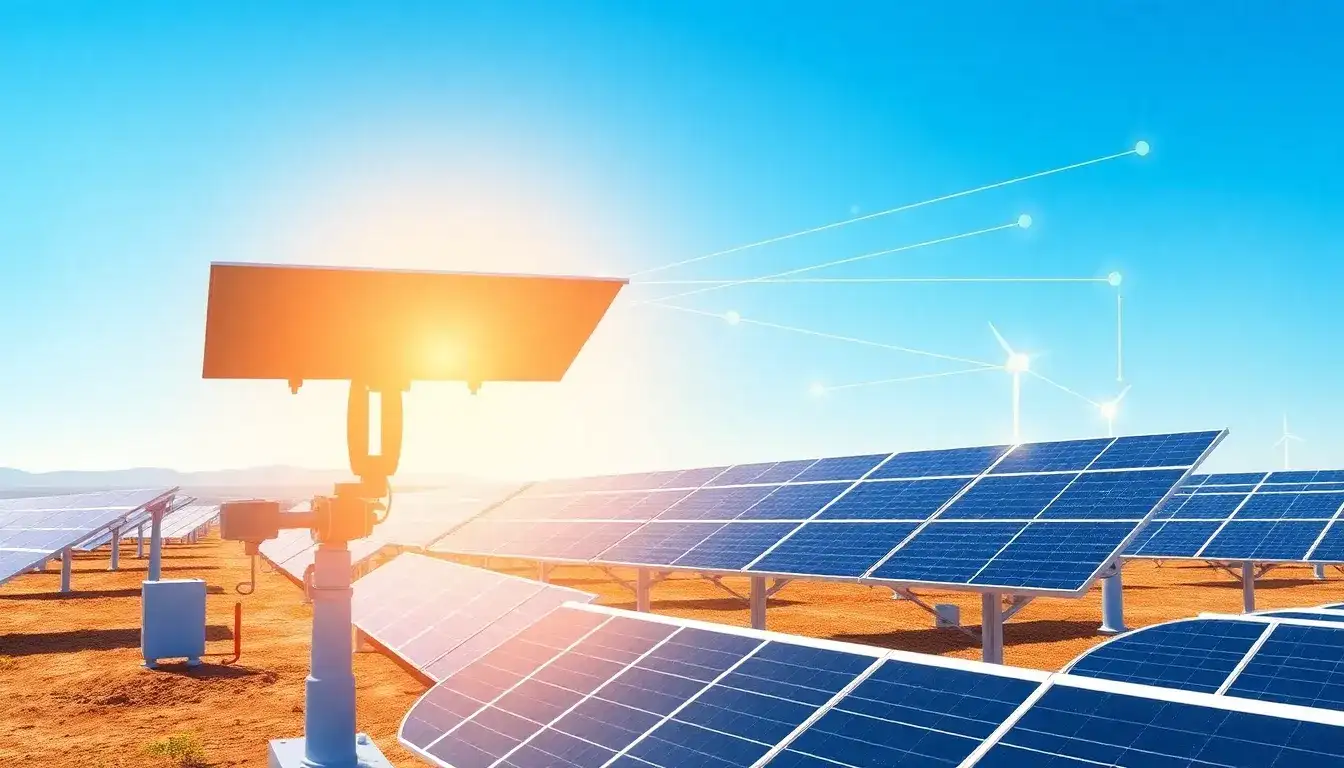
Machine learning significantly enhances the efficiency of solar tracking systems by several key mechanisms:
Improving Tracking Precision
- Real-time Data Analysis: Machine learning algorithms analyze real-time data such as wind speed, voltage, and sunlight intensity. This allows solar panels to dynamically adjust their angle, maximizing energy capture under varying conditions.
- Predictive Modeling: By processing historical data, machine learning models predict solar patterns and weather changes. This enables the system to preemptively adjust the tracking angles for optimal energy capture.
Enhancing Operational Efficiency
- Continuous Optimization: The integration of IoT and real-time data processing ensures that solar tracking systems operate at peak efficiency. Adjustments are made in real-time based on environmental conditions.
- Reliability and Sustainability: AI and machine learning improve the reliability of solar installations by providing accurate predictive maintenance schedules. This reduces downtime and contributes to environmental sustainability.
Advanced Technologies Integration
- Computer Vision: This technology allows solar tracking systems to visually track the sun’s position, providing precise adjustments that enhance efficiency.
- Cloud Computing: Enables the storage and processing of large datasets, including weather forecasts and satellite imagery. This information is used to optimize solar tracking performance further.
Efficiency Monitoring and Improvement
- Pattern Recognition: Deep learning models identify patterns in large datasets, helping to recognize performance issues related to solar panel structures. This improves overall energy output and system reliability.
- Real-time Anomaly Detection: Continuous monitoring with AI allows for early detection and resolution of anomalies, ensuring optimal performance of solar installations.
Original article by NenPower, If reposted, please credit the source: https://nenpower.com/blog/how-does-machine-learning-improve-the-efficiency-of-solar-tracking-systems/

