

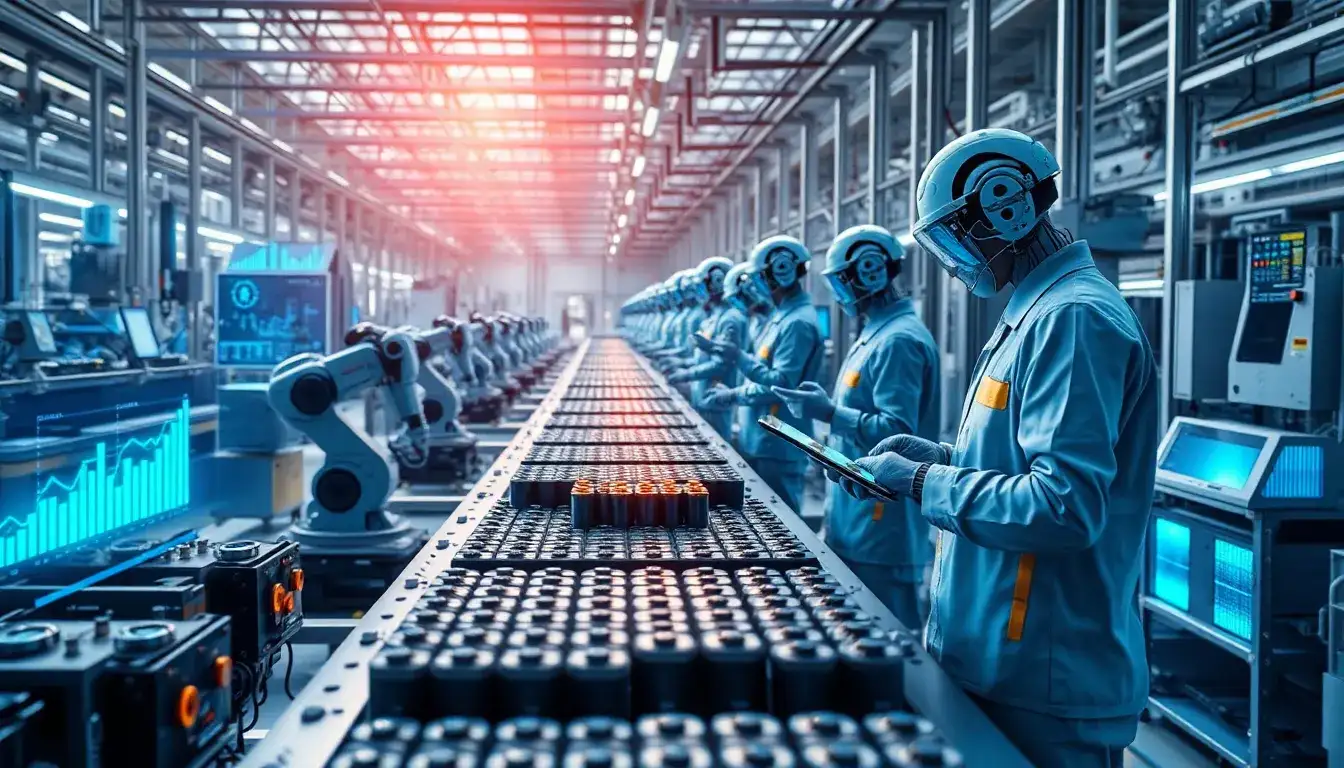
Machine learning (ML) improves the efficiency of battery production through several key mechanisms:
1. Optimizing Production Processes and Reducing Defects
ML algorithms analyze vast amounts of production data to optimize conditions in real time. By continuously learning from the manufacturing process, ML helps identify and correct deviations early, drastically reducing defects and ensuring consistent product quality. This continuous adjustment leads to smoother operations and less waste.
2. Enhancing Sustainability and Reducing Costs
By uncovering hidden correlations in manufacturing data, ML enables manufacturers to reduce energy consumption and material waste, directly contributing to more sustainable production practices. This optimization reduces production costs and environmental impact without compromising performance.
3. Predicting Battery Performance and Lifespan
ML models predict battery performance metrics such as capacity, lifetime, and safety more accurately than traditional methods. These predictive models assist manufacturers in selecting better materials and refining cell designs, ultimately leading to batteries with longer life and higher reliability. For example, algorithms can automatically generate and select physical degradation models that balance accuracy and simplicity, improving life-prediction.
4. Streamlining Quality Control and Testing
One of the most energy- and time-intensive steps in battery manufacturing is capacity grading, which involves full charge-discharge cycles to determine each cell’s capacity. ML models trained on early-stage formation data can accurately forecast cell performance, eliminating the need for extensive grading. This innovation can:
- Remove up to 90% of grading equipment
- Cut energy consumption for grading by 90%
- Increase production speed
- Reduce equipment investment and maintenance costs
This transformation significantly boosts throughput and reduces energy costs in the production line.
5. Data-Driven Process Integration
The integration of ML with advanced data storage and analysis infrastructure, such as time-series databases, allows manufacturers to handle large volumes of real-time data efficiently. These systems support granular data analysis, anomaly detection, early warnings, and real-time visualization, all of which contribute to proactive process management and enhanced manufacturing efficiency.
In summary, machine learning enables battery manufacturers to optimize production parameters dynamically, predict and enhance battery performance, streamline testing processes, and improve sustainability—all leading to significantly increased production efficiency and reduced costs.
Original article by NenPower, If reposted, please credit the source: https://nenpower.com/blog/how-does-machine-learning-improve-the-efficiency-of-battery-production/

