

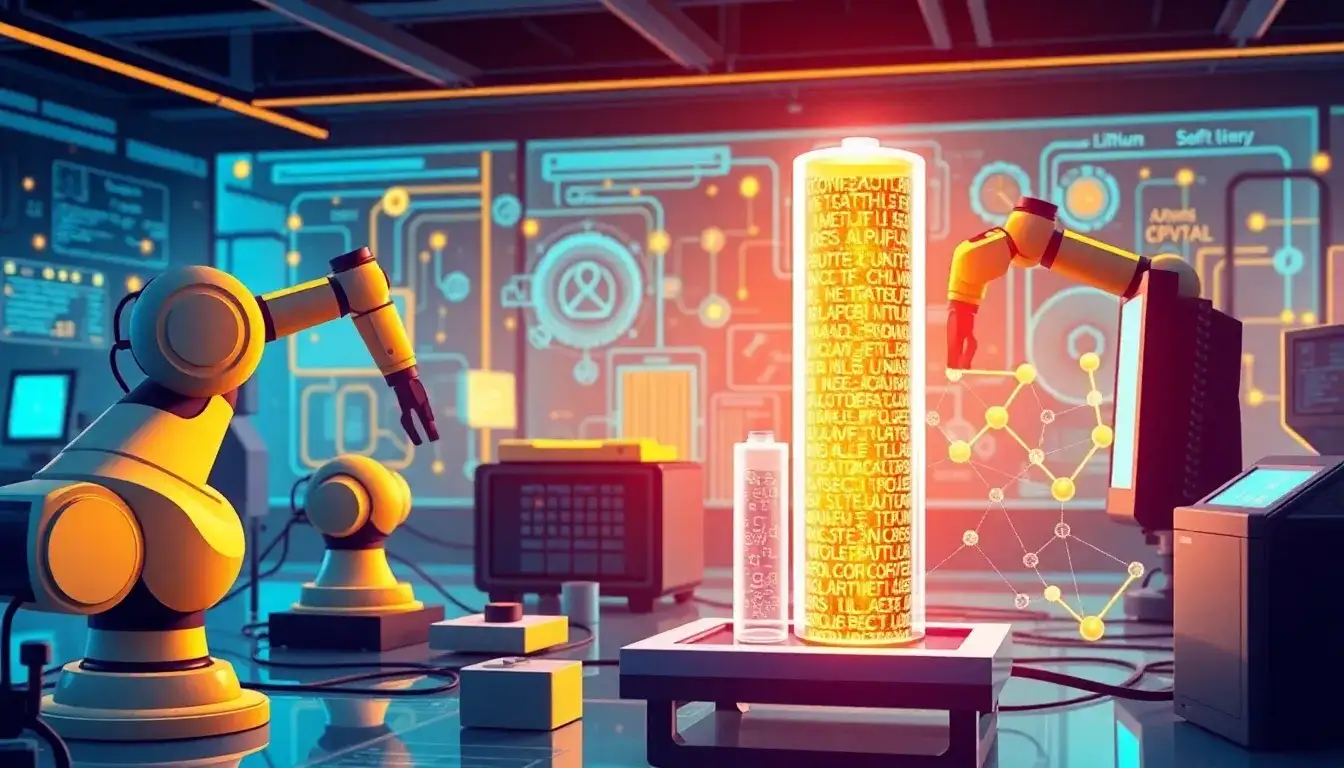
Machine learning enhances battery material efficiency through multiple approaches:
1. Accelerated material discovery and optimization
ML analyzes vast datasets to identify optimal chemistries, structures, and processing conditions for battery materials. This reduces trial-and-error experimentation and enables faster iteration of material designs.
2. Degradation prediction and lifetime extension
By analyzing thousands of battery cycles, ML models achieve 95% accuracy in predicting capacity loss and degradation patterns. This enables proactive maintenance and optimized charging protocols to extend battery life.
3. Production process optimization
ML algorithms analyze manufacturing data to:
- Reduce defects through real-time process adjustments
- Minimize energy consumption by identifying inefficiencies
- Improve yield by correlating material properties with production parameters.
4. Performance enhancement
For solid-state batteries, ML has identified materials and structures that increase ion conductivity by 50%, directly improving energy density and charging speed. ML also optimizes charging algorithms to reduce charging times by 30% while preserving battery health.
5. Sustainability improvements
ML-driven process adjustments reduce waste and resource consumption during material synthesis and cell manufacturing, supporting greener battery production.
Original article by NenPower, If reposted, please credit the source: https://nenpower.com/blog/how-does-machine-learning-improve-the-efficiency-of-battery-materials/

