

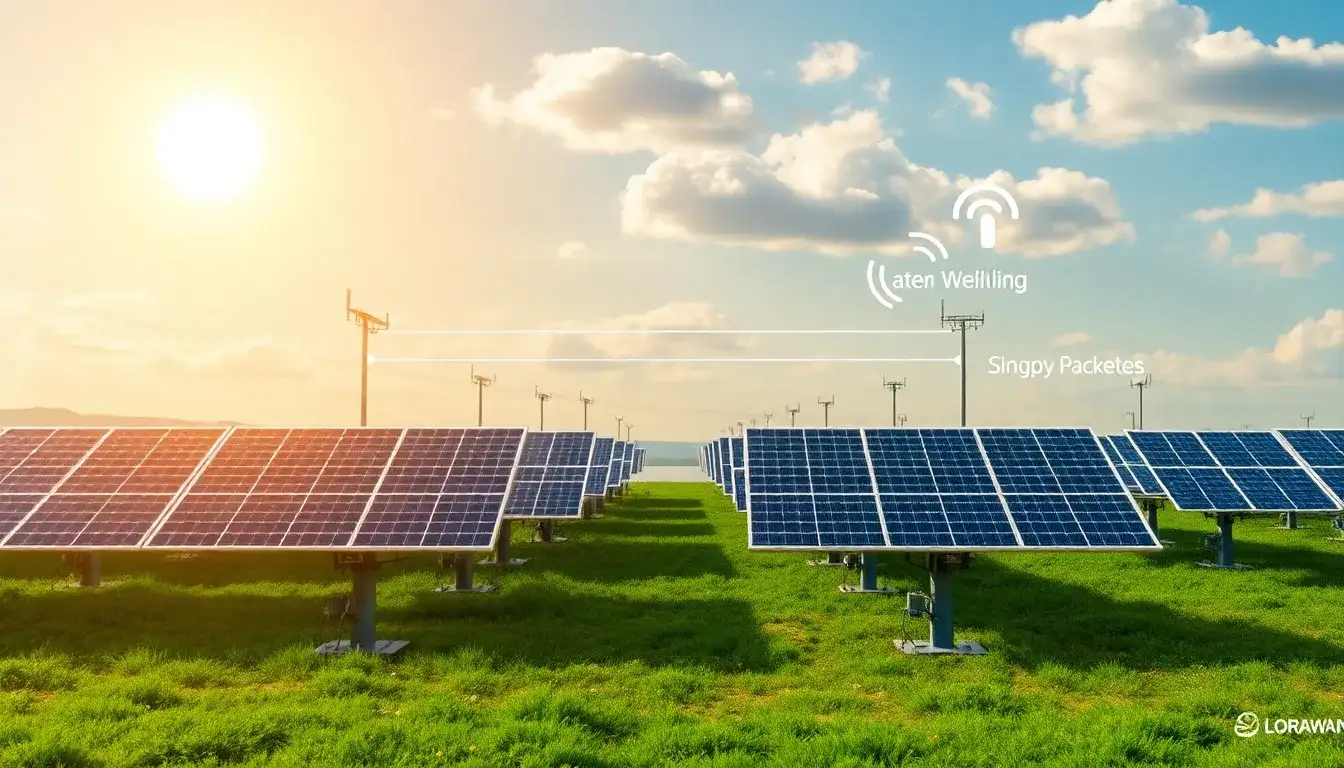
LoRaWAN ensures reliable data transmission in solar tracker systems through several key mechanisms and features designed to optimize wireless communication performance and robustness.
Key Reliability Features of LoRaWAN for Solar Tracker Systems
Adaptive Data Rate (ADR)
LoRaWAN employs ADR, which dynamically adjusts individual device transmission parameters such as spreading factor and power based on current network conditions. This optimization reduces packet collisions, enhances battery life, and improves overall network capacity and reliability. For solar trackers, this means the system can maintain robust communication even as environmental or network conditions change.
Spreading Factors and Gateway Placement
LoRaWAN uses multiple spreading factors (SF7 to SF12) that balance data rate, time-on-air, and receiver sensitivity. Selecting an appropriate spreading factor—often a lower SF like SF7—ensures higher bandwidth and lower airtime, leading to efficient battery use and reduced transmission delays. Proper placement of gateways and end devices further supports reliable connectivity by enhancing signal quality and minimizing interference.
Multiple Channels and Interference Mitigation
The protocol supports transmission over multiple frequency channels, which minimizes interference and avoids collisions. LoRaWAN networks monitor signal quality and can automatically switch channels when interference is detected, thus maintaining stable communication links essential for solar tracker system operations.
Secure and Confirmed Data Transmission
To ensure data integrity and security, LoRaWAN uses AES-128 encryption and endpoint-level authentication, protecting against data breaches and unauthorized access. Additionally, enabling confirmed uplink messages allows devices to receive acknowledgments from the network, ensuring that critical sensor data from solar trackers is successfully delivered and retransmitted if necessary.
Collision Avoidance and Channel Access Strategies
While LoRaWAN uses random channel access by default, which can lead to message collisions especially in dense networks, research and development efforts are exploring scheduled channel access methods such as slotted ALOHA and listen-before-talk. These approaches, combined with proper duty cycle management, aim to further reduce packet loss and enhance the reliability of transmissions for solar tracker communications.
Self-Check and Module Stability
Ensuring module reliability at startup through power-on self-checks and stability monitoring helps maintain continuous communication without unexpected failures, a vital aspect for autonomous solar tracking systems operating over long periods in the field.
Summary
For solar tracker systems, LoRaWAN ensures reliable data transmission by:
- Dynamically optimizing transmission parameters with ADR to reduce collisions and extend device battery life.
- Utilizing multiple spreading factors and careful gateway/device placement to maximize connectivity and signal quality.
- Employing multiple frequency channels and automatic channel switching to avoid interference.
- Using secure encryption and confirmed message delivery to guarantee data integrity.
- Exploring advanced channel access protocols to minimize data loss from message collisions.
- Maintaining module stability through diagnostic self-checks.
These combined features make LoRaWAN a robust, efficient, and secure communication solution for solar tracker systems, enabling reliable remote monitoring and control.
Original article by NenPower, If reposted, please credit the source: https://nenpower.com/blog/how-does-lorawan-ensure-reliable-data-transmission-in-solar-tracker-systems/

