

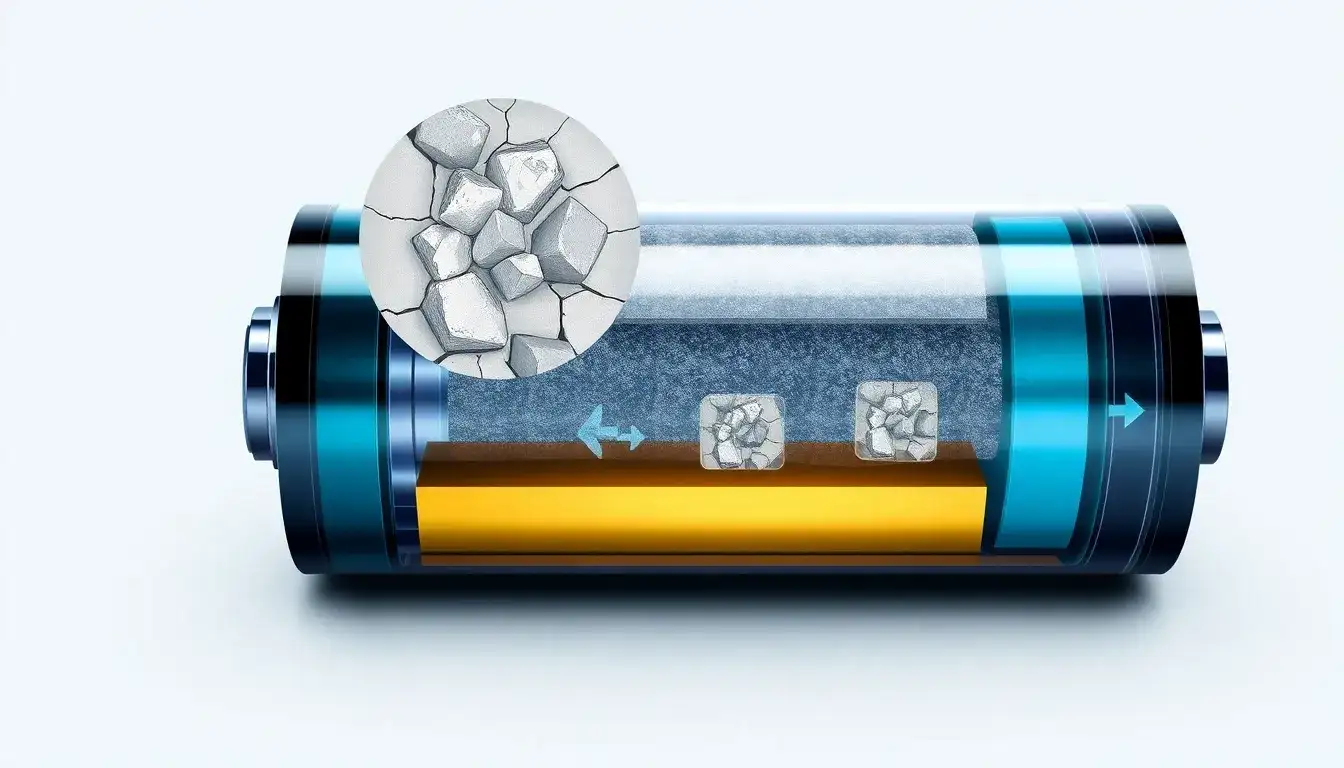
Lithium plating negatively impacts electric vehicle (EV) battery longevity primarily by causing capacity loss, increasing internal resistance, and compromising safety, which together accelerate battery aging and degrade performance over time.
How Lithium Plating Occurs and Its Effects on Battery Longevity
- Mechanism: Lithium plating occurs when lithium ions deposit as metallic lithium on the battery’s anode surface instead of intercalating properly into the anode during charging. This often happens under conditions such as fast charging, low temperatures, or high charge rates.
- Capacity Loss: When lithium plates on the anode, it consumes active lithium and electrolyte as the battery attempts to reform the protective surface electrolyte interphase (SEI) layer damaged by plating. This reduces the amount of cyclable lithium, leading to a permanent loss of battery capacity beyond normal aging processes.
- Increased Internal Resistance: The growth of lithium plating and thickening of the SEI layer raise the internal resistance of the battery, which diminishes its efficiency and power output. This effect further contributes to reduced driving range and performance degradation in EVs.
- Safety Risks: Metallic lithium can grow into dendrites—needle-like structures that may pierce the separator between the battery’s anode and cathode. Such dendrite formation can cause internal short circuits, leading to potential thermal runaway, fires, or explosions, posing serious safety risks.
- Irreversible Damage: Lithium that loses electrical contact and becomes trapped under the SEI layer turns inert, which exacerbates capacity loss since this lithium can no longer participate in charge-discharge cycles.
Impact on EV Battery Performance and Lifespan
- Lithium plating accelerates degradation beyond the typical aging factors such as repeated cycling, temperature, and depth of discharge. As a result, EV batteries exposed to plating tend to have notably shorter lifespans and faster capacity fade, reducing effective driving range.
- While typical EV batteries last 8 to 15 years, lithium plating can significantly shorten this timeframe by causing more rapid capacity decline and increasing the risk of failure.
- Fast charging can increase the risk of lithium plating, but the impact on battery longevity is nuanced; occasional fast charging may cause minor capacity loss, whereas continuous extreme fast charging could worsen plating effects unless battery thermal management and charging algorithms are optimized.
Summary
Lithium plating reduces EV battery longevity by:
- Consuming active lithium and electrolyte, causing capacity loss
- Increasing internal resistance, which lowers power and efficiency
- Leading to dendrite formation and safety hazards
- Causing irreversible loss of lithium and damage to the anode’s protective layer
Together, these effects degrade battery health, shorten useful life, and can cause premature failure if not managed or detected early.
Original article by NenPower, If reposted, please credit the source: https://nenpower.com/blog/how-does-lithium-plating-affect-ev-battery-longevity/

