

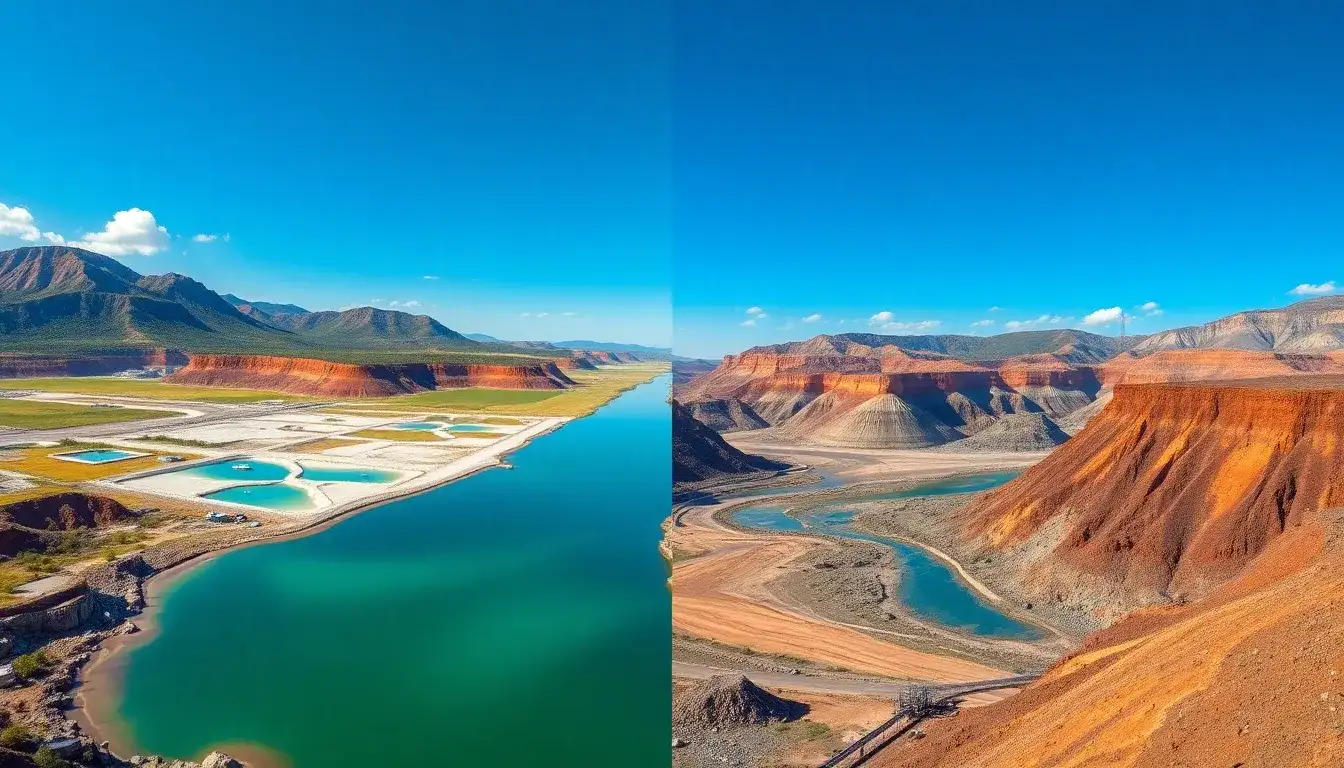
Lithium mining’s environmental impact is significant but differs in nature and scale from other mineral extraction processes, with both advantages and challenges when compared to fossil fuel and other metal mining.
Environmental Impact of Lithium Mining
Water usage and contamination:
Lithium extraction, especially from brine deposits (underground saltwater), requires massive quantities of water—about 500,000 liters per ton of lithium—leading to groundwater depletion and risks to local water sources and biodiversity, particularly in arid regions like Chile’s Atacama Desert and California’s Salton Sea area. The evaporation ponds used in brine extraction can disrupt local ecosystems and pollute water with chemicals like sulfuric acid and sodium hydroxide.
Carbon emissions:
Mining lithium emits roughly 15 tons of CO2 per ton of lithium mined. Hard rock lithium mining is about three times more carbon intensive than lithium extracted from brine. Much of the carbon footprint results from refining processes that follow mining. While lithium mining emissions are substantial, they are still significantly lower than the carbon emissions from fossil fuel extraction and combustion, which total around 34 billion tons CO2e annually.
Land disruption and habitat damage:
Hard rock lithium mining causes significant land disturbance and generates waste tailings. Both hard rock and brine mining disturb habitats, threaten plant and animal species—including flamingos in South America—and may cause deforestation and soil degradation.
Chemical contamination:
Chemicals used in lithium extraction can penetrate soil and water, poisoning ecosystems and endangering species and local communities’ health.
Comparison to Other Mineral Extraction
| Aspect | Lithium Mining | Fossil Fuel Mining (Coal, Oil) | Cobalt Mining |
|---|---|---|---|
| Carbon emissions | ~15 tons CO2/ton lithium (mining + refining) | Much higher; ~34 billion tons CO2e globally | Lower than fossil fuels but significant (~1.5 million tons CO2e) |
| Water usage | Very high, especially brine extraction (huge freshwater demand) | Variable, often lower per unit extracted but can cause pollution | Moderate; varies with method (surface or underground) mining |
| Land disruption | High in hard rock mining; brine mining partly land-intensive | Very high with coal strip mining and oil extraction infrastructure | Significant surface and underground mining impacts |
| Chemical pollution | Sulfuric acid and other chemicals cause soil and water contamination | Pollution from spills, runoff, and emissions | Toxic waste management challenges |
| Ecological impact | Threatens local species, biodiversity loss, damages protected ecosystems | Large-scale ecosystem destruction, greenhouse gas release | Often controversial due to poor labor and environmental conditions |
| Social impact | Indigenous displacement and community disruption in South America | Often displaced communities, pollution-related health risks | Social and ethical concerns, especially in DRC |
Summary
- Lithium mining has a lower greenhouse gas footprint than fossil fuel mining and combustion but still generates significant CO2 emissions, land disturbance, water depletion, and chemical pollution.
- Compared to cobalt mining, lithium extraction’s environmental footprint is somewhat similar in concerns like water use and pollution but cobalt mining raises additional social and labor issues due to concentration in the Democratic Republic of Congo.
- The environmental costs of lithium mining are exacerbated by intensive water use and pollution risks in sensitive ecosystems, while its carbon footprint and land disruption are lower than or comparable to coal mining before combustion.
- Despite these impacts, lithium is critical for renewable energy technologies like electric vehicles and grid storage, which ultimately reduce emissions over their life cycle relative to fossil fuel use.
- Sustainable lithium mining requires tighter environmental regulations, cleaner extraction technologies, recycling of lithium batteries, and development of alternative battery chemistries to reduce these adverse effects.
In conclusion, lithium mining presents significant environmental challenges, notably in water use and pollution, but it generally has a lower carbon and ecological impact compared to fossil fuel extraction. Its full life-cycle benefits in clean energy transition must be balanced against these localized environmental and social impacts.
Original article by NenPower, If reposted, please credit the source: https://nenpower.com/blog/how-does-lithium-mining-compare-to-other-mineral-extraction-processes-in-terms-of-environmental-impact/

