

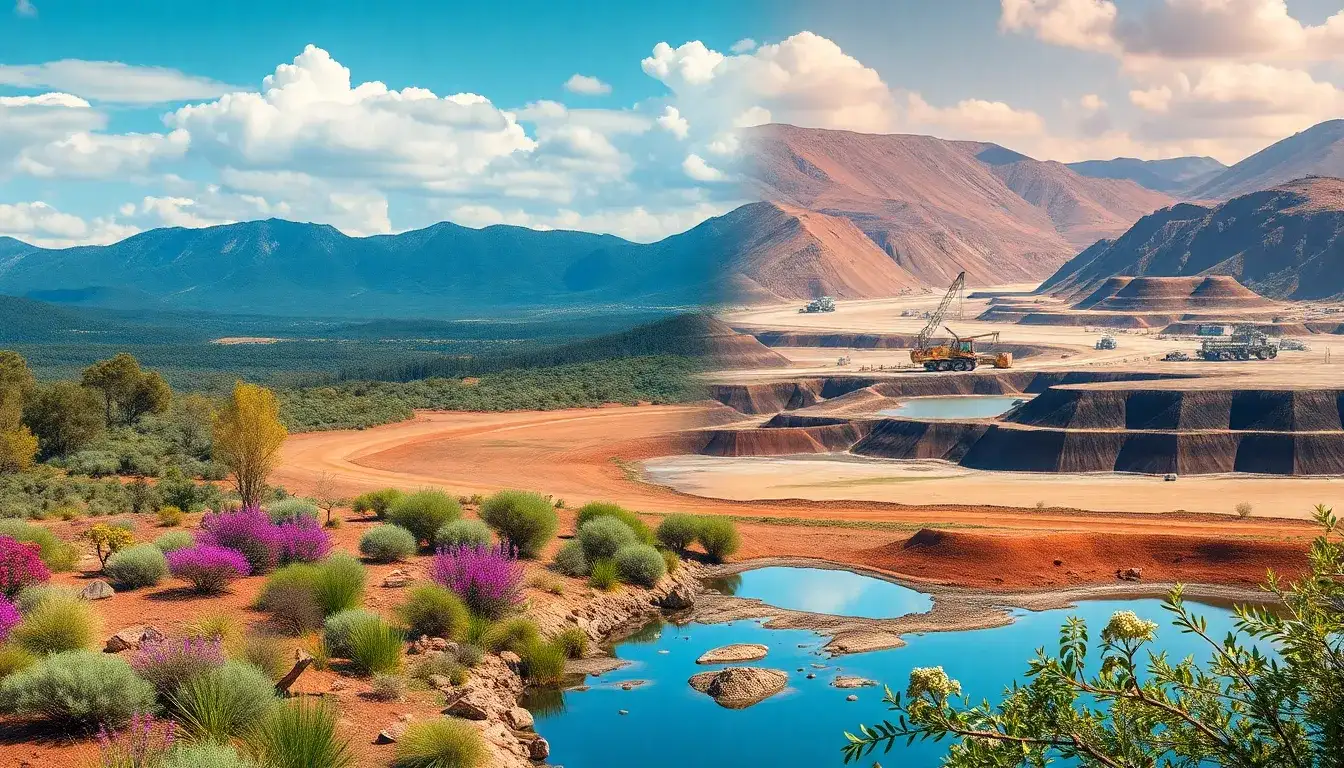
Lithium Mining and its Threats to Biodiversity
Lithium mining poses significant threats to local biodiversity through multiple interconnected mechanisms:
Water Depletion and Pollution
Lithium extraction often requires massive water use, particularly in brine-based operations. Pumping saltwater to the surface for evaporation depletes groundwater reserves, which can dry out wetlands and reduce water availability for flora and fauna. Additionally, toxic metals from mining processes can contaminate water sources, affecting aquatic life and species dependent on these habitats.
Habitat Destruction and Species Decline
Mining activities directly destroy ecosystems, particularly in sensitive regions like the Andean salt flats. For example, lithium projects in Argentina and Chile threaten wetlands that support Andean flamingos, pumas, vicuñas, and endangered chinchillas. A 30-year study in Chile’s Salar de Atacama found lithium mining correlated with declines in two flamingo species, linking reduced surface water and habitat disruption to lower populations.
Threats to Indigenous Lands and Biodiversity
Approximately 79% of U.S. lithium deposits lie within 35 miles of Native American reservations, while Andean mining overlaps Indigenous territories. Development often proceeds without Free, Prior, and Informed Consent (FPIC), risking irreversible damage to culturally significant landscapes and associated biodiversity. These regions often harbor unique ecosystems, such as microbial mats and stromatolites, which face destruction from mining.
Climate Change Interactions
In regions like the Lithium Triangle, climate change exacerbates water scarcity, while mining intensifies these pressures. Combined, they reduce primary productivity and surface water, further stressing species like flamingos that rely on these resources.
Key examples:
- Andean flamingos: Population declines linked to lithium mining and water loss.
- Microbial ecosystems: Rare stromatolites and microbialites in Argentina’s wetlands face habitat destruction.
- Groundwater-dependent species: Aquatic and semi-aquatic organisms suffer from contaminated or depleted water sources.
Mitigation requires stricter water management, FPIC enforcement, and reduced mining expansion in ecologically critical zones.
Original article by NenPower, If reposted, please credit the source: https://nenpower.com/blog/how-does-lithium-mining-affect-local-biodiversity/

