

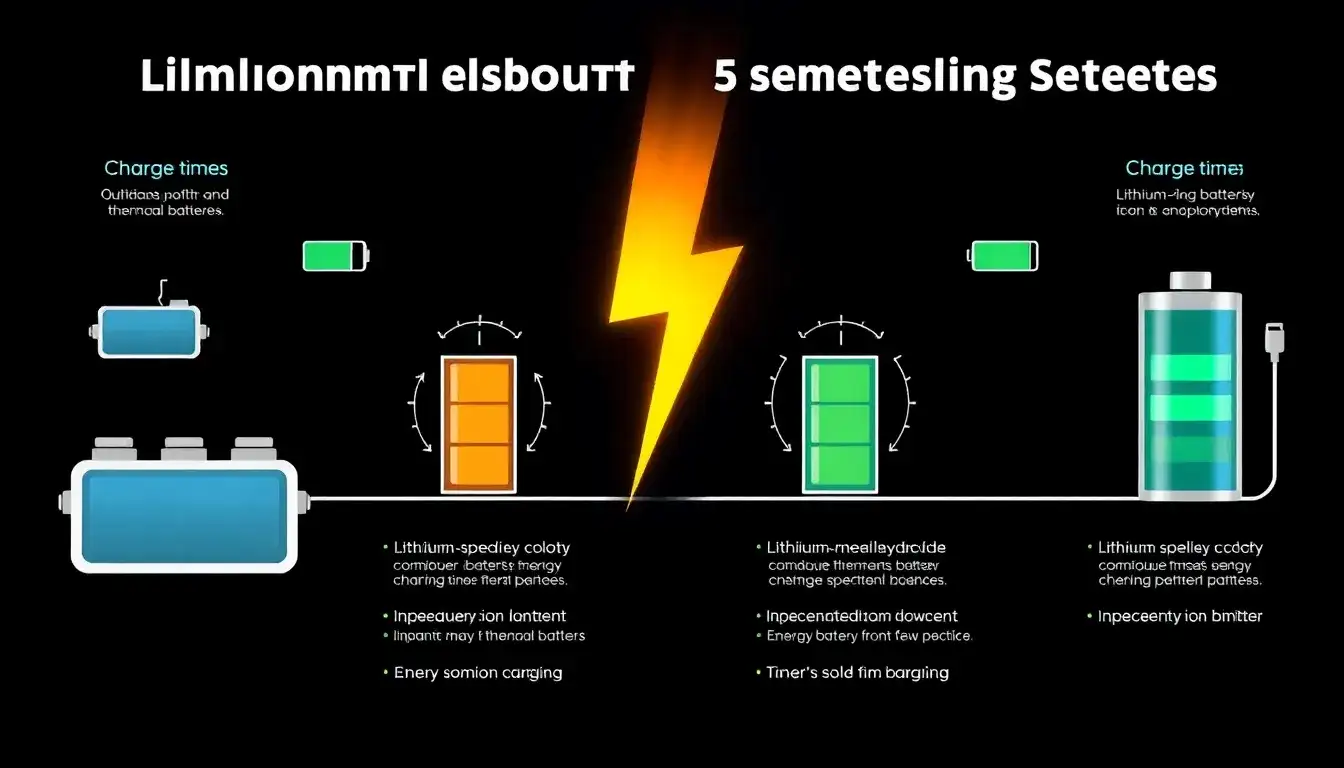
Charging Speed by Battery Type
Lithium-ion (Li-ion)
- C-rate range: Typically 0.5C–1C (0.5–1 hours for full charge), with specialized ultra-fast designs reaching 1–10C (10–60 minutes) for partial charges.
- Key advantages:
- Modern Li-ion cells (e.g., NMC chemistry) charge faster than lead-acid alternatives, with some reaching 80% charge in under 15 minutes using advanced thermal management.
- Solid-state lithium-metal designs (e.g., QuantumScape) aim for 1C rates with minimal degradation, enabling 80% charge in ~15 minutes while retaining 80% capacity after 800 cycles.
- Trade-offs:
- Fast charging (especially above 1C) accelerates degradation, reducing cycle life from 3,000+ cycles (slow charging) to significantly fewer.
- Requires precise voltage/current control to avoid overheating.
Lead-Acid
- C-rate range: 0.1C (14 hours for full charge).
- Limitations:
- Charging above 0.3C risks gas buildup and permanent damage.
- Slower charge acceptance compared to Li-ion, even with “opportunity charging.”
Nickel-Based (NiCd, NiMH)
- C-rate range:
- Rapid charging: 0.3–0.5C (3–6 hours).
- Fast charging: Up to 1C (1+ hours), but heat generation limits practicality.
- Drawbacks:
- Lower energy density than Li-ion.
- Memory effect (NiCd) and voltage depression reduce efficiency over time.
Technology-Specific Variations
- LFP vs. NMC Li-ion:
- LFP (LiFePO₄) typically charges at 0.5–0.8C (1–2 hours), prioritizing safety and cycle life.
- NMC (Lithium Nickel Manganese Cobalt Oxide) often supports higher C-rates (e.g., 1C), enabling faster charging at the cost of thermal stability.
- Solid-State Innovations:
- Ceramic electrolyte separators (e.g., QuantumScape) enable lithium-metal anodes, reducing bottlenecks for fast-charging Li-ion designs.
Performance Trade-offs
| Feature | Li-ion | Lead-Acid | NiCd/NiMH |
|---|---|---|---|
| C-rate | 0.5–10C | 0.1C | 0.3–1C |
| Cycle Life | 500–3,000+ | 200–500 | 500–1,000 |
| Energy Density | High | Low | Medium |
| Safety | Requires BMS | Acid leaks | Overheat risk |
While Li-ion outperforms older chemistries in speed and energy density, maximizing charge rates without compromising lifespan remains an active research area, particularly for electric vehicles.
Original article by NenPower, If reposted, please credit the source: https://nenpower.com/blog/how-does-lithium-ion-battery-technology-compare-to-other-types-in-terms-of-charging-speed/

