

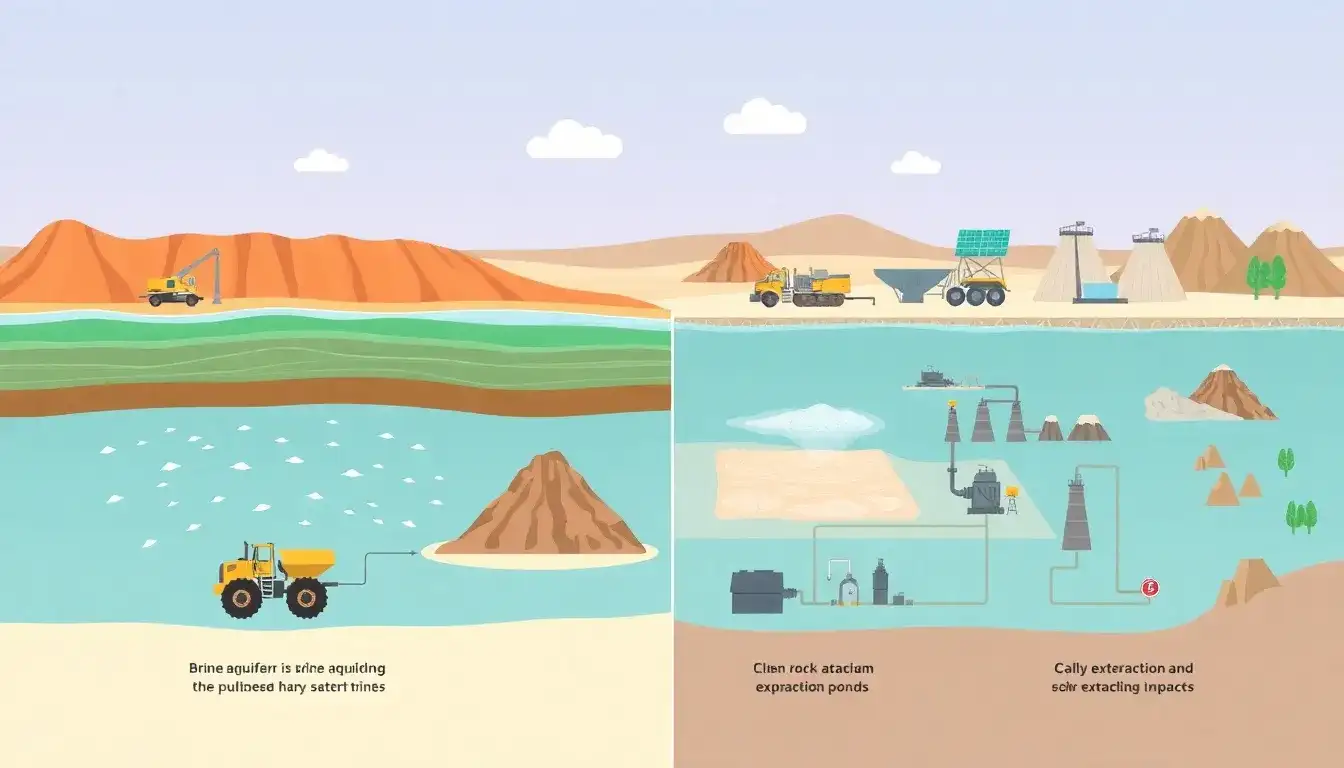
Lithium extraction from brine aquifers, particularly using Direct Lithium Extraction (DLE), differs significantly from other methods in several key aspects:
Comparison with Traditional Methods
1. Solar Evaporation
- Efficiency: Traditional solar evaporation is slow and inefficient, taking 1 to 2 years to complete and recovering only 20-40% of the lithium from brine. In contrast, DLE can recover up to 95% of lithium from brine more quickly.
- Environmental Impact: Solar evaporation requires large land areas (about 65 acres per operation) and consumes massive amounts of water, exacerbating water scarcity in arid regions. DLE minimizes environmental impact by reinjecting spent brine into aquifers.
- Energy Use: Solar evaporation relies on natural evaporation by sunlight, which is energy-free but slow. DLE requires some energy but is more efficient overall.
2. Advanced Technologies
- Membrane Filtration: This technology uses advanced membranes to filter out lithium, reducing energy-intensive steps and minimizing environmental impact. Unlike DLE, it doesn’t involve resin or adsorption materials but is more precise in its lithium selectivity.
- Ion-Exchange Resins: Similar to DLE, ion-exchange resins are used to selectively attract and bind lithium ions from brine. However, DLE integrates this process with a broader system that includes reinjection of spent brine.
- Solvent Extraction: This method uses specific solvents to separate lithium from brine, especially effective in brines with impurities. It offers high selectivity but may have different environmental implications compared to DLE.
3. Electrochemical Processes
- Stanford’s Electrochemical Process: This new technology uses electricity to move lithium through a solid-state electrolyte membrane. It requires less electricity than current methods and offers near 100% selectivity for lithium. Unlike DLE, it primarily focuses on low-energy consumption and high purity.
- FePO4 Cathode Process: Under an electrochemical process, lithium ions are intercalated into a cathode, forming a lithium compound. This method is distinct from DLE in its use of specific cathode materials.
In summary, lithium extraction from brine aquifers using DLE stands out for its efficiency, minimal environmental impact, and the ability to reinject spent brine, making it a more sustainable option compared to traditional methods like solar evaporation. Advanced technologies like membrane filtration and electrochemical processes offer different advantages, such as precision and low energy consumption, but operate on different principles than DLE.
Original article by NenPower, If reposted, please credit the source: https://nenpower.com/blog/how-does-lithium-extraction-from-brine-aquifers-differ-from-other-methods/

