

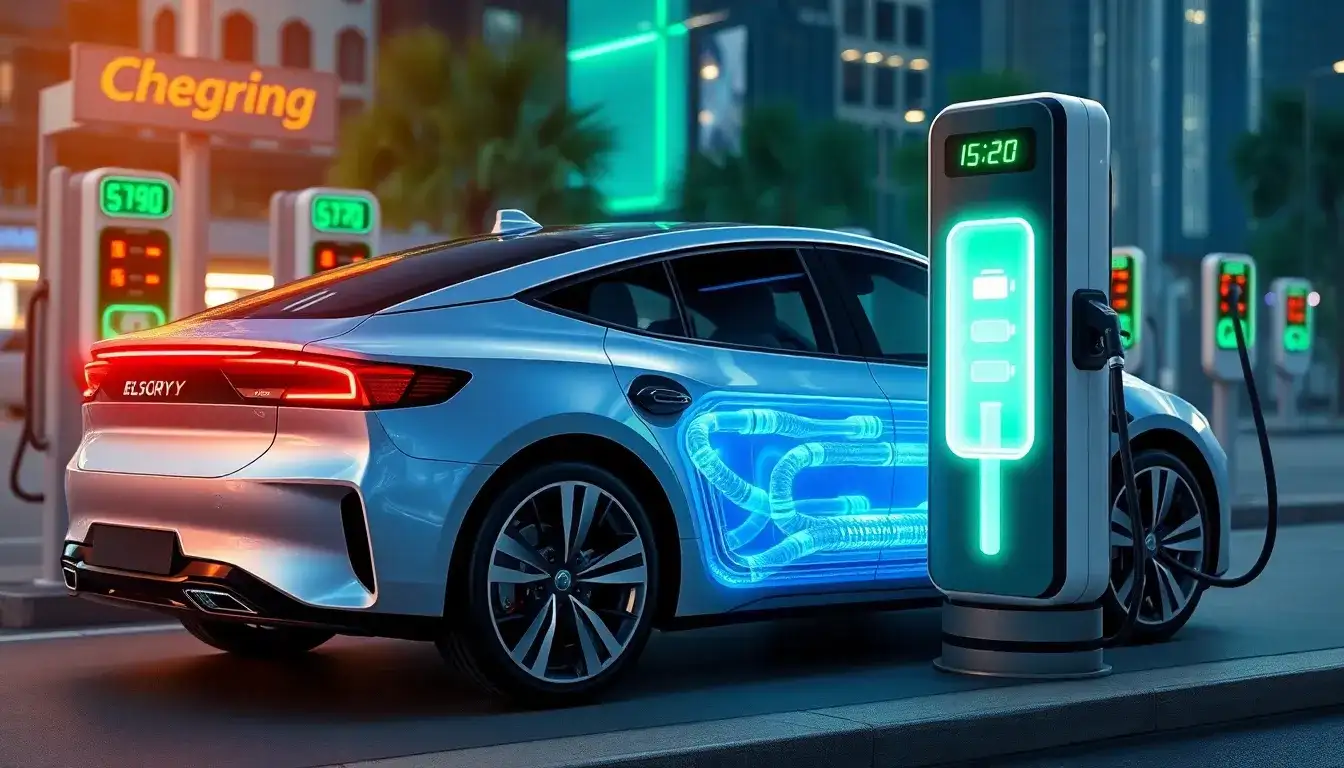
Liquid cooling enhances fast charging efficiency in EVs through several key mechanisms:
1. Heat dissipation capacity
Liquid-cooled systems manage extreme temperatures generated during high-power charging (150+ kW), where components can exceed 200°C (392°F). The water pump-driven coolant circulation actively removes heat from critical components like charging guns and internal electronics, preventing thermal throttling that would otherwise limit charging speeds.
2. System-wide thermal management
The cooling system extends from the charger to the cable and connector, maintaining stable temperatures across the entire charging path. This enables higher sustained power delivery compared to air-cooled systems, which struggle with localized hotspots.
3. Power density improvements
Liquid cooling allows more compact designs by replacing bulky air-cooling components. This increased power density supports ultra-high 500A charging currents, enabling 10-minute fast-charging sessions while maintaining component integrity.
4. Charger longevity
By keeping operational temperatures within optimal ranges, liquid cooling reduces wear on electronic components and charging connectors. This extends equipment lifespan while maintaining consistent charging performance over time.
The technology directly addresses the thermal limitations of traditional air-cooled systems, enabling faster, safer charging without compromising component reliability. This positions liquid cooling as critical infrastructure for next-generation EV charging networks.
Original article by NenPower, If reposted, please credit the source: https://nenpower.com/blog/how-does-liquid-cooling-improve-fast-charging-efficiency-in-evs/

