

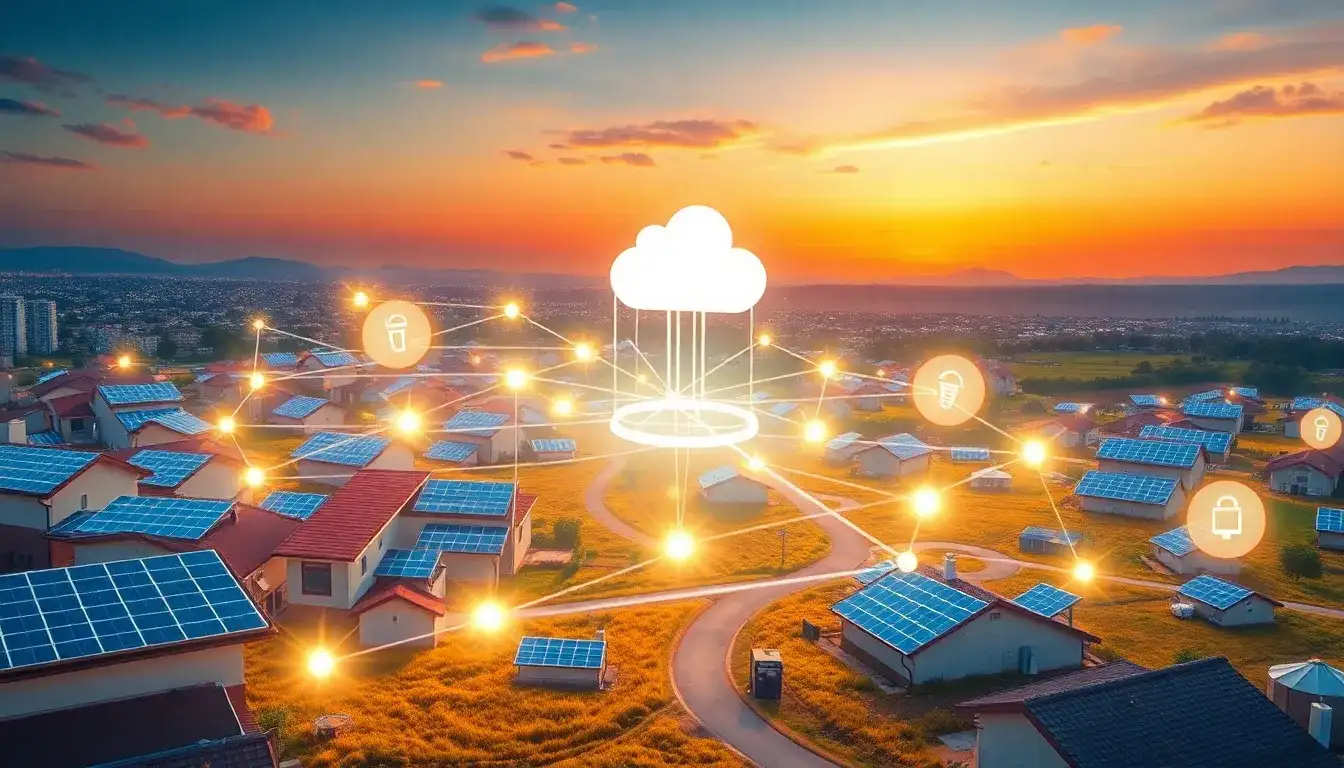
IoT technology plays a pivotal role in handling data from multiple solar panels by enhancing efficiency, monitoring, and maintenance. Here’s how it works:
Key Components of IoT in Solar Panel Data Handling
- IoT Sensors and Data Collection:
- Remote Monitoring: IoT sensors are installed on solar panels and inverters to collect data on vital parameters such as energy production, panel temperature, voltage, and current.
- Data Transmission: This data is transmitted wirelessly to a central cloud-based platform for real-time monitoring and analysis.
- Data Analytics and Insights:
- Performance Optimization: Advanced analytics algorithms analyze the data to identify trends, anomalies, and potential issues. This helps in optimizing the performance of each solar panel by detecting inefficiencies early on.
- Predictive Maintenance: Historical data is used to predict potential failures or underperformance, allowing for scheduled maintenance and reducing downtime.
- Energy Management and Control:
- Real-time Control: Operators can monitor and control solar panels remotely, addressing issues promptly and ensuring optimal energy output.
- Energy Consumption Patterns: IoT integrates with smart grid systems to provide insights into energy consumption patterns, allowing for better energy management.
- Scalability and Integration:
- IoT solutions can handle data from multiple solar panels across different locations, including remote and urban areas, ensuring efficient management of large solar systems.
Overall, IoT technology transforms traditional solar panel monitoring by providing real-time insights, improving efficiency, and reducing maintenance costs through predictive analytics.
Original article by NenPower, If reposted, please credit the source: https://nenpower.com/blog/how-does-iot-technology-handle-data-from-multiple-solar-panels/

