

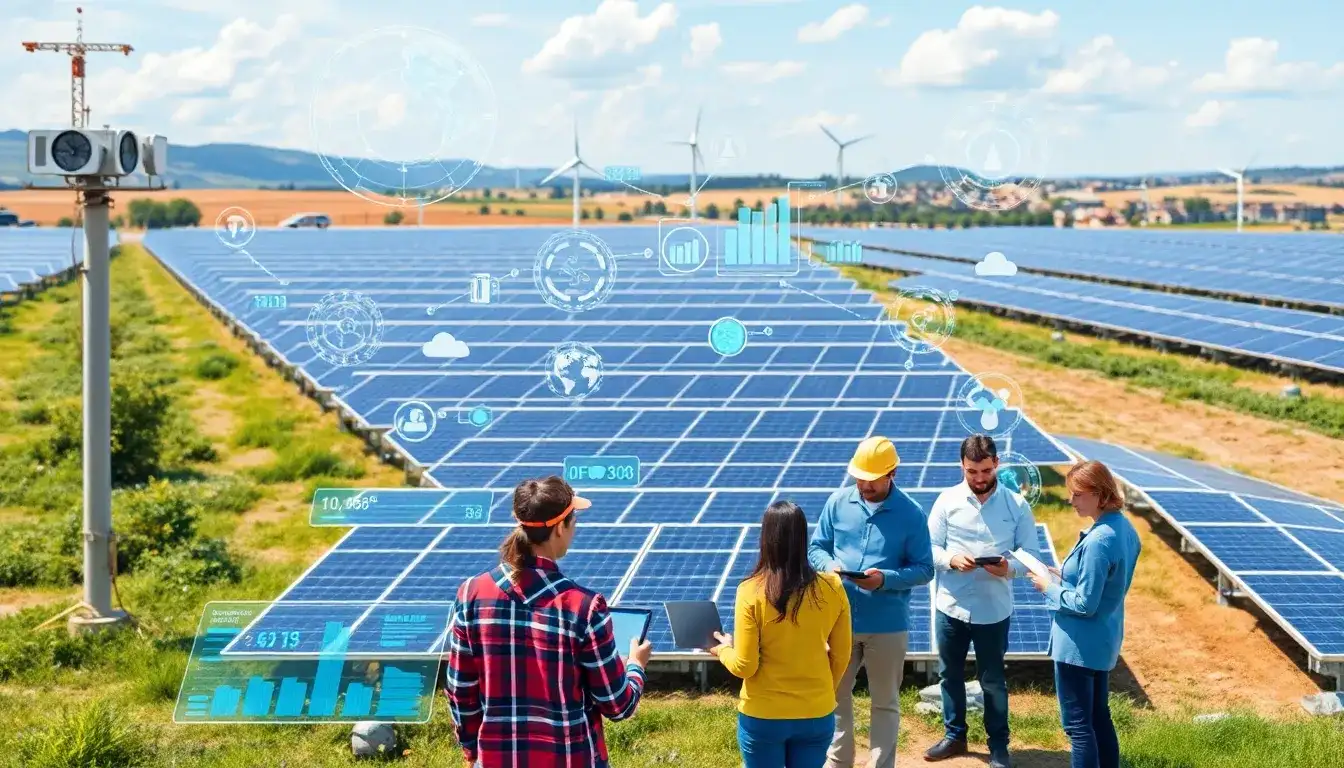
IoT integration significantly improves the overall return on investment (ROI) of solar energy investments by enhancing system efficiency, reducing maintenance costs, and enabling better operational management.
Key Impacts of IoT on Solar Energy ROI
1. Enhanced Efficiency and Energy Production
IoT-enabled solar systems use real-time data collection, smart sensors, and advanced analytics to optimize the performance of solar panels and related components. This optimization can boost solar installation efficiency by up to 20%, increasing the amount of energy generated and therefore the financial returns from the system.
2. Reduced Maintenance Costs and Downtime
IoT systems support predictive maintenance by continuously monitoring equipment health and alerting operators to potential faults before they escalate. This proactive approach can reduce maintenance costs by as much as 30% and minimize system downtime, ensuring continuous energy production and protecting revenue streams.
3. Extended Lifespan of Solar Components
Through precise monitoring and timely interventions enabled by IoT, the wear and tear on solar equipment can be minimized, effectively extending the lifespan of critical components and delaying costly replacements, which contributes to better long-term ROI.
4. Optimized Energy Management
IoT facilitates sophisticated energy management by optimizing energy storage and consumption in real-time. This reduces energy waste and maximizes the use of generated solar electricity, improving overall cost-effectiveness and accelerating the payback period for solar investments.
5. Improved Grid Integration and Stability
IoT-powered solar systems can integrate more intelligently with smart grids, enhancing grid stability and enabling better forecasting and resource allocation. This supports more resilient and sustainable energy networks, increasing the value of solar assets in evolving energy markets.
Summary Table of IoT Benefits on Solar ROI
| Benefit | Impact on ROI |
|---|---|
| Increased system efficiency | Up to 20% more energy production |
| Predictive maintenance | Maintenance costs reduced by up to 30% |
| Reduced downtime | Continuous energy generation |
| Extended equipment lifespan | Lower replacement costs |
| Optimized energy consumption | Reduced waste and faster ROI |
| Enhanced grid integration | Improved system value and reliability |
In conclusion, IoT integration transforms solar energy systems into smarter, more reliable, and cost-effective assets, substantially improving the overall ROI of solar energy investments and making solar power economically more viable for residential and commercial users alike.
Original article by NenPower, If reposted, please credit the source: https://nenpower.com/blog/how-does-iot-integration-impact-the-overall-roi-of-solar-energy-investments/

