

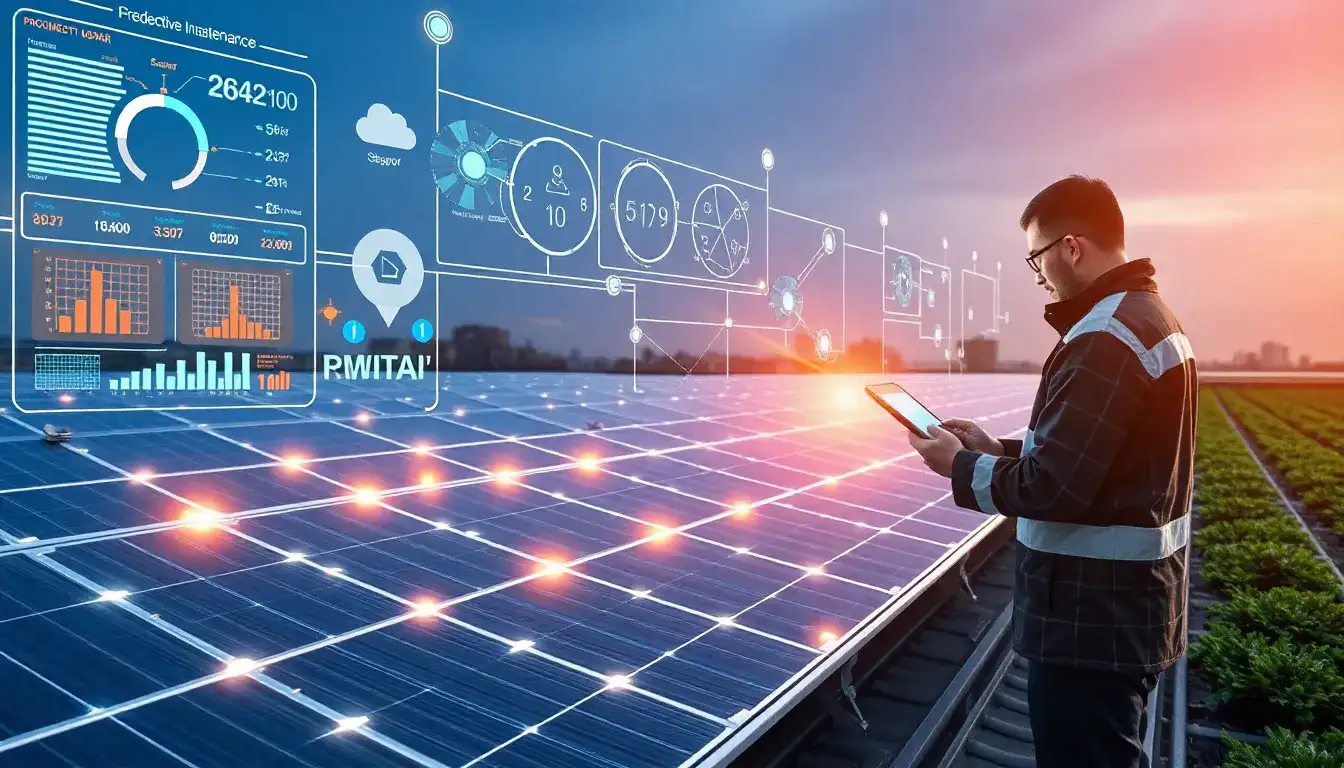
IoT technology plays a crucial role in predicting maintenance needs for solar panels by integrating various sensors and data analytics tools. Here’s how it enhances predictive maintenance:
Key Features of IoT in Solar Panel Maintenance
- Remote Monitoring and Data Collection:
- IoT Sensors: These are installed on solar panels, inverters, and other components to collect real-time data on energy production, temperature, voltage, and current.
- Data Analytics: The collected data is analyzed to provide performance insights, enabling early detection of potential issues.
- Performance Optimization and Issue Detection:
- Real-time Monitoring: Continuously tracks performance metrics to identify issues like shading, dirt buildup, or faulty panels.
- Predictive Analysis: Uses data analytics to predict when components might fail, allowing for scheduled maintenance to avoid costly repairs and downtime.
- Predictive Maintenance Benefits:
- Extended System Lifespan: By addressing potential issues early, IoT helps extend the operational life of solar panels, typically expected to last 25-30 years.
- Cost Reduction: Predictive maintenance can prevent up to 70% of common failures, leading to a 25-30% reduction in maintenance costs.
- AI Integration:
- Advanced Predictions: Combining IoT with AI enhances predictive capabilities, enabling more accurate forecasts of equipment failures and optimizing maintenance schedules.
- User Interface and Alerts:
- Real-Time Alerts: Users receive alerts on computers or smartphones, providing immediate feedback on system performance and potential issues.
This integration of IoT into solar panel systems transforms them into self-diagnosing systems, ensuring optimal performance, reduced downtime, and extended lifespan.
Original article by NenPower, If reposted, please credit the source: https://nenpower.com/blog/how-does-iot-help-in-predicting-maintenance-needs-for-solar-panels/

