

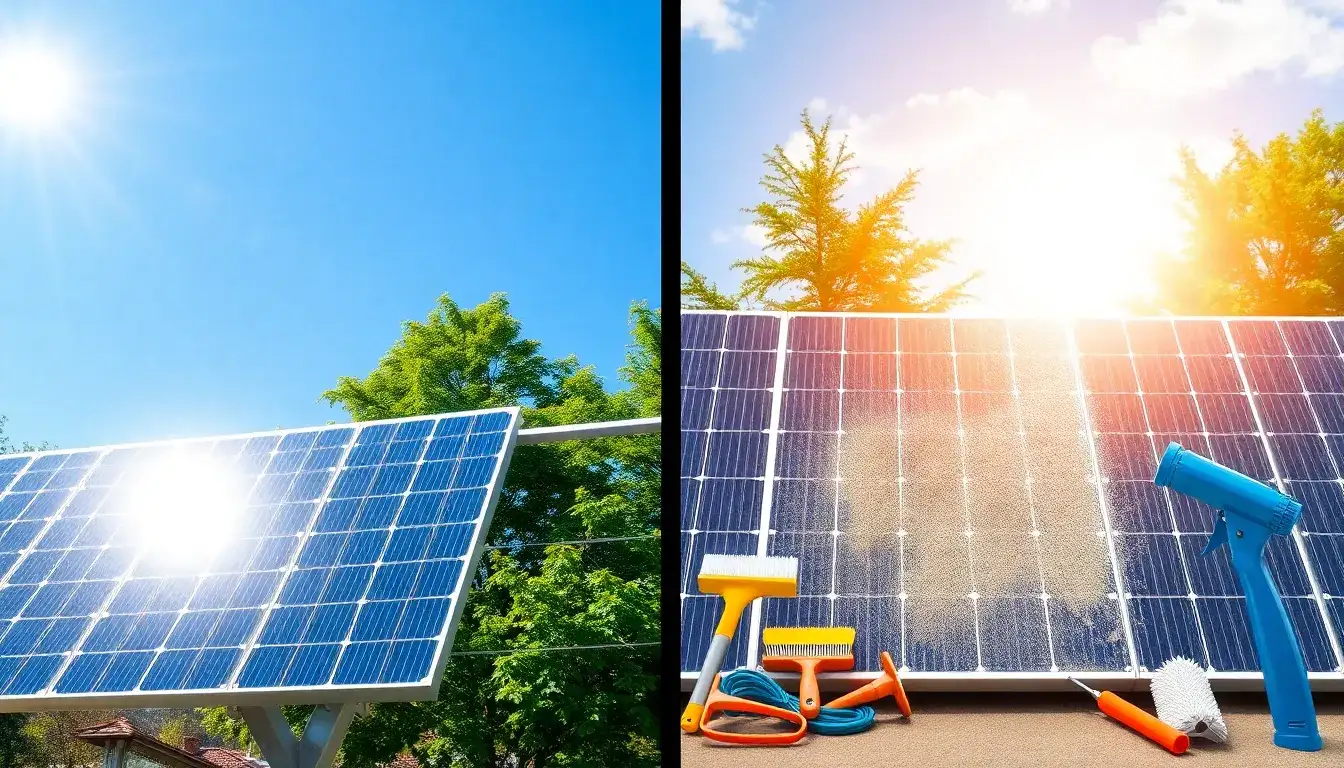
IoT (Internet of Things) technology effectively handles issues like shading and dirt buildup on solar panels by leveraging advanced sensors and smart algorithms to monitor and analyze various parameters in real-time. Here’s how IoT addresses these challenges:
Handling Shading
- Real-time Monitoring: IoT systems continuously monitor the power output of solar panels, allowing for immediate detection of any decrease in efficiency, which might be caused by shading.
- Data Analysis: Advanced algorithms analyze the data to identify patterns that indicate shading issues, such as reduced output during specific times of the day when shadows are likely to occur.
- Automated Alerts: Users receive alerts if shading negatively impacts performance, prompting them to assess and possibly adjust the panel orientation or trim nearby foliage.
Handling Dirt Buildup
- Environmental Sensors: IoT systems often include environmental sensors that track conditions like dust accumulation on the panels.
- Performance Tracking: The system monitors performance over time and detects subtle changes that might indicate dirt buildup affecting efficiency, such as reduced power output despite favorable weather conditions.
- Predictive Maintenance: Based on continuous monitoring, IoT systems can predict when cleaning is necessary to maintain optimal performance, helping prevent unnecessary strain on the system.
- Automated Alerts for Cleaning: Similar to shading, IoT technology can send automated alerts when dust accumulation reaches a certain threshold, prompting scheduled cleaning to maintain efficiency.
By integrating IoT technology into solar panel systems, both shading and dirt buildup can be effectively managed, ensuring higher efficiency and longevity of the solar installation.
Original article by NenPower, If reposted, please credit the source: https://nenpower.com/blog/how-does-iot-handle-issues-like-shading-and-dirt-buildup-on-solar-panels/

