

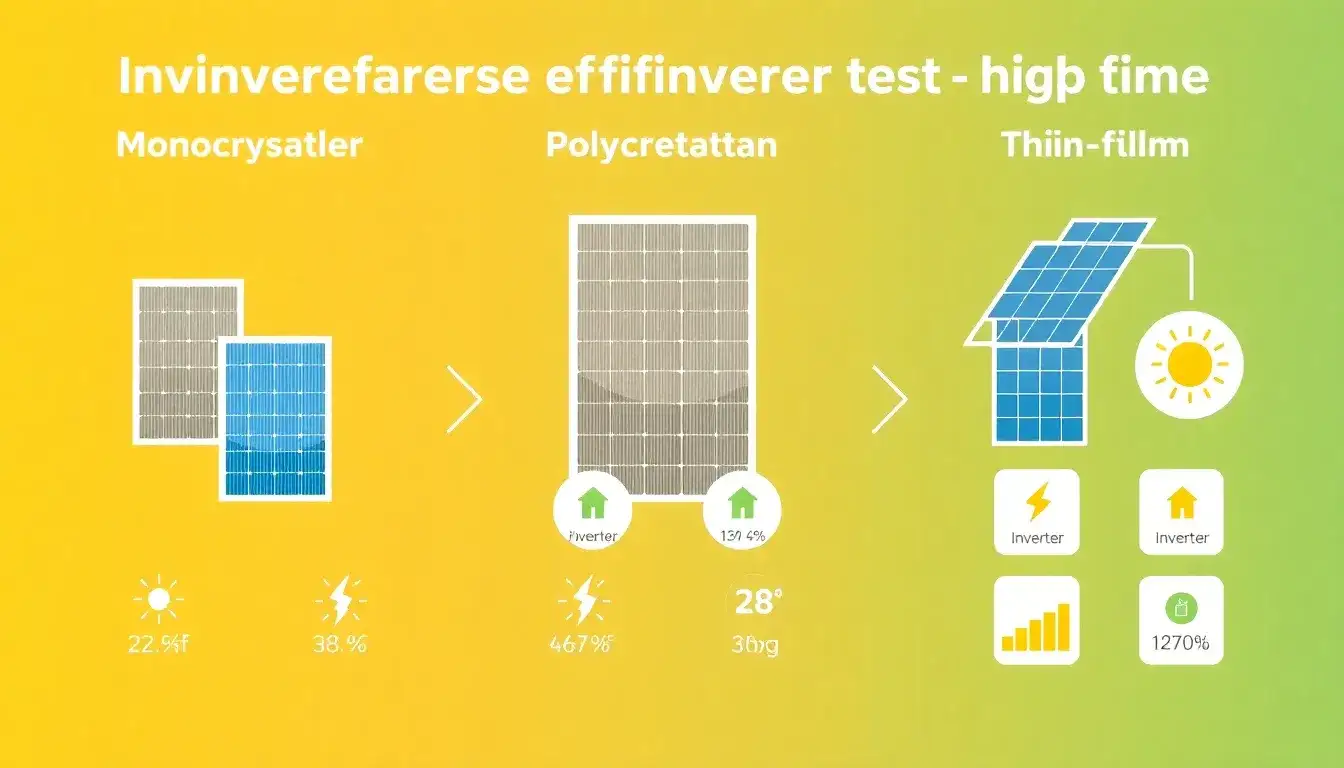
Inverter efficiency is not directly tied to the type of solar panels used but rather to the inverter’s design and how well it is matched to the solar system’s total output. However, the efficiency of a solar system can be influenced by the compatibility and setup of both the solar panels and the inverter.
Inverter Efficiency Basics
Inverter efficiency refers to how effectively an inverter converts DC power from solar panels into AC power usable by homes and businesses. High-quality inverters typically have efficiencies between 95% and 98%. This means that around 2% to 5% of the DC power input is lost as heat during the conversion process.
Inverter Types and Efficiency Considerations
There are several types of inverters, including string inverters, microinverters, and power optimizers. Each has its own efficiency profile:
- String Inverters: These are standard and cost-effective but may not be optimal if solar panels face different directions or are shaded. They can suffer from reduced overall production if one panel is shaded or damaged.
- Microinverters: These are highly efficient as they optimize each panel individually, allowing for peak performance even if some panels are shaded. They are more expensive but provide better monitoring of panel performance.
- Power Optimizers: These balance efficiency and cost by optimizing the DC output before sending it to a central inverter, providing better performance than string inverters under variable conditions.
Variation with Solar Panels
The efficiency of a solar system, including the inverter, can be affected by how well the solar panels match the inverter’s specifications. For instance, if solar panels are slightly oversized (up to 133% of the inverter’s capacity), they can provide better energy production during early morning and late afternoon when sunlight is weaker. However, this may lead to power clipping during peak sun hours. The type of solar panels (e.g., monocrystalline versus polycrystalline) does not directly impact inverter efficiency but affects overall system performance due to differences in power output and efficiency under various conditions.
Inverter Sizing and Efficiency
Proper sizing of the inverter to the solar panel array is crucial for maximizing efficiency. If an inverter is under-sized, it may not utilize all the energy generated by the panels, leading to efficiency losses. Conversely, an over-sized inverter may be more efficient under lower irradiance conditions but may not be cost-effective.
Conclusion
Inverter efficiency does not vary directly with the type of solar panels but is influenced by how well the panels and inverter are matched, the type of inverter used, and the system’s overall configuration. Proper inverter sizing and using advanced technologies like microinverters or power optimizers can improve system efficiency under diverse conditions.
Original article by NenPower, If reposted, please credit the source: https://nenpower.com/blog/how-does-inverter-efficiency-vary-with-different-types-of-solar-panels/

