

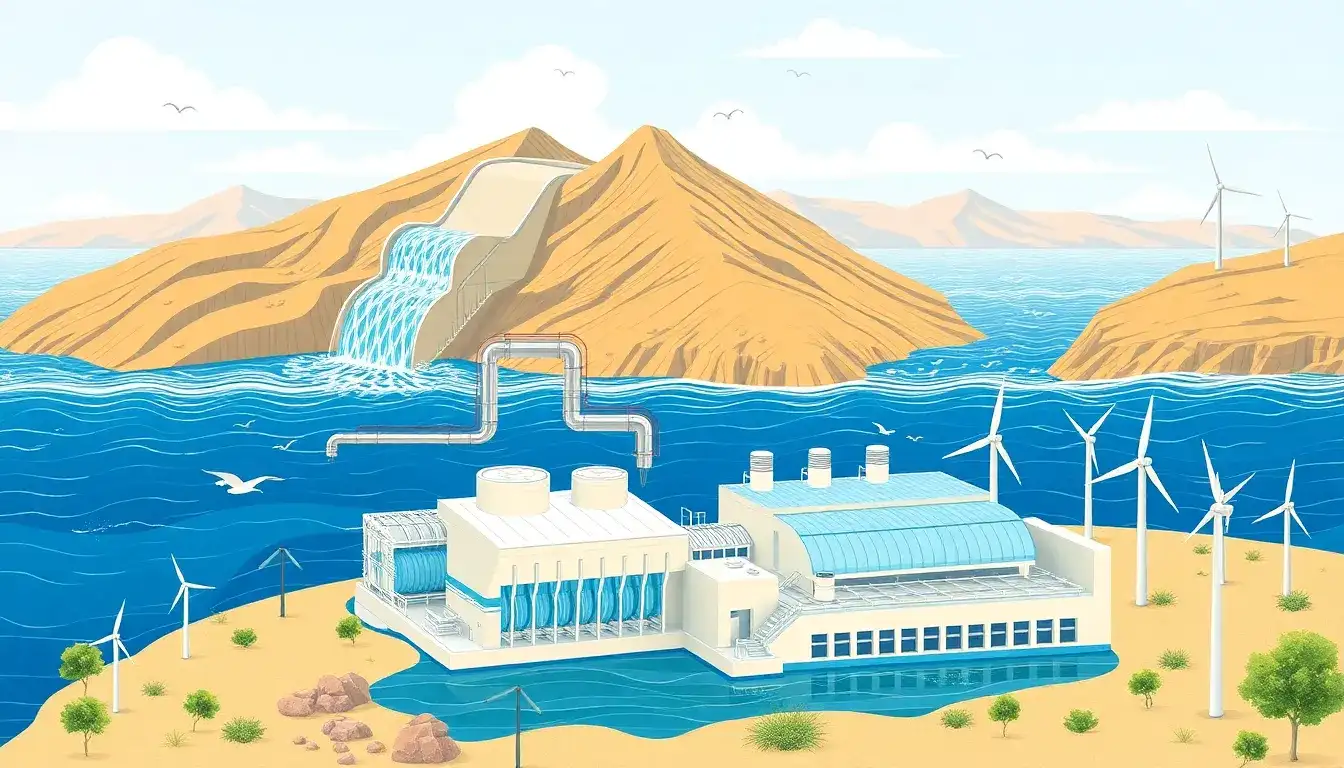
Integrated pumped storage and desalination combines energy storage with desalination to address both energy and freshwater needs, particularly in coastal regions. This approach is exemplified by systems like the Integrated Pumped Hydro Reverse Osmosis System (IPHROS) and Oceanus’s Hybrid Pumped-Storage Desalination Facility. Here’s how it works:
Overview of the Process
- Pumping Seawater to a Reservoir: Seawater is pumped to a high-altitude reservoir using renewable energy sources, such as solar or wind power, during off-peak hours when energy costs are typically lower.
- Generating Power and Producing Freshwater:
- When energy demand is high, the stored seawater is released to generate electricity through conventional hydroelectric turbines. This process can provide rapid response times to stabilize the grid during peak demand periods.
- A portion of the seawater is diverted to a reverse osmosis desalination facility.
- Reverse Osmosis Desalination:
- Instead of using pumps to pressurize seawater for desalination, the potential energy (head) from the elevated reservoir is utilized to drive water through the reverse osmosis membranes. This approach significantly reduces the energy required for desalination, which is typically around 3-5 kilowatt-hours per cubic meter in traditional systems.
- The use of gravity-fed systems means that the energy consumed is lower, as there’s no need to convert the stored potential energy into additional electricity for desalination.
Benefits of Integrated Systems
- Energy Efficiency: The system leverages low-cost renewable energy for both power generation and desalination, reducing operational expenses and environmental impact compared to traditional desalination and energy storage methods.
- Environmental Impact: The system dilutes concentrated brine with the released seawater before discharge, reducing marine pollution by creating a low-salinity effluent.
- Flexibility: It can offer rapid response to electricity demand fluctuations while providing a reliable source of freshwater for communities.
Challenges and Potential
While the concept shows great promise for integrated energy and water management, it faces challenges like high upfront costs for infrastructure development and geographic limitations due to the need for suitable topography to create the necessary water head. However, ongoing research and advancements in technology, like Cornell University’s work on IPHROS, are refining these models to increase efficiency and applicability.
Original article by NenPower, If reposted, please credit the source: https://nenpower.com/blog/how-does-integrated-pumped-storage-and-desalination-work/

