

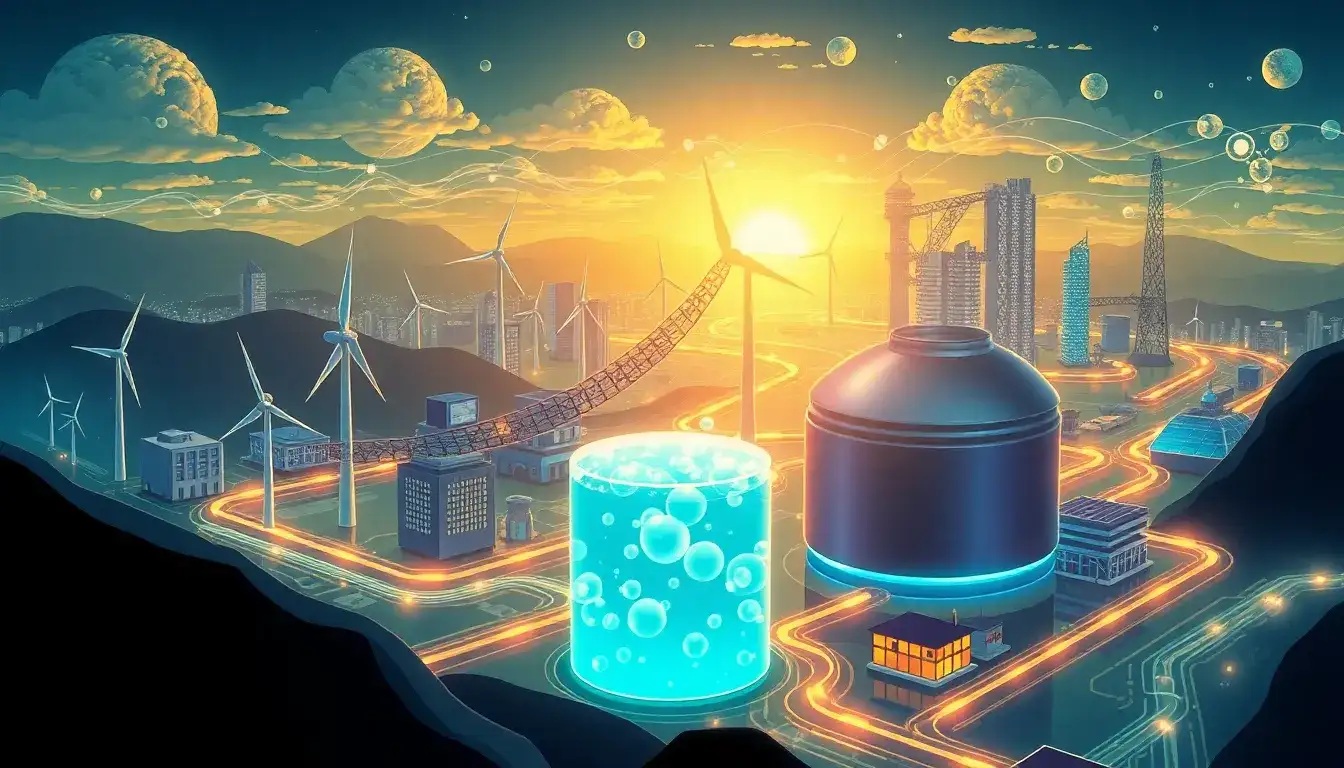
Hydrogen acts as a “battery” for renewable energy
Hydrogen acts as a “battery” for renewable energy by serving as a clean, versatile energy storage medium that can store excess electricity generated from renewable sources like solar and wind, and then release that energy when needed. Here is how the process works and why hydrogen is considered a promising alternative or complement to traditional batteries:
How Hydrogen Stores Renewable Energy
- Electrolysis of Water: When there is excess electricity from renewable sources such as solar panels or wind turbines, that electricity is used to split water molecules into oxygen and hydrogen gas through a process called electrolysis. This converts electrical energy into chemical energy stored in hydrogen gas.
- Storage: The produced hydrogen gas can be stored safely under pressure or in specialized materials like metal hydrides. Because hydrogen has a high energy density by weight, it can store significant amounts of energy for long durations, which is an advantage over conventional batteries that are limited in capacity and degrade over time.
- Energy Release via Fuel Cells: When electricity is needed — for example, when solar or wind generation is low — the stored hydrogen is fed into fuel cells that recombine the hydrogen with oxygen from the air to produce electricity and water vapor as the only byproduct. This process converts the chemical energy back into electrical energy.
Advantages of Hydrogen as a Renewable Energy “Battery”
- Long-term, Large-scale Storage: Hydrogen storage can handle large amounts of energy for longer periods, enabling seasonal or multi-day storage solutions beyond the capabilities of typical lithium-ion batteries.
- Clean and Sustainable: The cycle of electrolyzing water and using fuel cells produces no harmful emissions, making hydrogen a green energy carrier.
- Complement to Batteries: Hydrogen systems can complement battery systems. Batteries provide immediate power with high round-trip efficiency, while hydrogen storage provides capacity for longer-term storage and can handle surplus energy that batteries cannot adequately absorb.
- Practical Applications: Commercial systems like LAVO’s hybrid hydrogen battery system integrate solar PV with electrolysis, hydrogen storage, and fuel cells to power homes with renewable energy and provide over 40 kWh of storage capacity, enough to power an average home for days without sun.
Summary Table
| Step | Description |
|---|---|
| Electrolysis | Uses surplus renewable electricity to split water into hydrogen and oxygen |
| Storage | Stores hydrogen gas under pressure or in metal hydrides for later use |
| Electricity Generation | Converts hydrogen back into electricity via fuel cells when needed |
| Byproduct | Water vapor, a clean emission |
| Advantages | High energy density, long-term storage, clean, scalable |
In essence, hydrogen acts as a rechargeable, storable chemical battery for renewable electricity, enabling storage and use of clean energy on demand, addressing intermittency challenges of renewables, and potentially reducing reliance on conventional chemical batteries.
Original article by NenPower, If reposted, please credit the source: https://nenpower.com/blog/how-does-hydrogen-act-as-a-battery-for-renewable-energy/

