

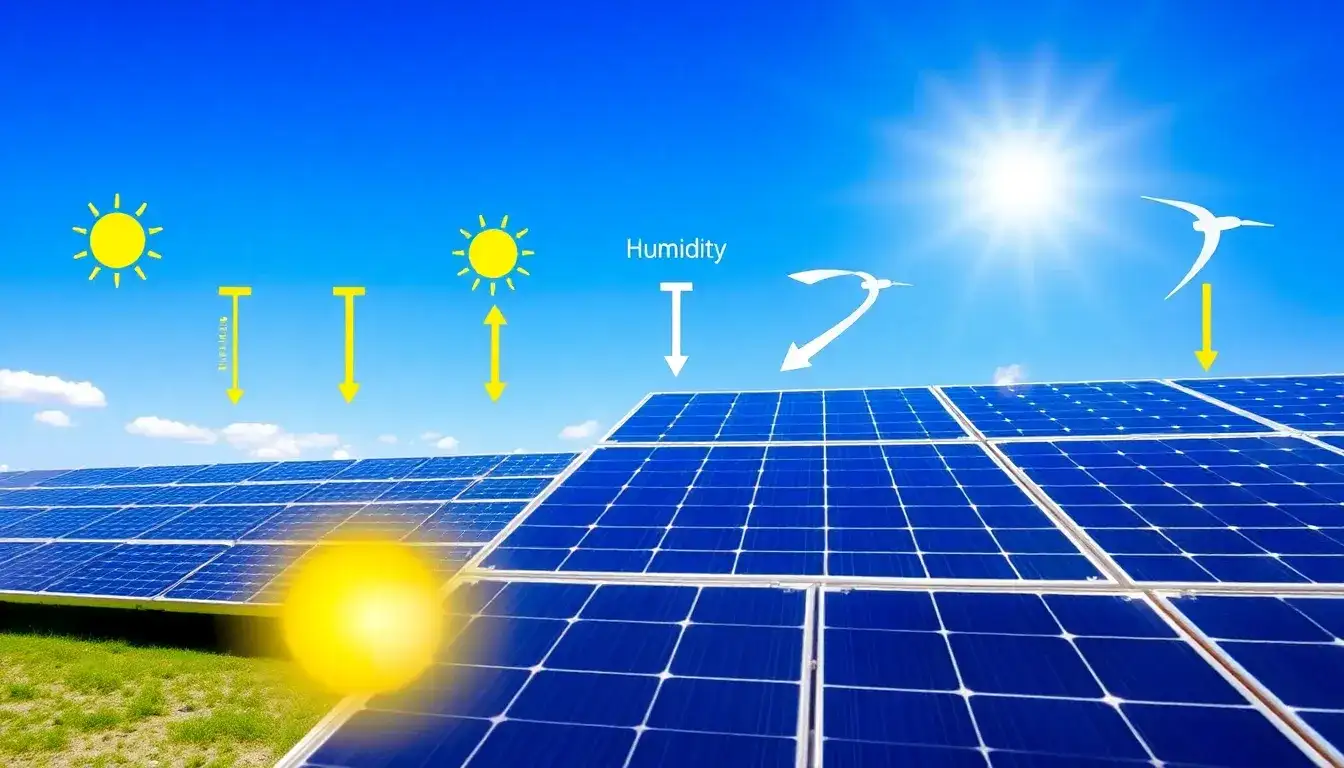
Impact of Humidity on Solar Panel Efficiency
- Moisture Buildup and Surface Soiling: High humidity can lead to moisture accumulation on the panels, which blocks sunlight and reduces efficiency. It also causes dirt and dust to stick, further decreasing efficiency.
- Corrosion and Material Degradation: High humidity accelerates corrosion of metallic components, potentially shortening the lifespan of solar panels.
- Efficiency Reduction: High humidity can gradually reduce efficiency by preventing sunlight from reaching the photovoltaic cells.
Comparison with Other Factors
| Weather Factor | Impact on Solar Panel Efficiency |
|---|---|
| Humidity | Can block sunlight, cause corrosion, and lead to efficiency reduction due to moisture buildup and surface soiling. |
| Temperature | High temperatures decrease efficiency by changing semiconductor properties, while cooler temperatures improve efficiency. |
| Cloud Cover | Reduces sunlight reaching the panels, significantly impacting energy production. |
| Wind | Can cool the panels, increasing efficiency slightly; strong winds pose structural risks. |
| Snow and Ice | Blocks sunlight and adds weight, potentially causing structural damage; cooler temperatures can improve efficiency. |
| Dust and Air Quality | Poor air quality and accumulation of dust can reduce sunlight available for energy conversion. |
Key Takeaways
- Humidity affects solar panel efficiency through moisture buildup and corrosion.
- Temperature is crucial as high temperatures decrease efficiency, while moderate temperatures optimize performance.
- Cloud Cover and Snow/Ice significantly impact efficiency by blocking sunlight.
- Wind offers some benefits by cooling panels but poses structural risks at high speeds.
Overall, while humidity has a negative impact on solar panel efficiency, temperature and cloud cover are more significant factors affecting energy output.
Original article by NenPower, If reposted, please credit the source: https://nenpower.com/blog/how-does-humidity-compare-to-other-weather-factors-in-terms-of-impacting-solar-panel-efficiency/

