

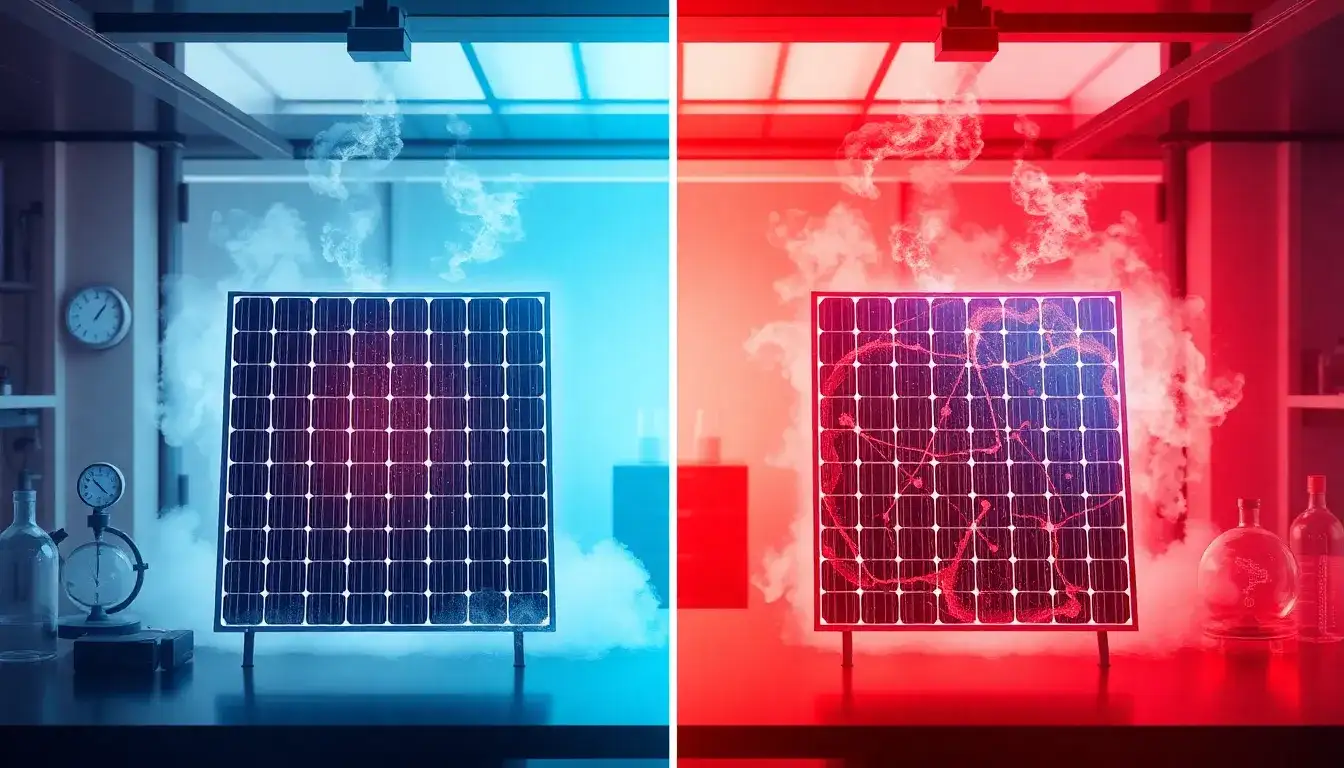
Humidity significantly affects the performance of perovskite solar panels, particularly indoors. Here’s how it impacts them:
Instability and Degradation
- Moisture Sensitivity: Perovskites are highly susceptible to moisture due to their hygroscopic components, such as ammonium and lead(II) salts. When exposed to humidity, these components can facilitate chemical decomposition, leading to degradation of the perovskite material.
- Performance Impacts: The degradation from moisture can reduce the efficiency and stability of perovskite solar cells. Over time, exposure to humidity can lead to a decrease in photoconversion efficiency and overall device performance.
Fabrication Challenges
- Environment Requirements: Traditionally, perovskite solar cells are fabricated in controlled environments with low humidity (<30% RH) to minimize adverse effects on film morphology and performance. High-humidity conditions can complicate the fabrication process and require specialized modifications.
Mitigation Strategies
- Stability Enhancements: Researchers have explored methods to enhance moisture stability, such as using supercritical carbon dioxide during film crystallization. This has shown promising results in improving stability under various humidity conditions.
- Adaptive Techniques: Developing scalable processing methods that can operate effectively in high-humidity environments is crucial for commercial viability. Techniques like blade-coating, spray-coating, and inkjet printing are being adapted to accommodate high humidity during fabrication.
Indoor Implications
For perovskite solar panels used indoors, maintaining low humidity conditions can be challenging due to varying indoor humidity levels, especially in environments without strict climate control. However, advancements in material modifications and processing techniques aim to reduce these panels’ dependence on humidity, making them more suitable for a broader range of conditions.
In summary, while humidity poses a significant challenge to the durability and performance of perovskite solar panels indoors, ongoing research and development of moisture-resistant materials and fabrication processes are critical to addressing these issues.
Original article by NenPower, If reposted, please credit the source: https://nenpower.com/blog/how-does-humidity-affect-the-performance-of-perovskite-solar-panels-indoors/

