

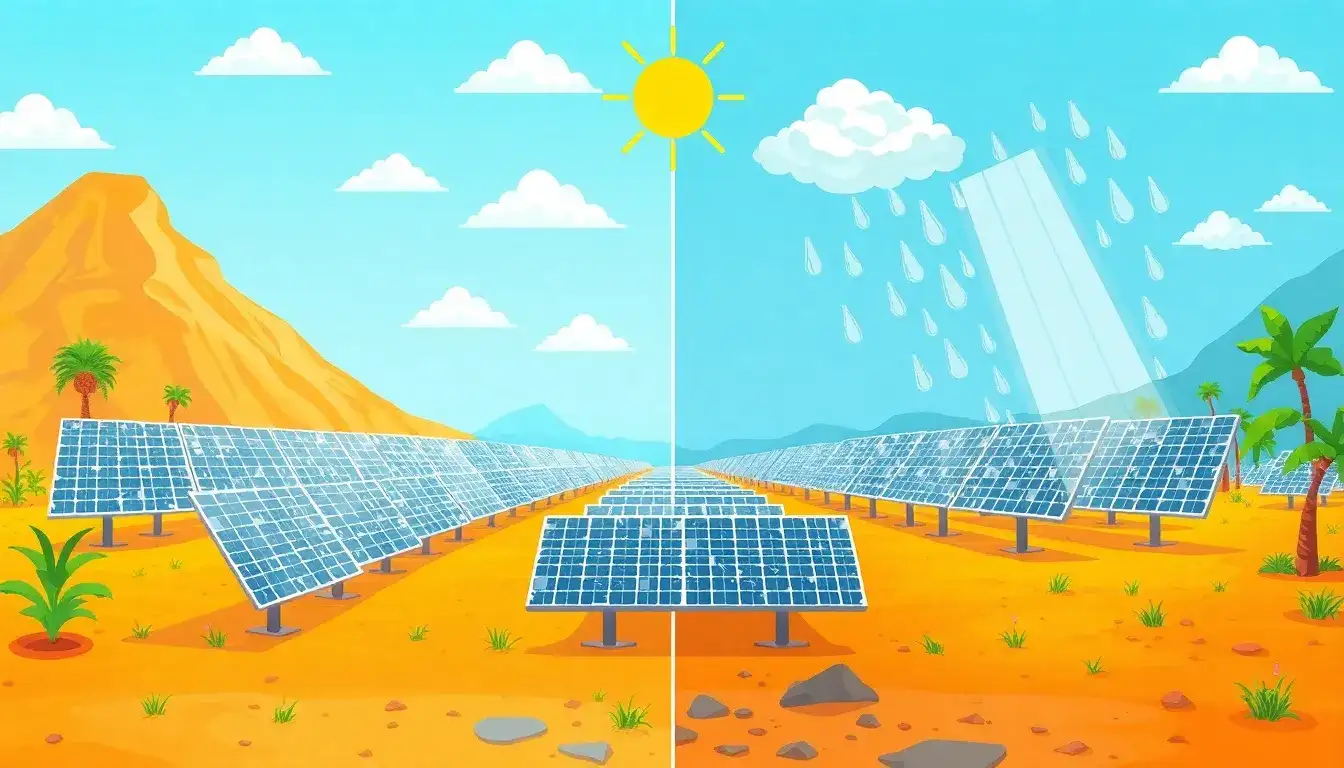
Humidity affects solar panel efficiency primarily through several mechanisms related to moisture presence and temperature interactions:
1. Reduction of Sunlight Reaching Solar Cells
- Water vapor or tiny droplets formed from humidity can accumulate on the surface of solar panels, similar to beads of sweat. These droplets reflect and refract sunlight away from the solar cells, thereby reducing the amount of sunlight that actually hits the cells and produces electricity.
- Additionally, humidity often leads to increased cloud cover and rainfall, which further decreases the sunlight intensity reaching the panels during the day.
2. Surface Soiling and Growth of Mold/Algae
- Humidity encourages the accumulation of dirt, dust, mold, and algae on the panel surface. This layer blocks sunlight and can cause permanent damage, thereby lowering efficiency over time if panels are not cleaned regularly.
3. Corrosion and Material Degradation
- High humidity, especially in hot and coastal areas, accelerates corrosion of metallic components and electrical contacts within solar panels. This corrosion damages the panels and reduces their lifespan and performance.
- Manufacturers use protective measures such as edge sealants and low ionic conductive materials to mitigate this degradation in consistently humid environments.
4. Temperature-Humidity Interactions
- Humidity is often accompanied by elevated temperatures which reduce solar panel efficiency. As panels heat up, their electrical efficiency typically drops due to semiconductor properties, with every 1°C rise causing approximately 0.03–0.05% efficiency loss.
- Conversely, wind can cool panels, partially offsetting the negative effects of heat and humidity.
5. Condensation and Electrical Issues
- Condensation from high humidity can seep into electrical components causing shorts or other failures, which adversely affect performance.
Quantitative Effects
- Lowering humidity from 60% to 48% was estimated to increase solar panel efficiency from approximately 9.7% to 12.04% in one study, highlighting the tangible impact humidity can have.
- A 20% increase in ambient humidity could reduce panel power capacity by about 3.16 watts.
Mitigation Strategies
- Regular cleaning to remove mold, algae, and dirt buildup caused by humidity.
- Utilizing materials and coatings to resist corrosion.
- Employing humidity sensors and weather monitoring to anticipate and manage moisture-related issues.
- Design considerations such as better sealing and cooling systems can help maintain performance in humid climates.
Summary:
Humidity lowers solar panel efficiency mainly by causing surface moisture that blocks sunlight, increasing corrosion and material degradation, promoting soiling and biological growth, and by associating with higher temperatures that reduce semiconductor performance. However, wind cooling and proper maintenance can help offset some of these effects. Manufacturers and users in humid environments employ specific design and upkeep strategies to enhance panel longevity and efficiency under these conditions.
Original article by NenPower, If reposted, please credit the source: https://nenpower.com/blog/how-does-humidity-affect-solar-panel-efficiency/

