

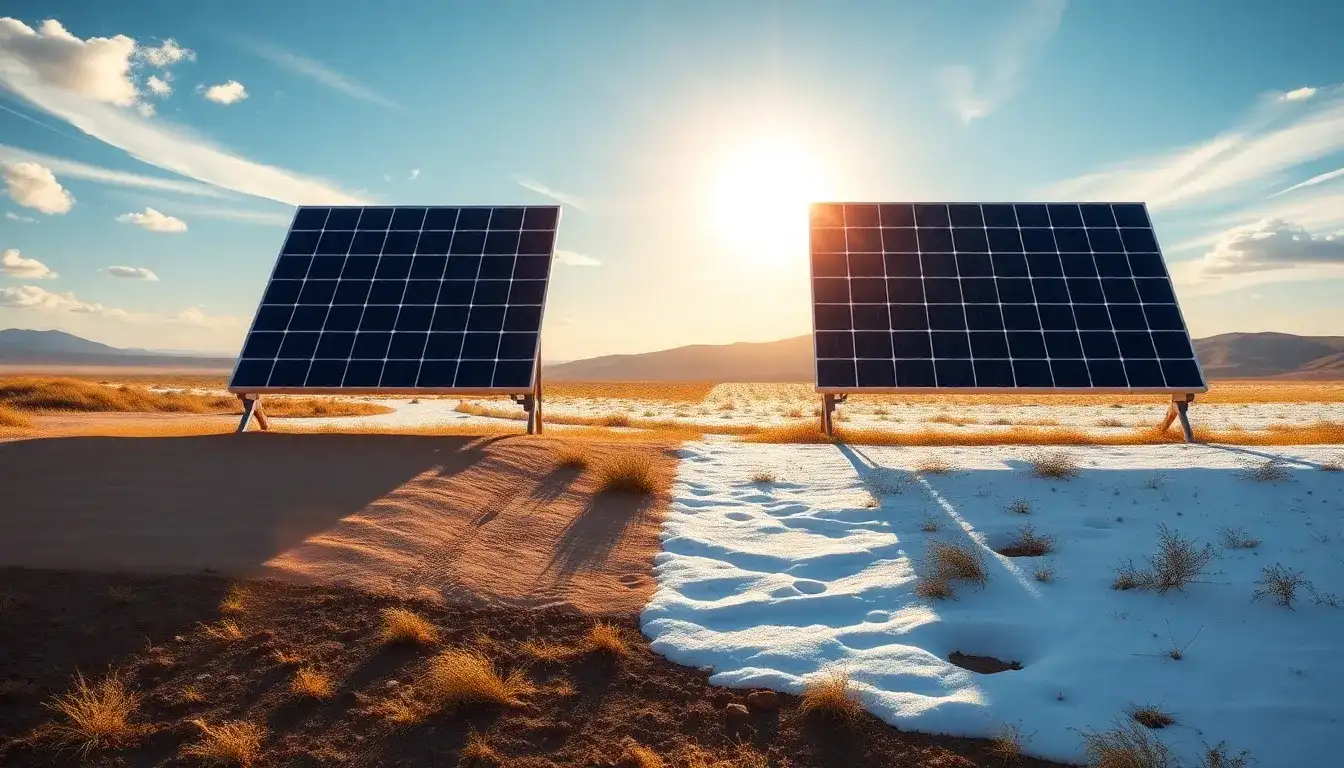
Ground reflectivity (albedo) critically impacts bifacial solar panel efficiency by determining the amount of light reflected onto their rear side. High-albedo surfaces like snow (80–85% reflectivity) or sand/cement (20–40%) substantially boost energy yield, while low-reflectivity surfaces like grass (15–25%) or water (5–12%) offer minimal gains. Key points:
Albedo’s Role in Energy Gain
Bifacial panels generate 5–30% more energy than monofacial equivalents depending on albedo. For example:
- Snow-covered ground provides the highest gains (up to 40% rear-side output for HJT modules).
- Artificial enhancements like reflective paints or white gravel can increase albedo by up to 50%, further improving efficiency.
Technology-Specific Performance
| Surface | HJT Gain | TOPCon Gain | IBC Gain | PERC Gain |
|---|---|---|---|---|
| Snow | 30–40% | 28–35% | 25–30% | 20–25% |
| Sand/Cement | 20–30% | 18–25% | 15–20% | 10–15% |
| Grass | 10–15% | 8–14% | 8–12% | 3–8% |
| Water | 8–12% | 6–10% | 5–10% | 3–7% |
HJT cells outperform others in high-albedo environments, while PERC shows the smallest gains.
Practical Optimization
- Site selection: Prioritize sandy, snowy, or artificially lightened surfaces.
- Climate synergy: Cold, snowy regions maximize the albedo effect, while high temperatures in sunny areas can reduce overall efficiency despite good reflectivity.
- Cost-benefit analysis: Reflective ground coatings often pay for themselves through increased yield.
Recent research confirms that strategic albedo management can boost bifacial plant yields by 4.5% or more.
Original article by NenPower, If reposted, please credit the source: https://nenpower.com/blog/how-does-ground-reflectivity-impact-the-efficiency-of-bifacial-solar-panels/

