

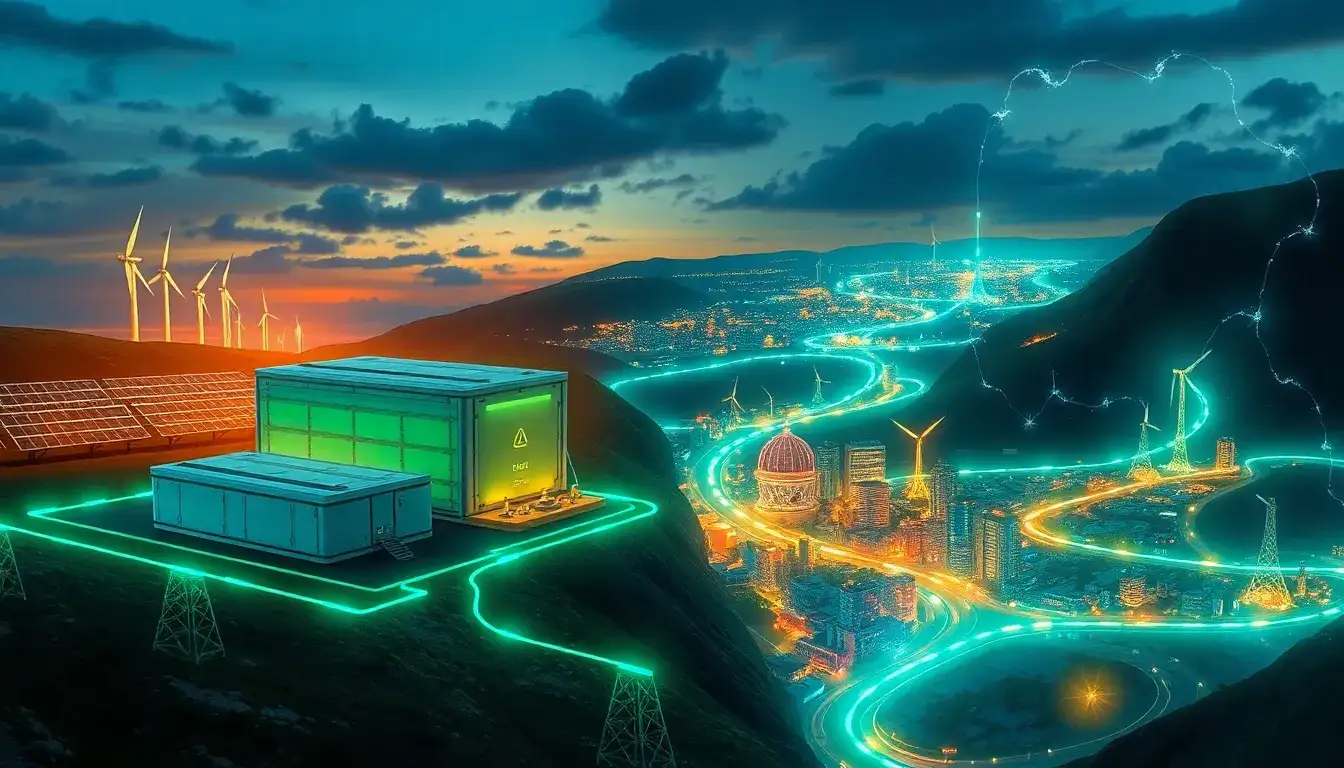
Grid-scale energy storage significantly improves the reliability of renewable energy sources by addressing the inherent variability and intermittency of resources like solar and wind power.
Key ways grid-scale energy storage enhances reliability:
- Balances supply and demand: Renewable energy production fluctuates because it depends on weather conditions (sunlight, wind). Energy storage systems store surplus energy generated during peak production periods and release it when production is low, ensuring a stable and continuous energy supply to the grid.
- Enhances grid stability: By absorbing excess energy and releasing it during peak demand or low generation times, storage helps maintain consistent grid frequency and voltage, preventing blackouts and brownouts.
- Improves grid resilience: During unexpected outages or extreme weather events, grid-scale storage can quickly deploy stored energy to keep power flowing, reducing reliance on traditional fossil-fuel plants and supporting grid reliability.
- Facilitates renewable integration: Storage smooths out fluctuations from intermittent renewable sources, making it feasible to incorporate higher shares of clean energy into the grid without jeopardizing reliability.
For example, after the Texas winter storm in 2021 caused massive blackouts due to grid failure, the state expanded its energy storage capacity dramatically to enhance resilience and prevent future outages.
Overall, grid-scale energy storage acts as a buffer and balancing resource that enables renewable energy to be more dependable and usable as a primary electricity source.
Original article by NenPower, If reposted, please credit the source: https://nenpower.com/blog/how-does-grid-scale-energy-storage-improve-the-reliability-of-renewable-energy-sources/

