

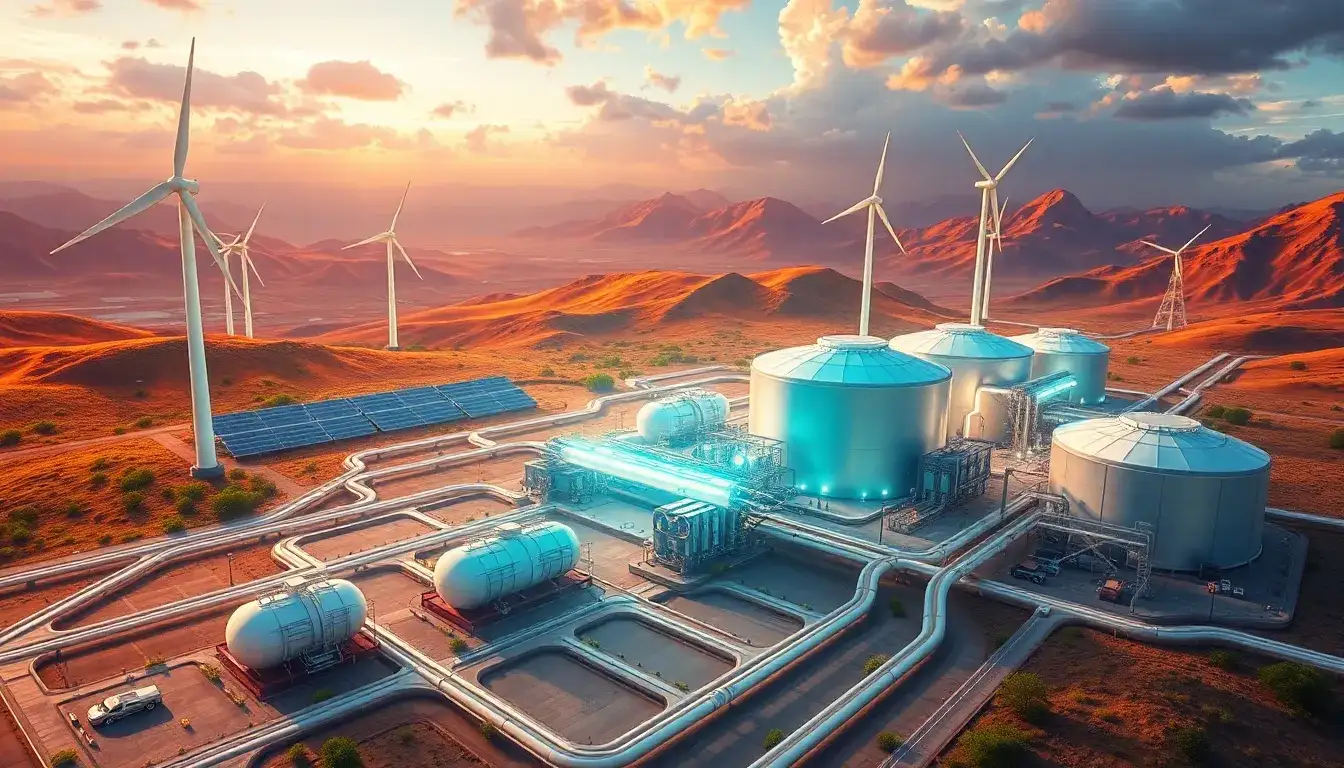
Green hydrogen helps reduce curtailment of renewable energy primarily by acting as an energy sink that can absorb excess electricity generated when supply exceeds demand or when grid transmission capacity is limited. This excess renewable electricity, which would otherwise be curtailed (i.e., wasted), can be used to produce hydrogen through electrolysis, thereby converting surplus renewable energy into a storable and transportable fuel.
Key points explaining this relationship include:
- Energy Conversion and Storage: Hydrogen production via electrolysis uses electricity to split water into hydrogen and oxygen. When renewable generation—such as wind, solar, or hydro—is high and grid demand or capacity cannot absorb it, this surplus electricity can be redirected to produce green hydrogen instead of being curtailed.
- Grid Constraints Mitigation: Curtailment often occurs because the electricity grid cannot handle more power due to physical or operational constraints. Installing electrolyzers close to renewable generation sites can increase electricity demand locally, thus alleviating network congestion and reducing the need to curtail renewable output.
- Economic and Operational Benefits: Producing hydrogen from curtailed power can make green hydrogen cost-competitive, especially when facilities are co-located with renewable sources in regions with frequent curtailment (e.g., northern Scotland). This enhances overall system efficiency by converting otherwise wasted electricity into valuable hydrogen fuel that can be stored and used later.
- Scaling Impact: Studies suggest that using curtailed wind and solar power for electrolytic hydrogen production could replace a significant fraction (up to 30%) of hydrogen currently produced from fossil fuels, further leveraging renewable energy and reducing emissions.
- Temporal and Spatial Dynamics: The volume of curtailed energy and its availability for hydrogen production depends on local grid conditions and transmission reinforcements over time. While upgrades to transmission infrastructure can reduce curtailment, in the near term and in regions with network bottlenecks, green hydrogen production provides a practical way to utilize excess renewable energy.
In summary, green hydrogen acts as a flexible and scalable energy carrier that absorbs surplus renewable electricity, reducing curtailment by matching otherwise wasted renewable generation with a valuable conversion process. This integration enhances renewable energy utilization, grid stability, and supports the transition to a low-carbon energy system.
Original article by NenPower, If reposted, please credit the source: https://nenpower.com/blog/how-does-green-hydrogen-help-in-reducing-curtailment-of-renewable-energy/

