

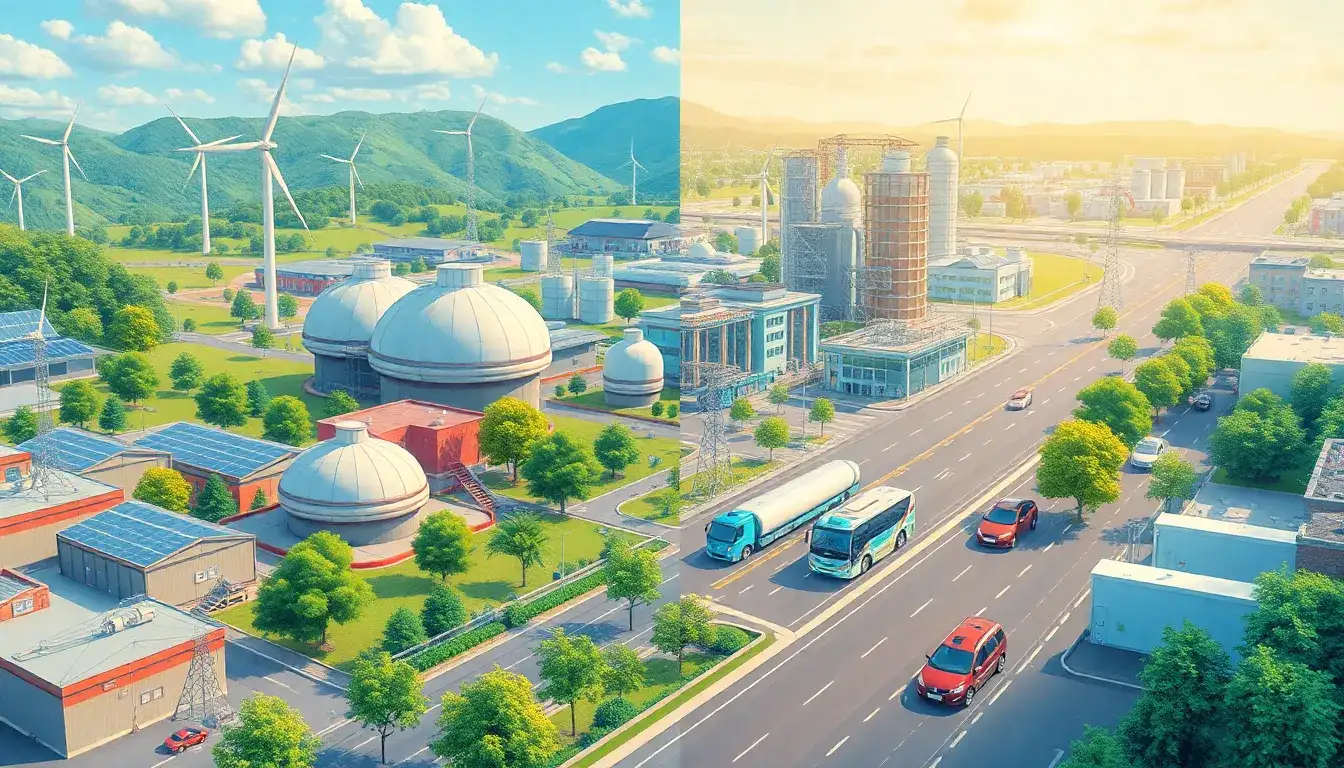
Green hydrogen significantly contributes to the decarbonization of energy systems by providing a clean, renewable alternative to fossil fuels across various sectors, especially those difficult to electrify.
How Green Hydrogen Supports Decarbonization
Produced from renewable energy sources:
Green hydrogen is generated through electrolysis, a process that splits water into hydrogen and oxygen using electricity derived exclusively from renewables such as wind or solar power. This production method results in zero carbon emissions, making green hydrogen a truly clean fuel.
Versatile energy carrier and storage medium:
Hydrogen’s versatility enables it to serve both as an energy vector—storing surplus renewable energy—and as a direct fuel substitute for fossil fuels in sectors where electrification is challenging. This dual role is crucial for integrating higher shares of renewables into energy systems and balancing supply and demand.
Decarbonizing hard-to-abate sectors:
Green hydrogen is particularly valuable in industries and transportation modes where reducing emissions is complex. It can replace fossil-based hydrogen and fuels in heavy industries like steelmaking, chemical manufacturing, petroleum refining, and heavy-duty transport—including shipping and aviation—sectors that contribute significantly to global CO₂ emissions. For example, steel production accounts for 6-7% of global emissions, and using green hydrogen for steelmaking could eliminate this carbon footprint substantially.
Supporting a climate-neutral economy:
Policies such as the European Union’s hydrogen strategy aim to accelerate green hydrogen development as a cornerstone of the climate-neutral transition by 2050. With costs of renewable electricity and electrolysis technologies declining, green hydrogen is becoming economically viable and poised to play a central role in the global clean energy transition.
Clean energy conversion and use:
When used in fuel cells, green hydrogen produces electricity with water as the only by-product, emitting no CO₂ during energy conversion, which complements renewable electric grids and supports sustainable energy systems.
Summary
| Aspect | Contribution to Decarbonization |
|---|---|
| Production method | Electrolysis using renewables, zero carbon emissions |
| Energy storage & fuel | Stores renewable energy, substitutes fossil fuels |
| Hard-to-abate sectors | Decarbonizes steel, chemicals, refining, heavy transport |
| Emission outputs | Water as sole by-product in energy conversion |
| Policy & cost trends | Supported by climate policies, cost reductions enhancing uptake |
In essence, green hydrogen enables deep decarbonization by replacing carbon-intensive fuels and feedstocks with clean, renewable hydrogen across sectors that are otherwise difficult to electrify, thus driving a more sustainable and climate-resilient energy system.
Original article by NenPower, If reposted, please credit the source: https://nenpower.com/blog/how-does-green-hydrogen-contribute-to-the-decarbonization-of-energy-systems/

