

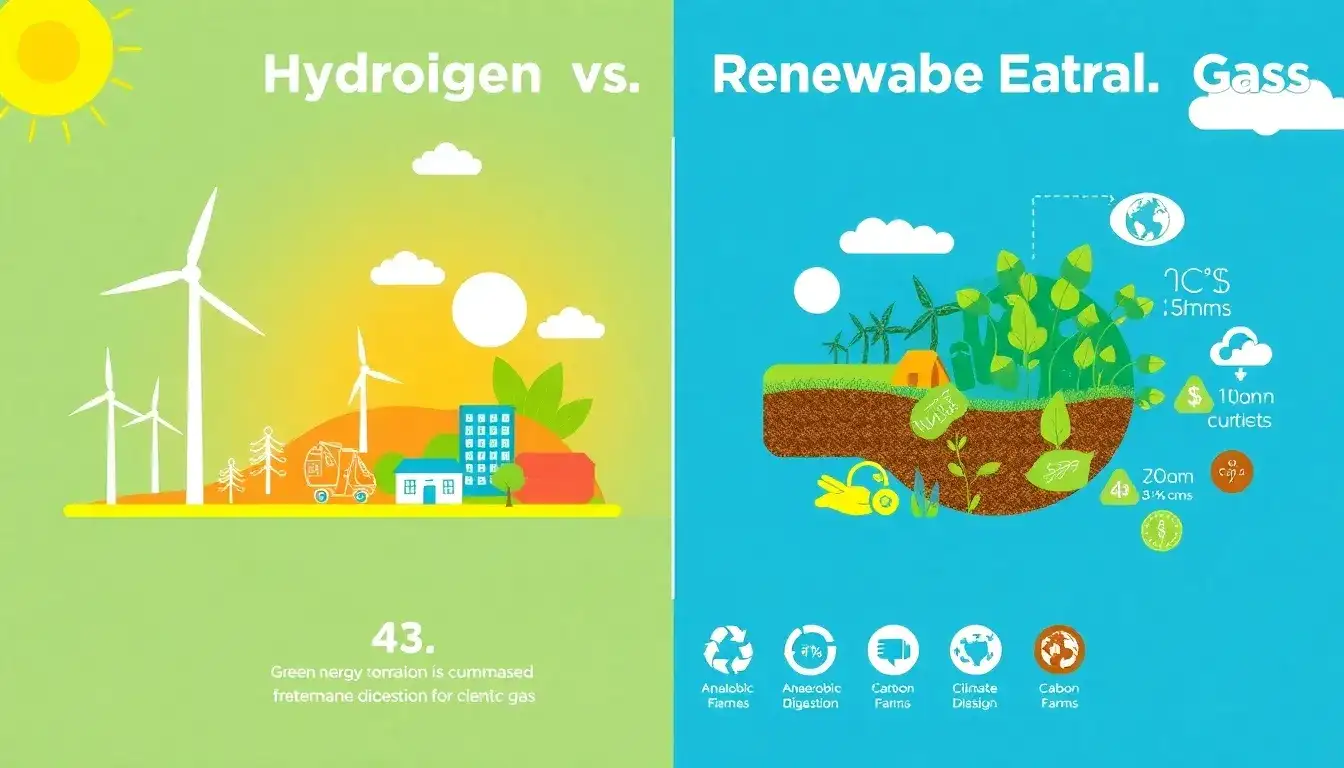
Comparing green hydrogen and renewable natural gas (RNG) in terms of carbon emissions involves understanding their production methods and lifecycle emissions. Here’s a breakdown to help compare the two:
Green Hydrogen
- Production Method: Green hydrogen is produced by electrolysis of water using renewable electricity, such as wind, solar, or hydroelectric power.
- Carbon Emissions: The carbon footprint of green hydrogen is generally very low, typically ranging from nearly zero to about 0.5 kg CO2e per kilogram of hydrogen, depending on the source of the electricity. Most emissions are embedded in the production of equipment rather than the operation.
Renewable Natural Gas (RNG)
- Production Method: RNG is produced from organic waste such as agricultural waste, sewage, or landfill gas through processes like anaerobic digestion.
- Carbon Emissions: RNG is considered carbon neutral as it offsets CO2 emissions from fossil fuels by utilizing carbon that is part of the natural biological cycle. However, production and transportation emissions can vary but are generally lower than traditional fossil fuels.
Comparison
- Green Hydrogen has a significantly lower carbon footprint than most other forms of hydrogen, with emissions primarily coming from embedded sources in equipment manufacturing.
- Renewable Natural Gas (RNG), while not as direct in its carbon intensity during production as green hydrogen, is typically seen as carbon neutral because it utilizes waste carbon that would otherwise be released.
- Emissions Impact: Green hydrogen is more direct in its low-carbon impact during operation compared to RNG, which may have some operational emissions but remains carbon neutral overall due to its feedstock.
In summary, green hydrogen offers a much lower operational carbon footprint, but RNG is carbon neutral over its lifecycle. Both options are considered cleaner alternatives to traditional fossil fuels but serve different roles in energy systems.
Original article by NenPower, If reposted, please credit the source: https://nenpower.com/blog/how-does-green-hydrogen-compare-to-renewable-natural-gas-in-terms-of-carbon-emissions/

