

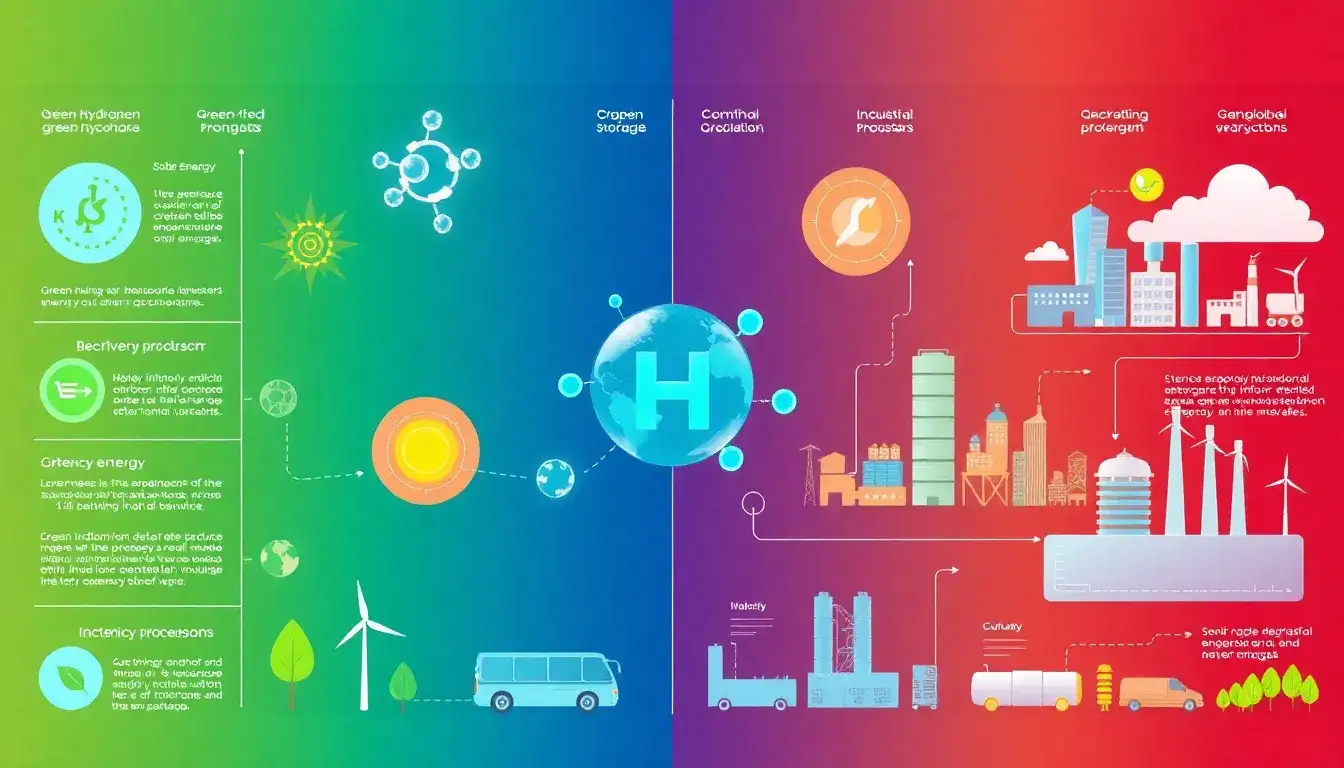
Green Hydrogen and Other Low-Carbon Energy Solutions
Overview of Green Hydrogen
Green hydrogen is produced using renewable energy sources such as wind, solar, or hydropower to split water into hydrogen and oxygen. This process significantly reduces carbon emissions compared to traditional methods, such as the production of grey or blue hydrogen, which involve natural gas and often carbon capture technologies.
Comparison to Other Low-Carbon Energy Solutions
Green Hydrogen vs. Blue Hydrogen
- Production Method: Green hydrogen is made using electrolysis powered by renewable energy. Blue hydrogen is produced from natural gas via steam methane reforming, with carbon capture and storage (CCS) to reduce emissions.
- Carbon Footprint: Green hydrogen has a much lower carbon footprint, with emissions of less than 1 kg CO2e per kg of hydrogen, compared to 3-5 kg CO2e for blue hydrogen.
Green Hydrogen vs. Renewable Natural Gas (RNG)
- Production: RNG is derived from organic waste, offering a low-carbon alternative but with less scalability and technical maturity compared to green hydrogen.
- Use Cases: Both can be used for energy production, but green hydrogen can decarbonize more complex industries like aviation and steel.
Green Hydrogen vs. Li-ion Batteries
- Application: Li-ion batteries are widely used for short-term energy storage, whereas green hydrogen is suitable for long-term storage and can be used as a direct fuel.
- Scalability: Batteries have a more established market, but green hydrogen has vast potential for scaling up for industrial applications due to its ability to be stored and transported more easily over long distances.
Green Hydrogen vs. Carbon Capture Utilization and Storage (CCUS)
- Purpose: CCUS technologies focus on capturing CO2 from industrial sources and utilizing or storing it, while green hydrogen avoids CO2 emissions during production.
- Application: Green hydrogen offers a cleaner energy source, whereas CCUS is more about reducing emissions from existing industrial processes.
Advantages and Challenges
Advantages:
- Low Carbon Footprint: Offers a nearly carbon-neutral energy source when using renewable energy sources for production.
- Versatility: Can be used in various sectors including transportation, industry, and energy storage.
- Scalability: Significant potential for increasing production capacity using existing renewable infrastructure.
Challenges:
- Cost: Currently more expensive than traditional hydrogen production methods like grey or blue hydrogen.
- Efficiency: Production efficiency can vary based on the type of electrolysis technology used.
In summary, green hydrogen stands out as one of the cleanest low-carbon energy solutions, offering a versatile and scalable alternative for decarbonizing various industries. However, it faces challenges related to cost and production efficiency compared to other low-carbon options.
Original article by NenPower, If reposted, please credit the source: https://nenpower.com/blog/how-does-green-hydrogen-compare-to-other-low-carbon-energy-solutions/

