

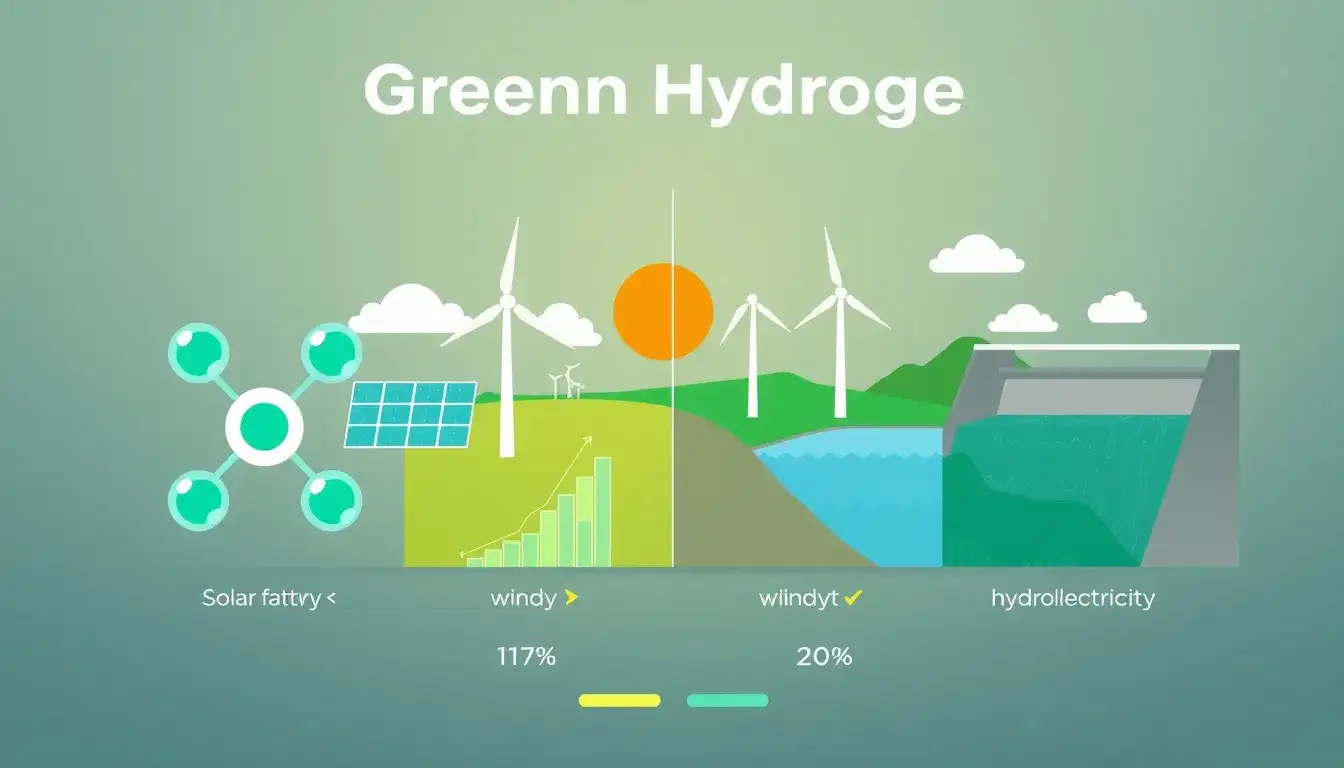
Comparing green hydrogen to other clean energy sources in terms of efficiency involves considering several factors, including the production process, energy density, conversion efficiency, and round-trip efficiency.
Overview of Green Hydrogen Efficiency
- Production Efficiency: Green hydrogen is produced by electrolyzing water using renewable electricity, such as solar or wind power, making it a cleaner process compared to fossil fuels. However, the efficiency of electrolysis can vary depending on the technology used. Traditional alkaline electrolysis is around 60-70% efficient, while PEM electrolyzers can reach efficiencies up to 80-90%.
- Energy Density: Hydrogen has a high energy density of approximately 33.3 kWh per kilogram, which is advantageous for transportation but requires efficient storage and conversion systems.
- Round-Trip Efficiency: The conversion of electrical power to hydrogen and back to power (round-trip efficiency) is relatively low, ranging from 18% to 46%. This is compared to other long-duration energy storage technologies like pumped hydro and compressed air, which have higher efficiencies but come with environmental and geographic constraints.
Comparison to Other Clean Energy Sources
Solar Energy
- Efficiency: Solar panels convert sunlight to electricity with an efficiency of around 20% for commercial modules.
- Direct Usage: Solar power can be used directly for electricity, eliminating the need for conversion processes.
- Storage: Energy storage solutions like batteries are required to store excess energy for later use.
Wind Energy
- Efficiency: Modern wind turbines can achieve efficiencies close to 50% in converting wind energy into electricity.
- Direct Usage: Like solar, wind energy can be directly used for electricity without additional conversion losses.
- Storage: Similar to solar, wind energy often requires energy storage solutions.
Green Hydrogen
- Efficiency: The overall efficiency of green hydrogen from production to usage (e.g., in fuel cells) is limited by both electrolysis efficiency and round-trip efficiency.
- Versatility: Can be used in transportation, industry, and power generation.
- Storage: Offers a promising method for seasonal energy storage due to its high energy density.
Key Points
- Green Hydrogen: Offers a clean, versatile energy carrier with high energy density but suffers from low round-trip efficiency.
- Solar and Wind Energy: More efficient in direct electricity production but require separate storage solutions for energy storage.
- Efficiency Comparison: While solar and wind are more efficient in direct electricity production, green hydrogen provides a unique solution for sectors where direct electrification is less feasible, like long-haul transport and certain industrial processes.
In summary, while green hydrogen faces efficiency challenges compared to direct solar or wind power, its versatility and high energy density make it an important component in the decarbonization of hard-to-abate sectors.
Original article by NenPower, If reposted, please credit the source: https://nenpower.com/blog/how-does-green-hydrogen-compare-to-other-clean-energy-sources-in-terms-of-efficiency/

