

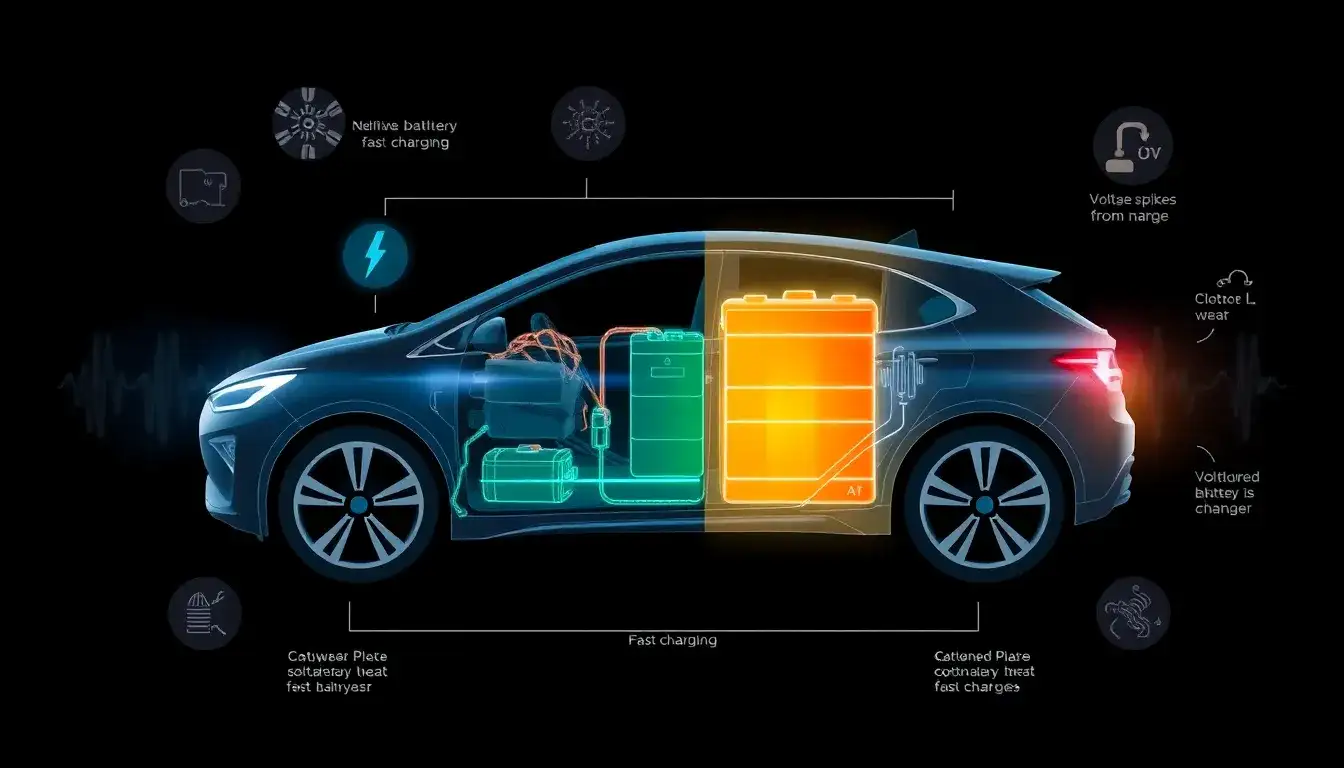
Frequent fast charging influences EV battery degradation through several key mechanisms, though modern systems mitigate some risks. Higher charging rates accelerate wear by forcing lithium ions into battery cells faster than they can properly diffuse, leading to lithium plating (metallic lithium accumulation) that damages battery chemistry over time. Studies show vehicles charged exclusively with DC fast chargers experience ~5% more degradation over 50,000 miles compared to slower AC charging (70% vs. 75% capacity retention).
Critical factors:
- State of charge: High charge levels leave fewer available spaces for lithium ions, increasing plating risk during fast charging.
- Temperature: While warmer batteries reduce plating risk, excessive heat accelerates SEI layer formation, which permanently reduces capacity. Cold batteries face worse plating issues.
- Frequency: Regular rapid charging (e.g., daily use) causes 16% faster degradation compared to occasional use, as seen in Nissan Leaf studies.
Mitigations:
- Battery management systems dynamically adjust charging rates and thermal controls to minimize stress.
- Optimized charging: Limiting DC fast charging to below 80% state of charge and avoiding extreme temperatures helps preserve battery life.
While fast charging isn’t inherently harmful, frequent use without precautions can shorten battery lifespan. Most degradation occurs through cumulative stress rather than single charging events.
Original article by NenPower, If reposted, please credit the source: https://nenpower.com/blog/how-does-frequent-fast-charging-influence-ev-battery-degradation/

