

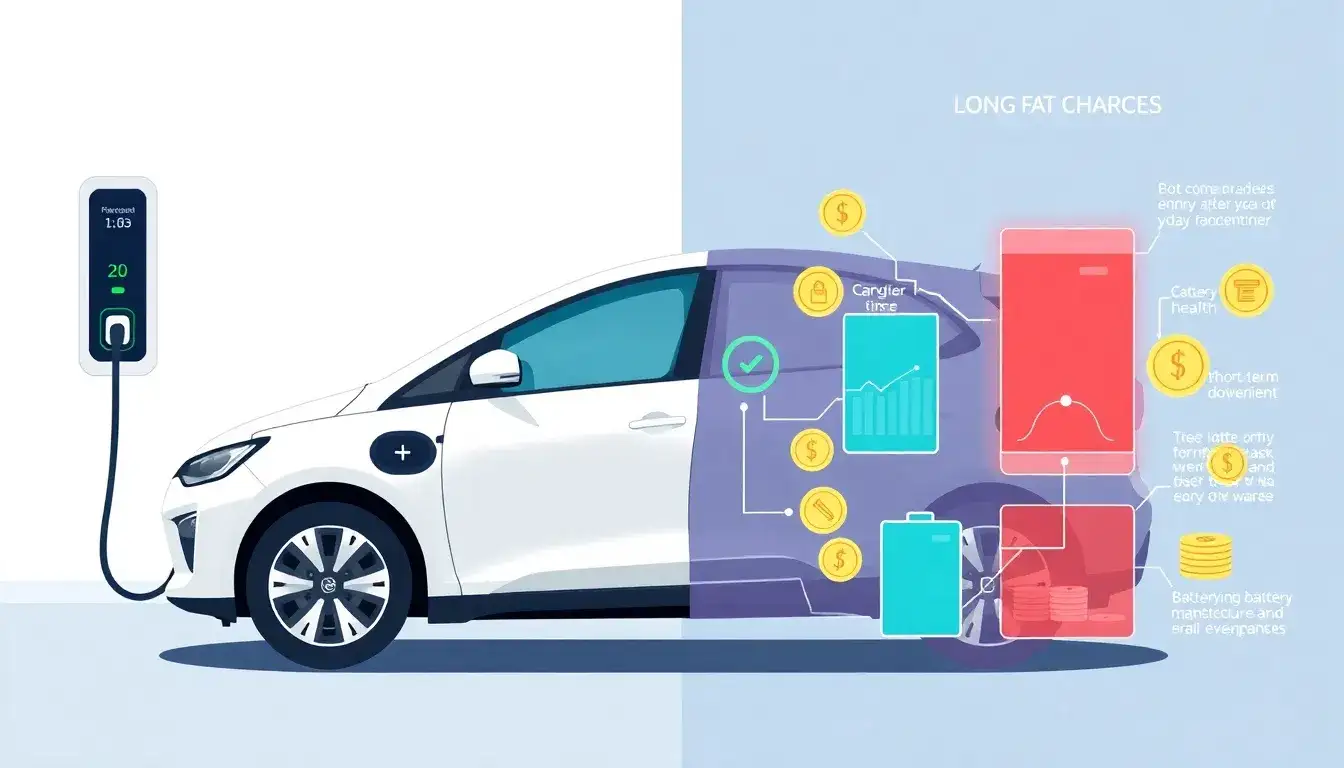
Frequent fast charging affects the overall cost of owning an electric vehicle (EV) primarily through two factors: higher charging costs and accelerated battery degradation.
Higher Charging Costs
- Cost per kWh: Fast charging at public stations can cost between $0.25 and $0.79 per kWh, which is significantly higher than average residential electricity rates typically used for slower, at-home charging.
- Cost comparison: For example, charging a 40 kWh battery using Level 2 home charging costs about $8 to $10, whereas fast DC charging costs range from $16 to $24 for the same amount of energy.
- Fees and pricing models: Public fast chargers often charge by the minute or by kWh and may have additional network fees. Memberships or subscriptions can reduce costs but fast charging remains more expensive overall.
Because fast charging delivers energy much quicker, it tends to have premium pricing reflecting the infrastructure and electricity costs during peak times, increasing the direct energy expense of running the EV.
Accelerated Battery Degradation and Replacement Costs
- Battery wear: Frequent use of rapid DC fast charging causes increased battery degradation compared to slower charging methods. Studies show that using exclusive DC rapid charging can increase degradation rates by about 16%, contributing to capacity loss of 3% to 9% over 50,000 miles.
- Impact on battery life: This degradation means the battery holds less charge over time, reducing range and potentially necessitating an earlier battery replacement, which is a major cost driver in EV ownership.
- Recommendations: Experts recommend prioritizing Level 2 fast charging (7 kW to 22 kW) for daily needs and reserving rapid DC fast charging for occasional use to minimize battery wear.
Overall Cost of Ownership Implications
- Maintenance savings: Despite the higher cost of fast charging and potential battery degradation, EVs generally have lower maintenance and repair costs than gasoline vehicles, which helps offset some of the increased cost of charging and battery wear.
- Cost trade-offs: Users who rely heavily on fast charging may face higher energy expenses and increased likelihood of costly battery replacement, raising the total cost of ownership compared to those who primarily charge at home or use slower chargers.
Summary
Frequent fast charging raises the overall cost of owning an EV by increasing charging expenses due to higher per-kWh prices at fast chargers and by accelerating battery degradation, which may shorten battery life leading to costly replacements. To manage these costs, using slower, at-home Level 2 charging for regular use and reserving rapid charging for occasional needs is advisable to balance convenience and cost-effectiveness.
Original article by NenPower, If reposted, please credit the source: https://nenpower.com/blog/how-does-frequent-fast-charging-affect-the-overall-cost-of-owning-an-ev/

