

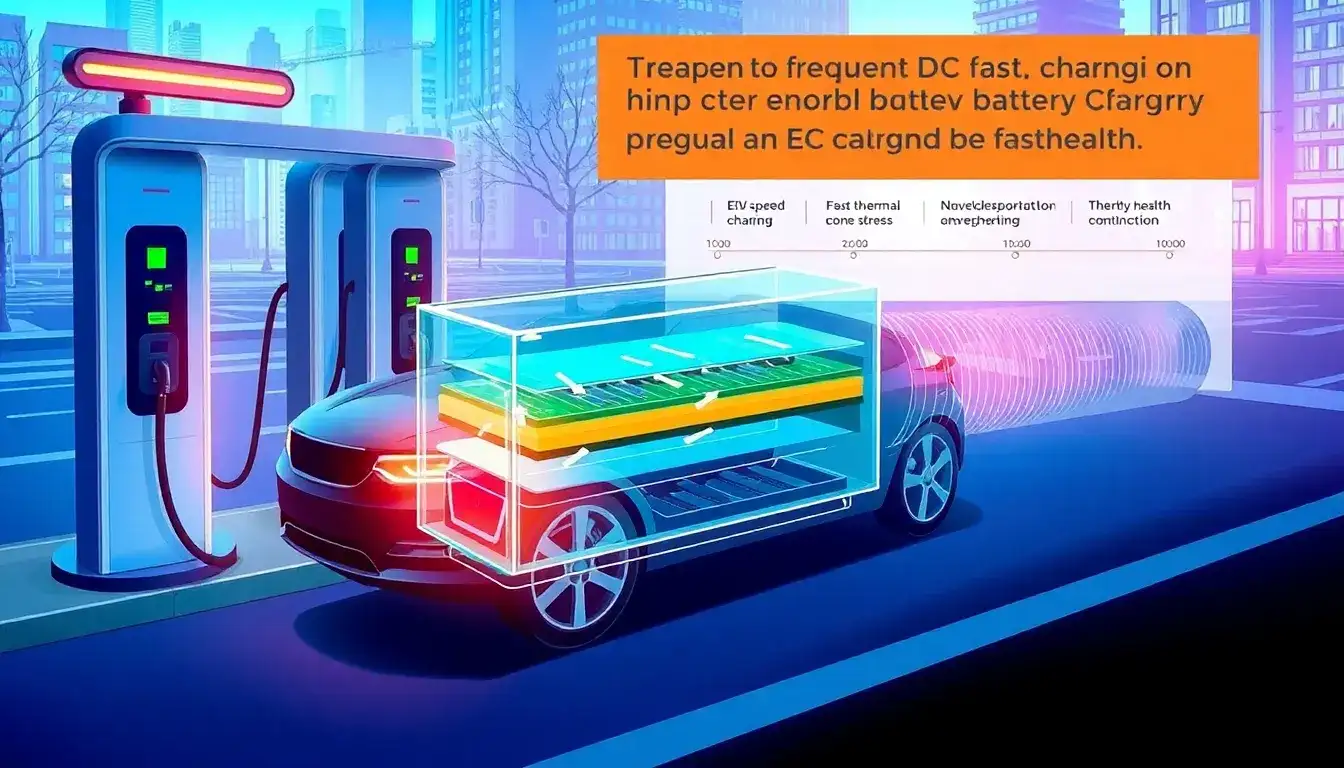
Frequent DC fast charging can have both minimal and noticeable impacts on EV battery degradation, depending on various factors:
Minimal Impact
- Average Degradation Increase: Some studies indicate that frequent DC fast charging increases battery degradation by a negligible amount on average, about 0.1%.
- Built-in Thermal Management Systems: Modern electric vehicles are equipped with sophisticated thermal management systems that help regulate battery temperatures during fast charging, mitigating potential damage.
Noticeable Impact
- Increased Heat: Fast charging generates high temperatures within the battery pack, accelerating chemical reactions that can lead to electrolyte decomposition and electrode material breakdown.
- Studies Showing Increased Degradation: A study on Nissan Leafs found that exclusive DC rapid charging increased battery degradation by about 16% compared to AC fast charging. This suggests that frequent use of rapid charging can slightly accelerate wear on the battery.
- Strain on Batteries: The high voltage and current associated with rapid charging can subject batteries to increased strain, potentially reducing their capacity to hold charge over time.
Overall, while frequent DC fast charging may slightly accelerate battery degradation, especially due to heat generation, the effects are generally considered manageable with modern thermal management systems. However, best practices for minimizing battery degradation include avoiding extreme temperatures and not relying solely on fast charging.
Original article by NenPower, If reposted, please credit the source: https://nenpower.com/blog/how-does-frequent-dc-fast-charging-impact-ev-battery-degradation/

