

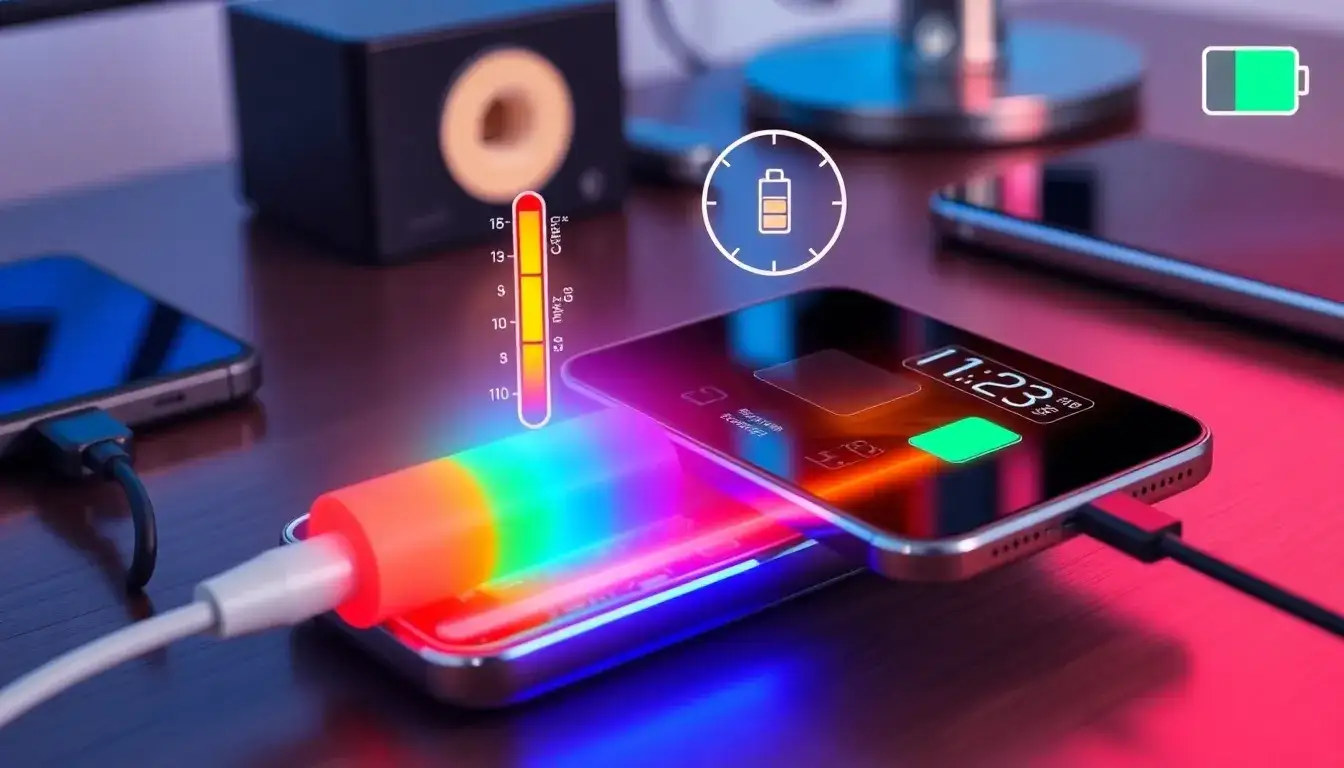
Fast charging contributes to charger overheating primarily due to the higher electrical currents and power levels involved in rapidly replenishing a device’s battery. Here’s a detailed explanation:
How Fast Charging Leads to Overheating
- Higher Current Flow: Fast chargers deliver significantly higher currents compared to standard chargers to reduce charging time. This increase in current flow means more electrical energy is being transferred in a shorter period, which naturally generates more heat as a byproduct of the process.
- Energy Conversion and Resistance: Chargers convert alternating current (AC) from the power outlet into direct current (DC) suitable for charging batteries. This conversion involves components such as transformers, rectifiers, and wiring, all of which have inherent electrical resistance. The resistance causes some of the electrical energy to be lost as heat. With higher currents in fast charging, these losses—and thus heat generation—are amplified.
- Rapid Heat Generation: Fast charging’s high power output leads to rapid heat buildup inside the charger and the device’s battery. If the heat is not effectively dissipated, it accumulates, causing the charger to feel hot or even become dangerously overheated.
Risks and Impacts of Overheating
- Fire Hazard: Excessive heat can pose a fire risk, especially if the charger or surrounding materials are flammable or if the charger is covered and cannot ventilate properly.
- Component Degradation: Persistent overheating can damage the internal components of the charger and the phone battery, reducing their lifespan and efficiency.
- Reduced Charging Efficiency: When the charger or device overheats, it may throttle charging speed to protect the hardware, leading to slower charging and unstable power delivery.
- User Experience Issues: As noted in real-world cases, devices and chargers can become uncomfortably hot during fast charging, sometimes causing users concern, although some warmth is a normal effect of the physics involved.
Summary
Fast charging contributes to charger overheating through the increased electrical current and power it delivers, which raises heat generation due to resistance and energy conversion inefficiencies inside the charger. This heat can accumulate rapidly, posing risks such as reduced hardware lifespan, fire hazards, and diminished charging performance if not managed properly.
Original article by NenPower, If reposted, please credit the source: https://nenpower.com/blog/how-does-fast-charging-contribute-to-charger-overheating/

