

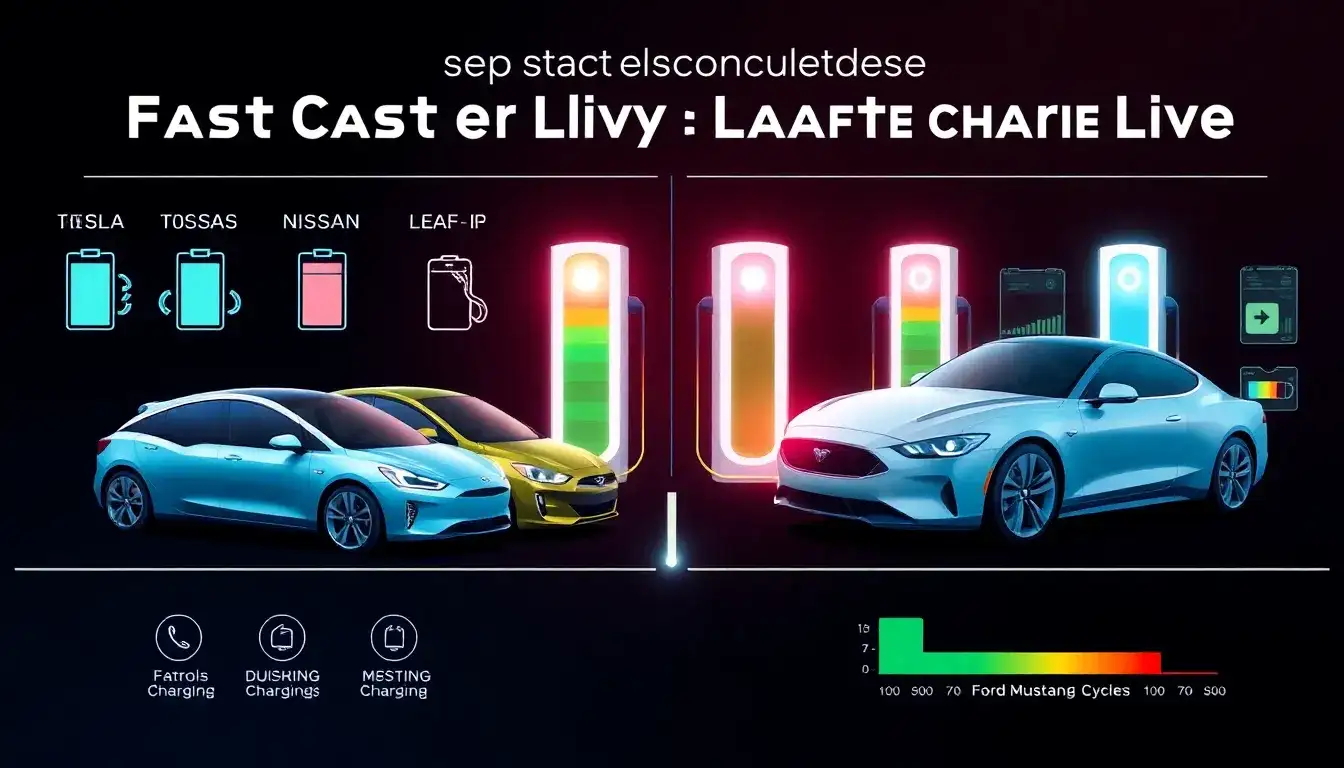
Here’s how fast charging affects battery life across different EV models, based on recent studies and manufacturer insights:
General Impact
- Degradation mechanism: Rapid charging (high-voltage DC) causes increased heat and stress on batteries, potentially accelerating capacity loss over time.
- Key variables: Impact varies based on battery chemistry, thermal management systems, and charging habits.
Model-Specific Factors
- Thermal management systems
Newer EVs (e.g., Tesla, Hyundai Ioniq) with active cooling/heating show minimal degradation from occasional fast charging.
Example: Recurrent’s study of 12,500 Teslas found no significant capacity loss even with >90% fast charging use. - Older models without cooling
EVs lacking thermal management (early Nissan Leafs) exhibit faster degradation when frequently fast-charged. A Nissan Leaf study showed 16% faster degradation with exclusive DC charging compared to AC. - High-mileage use cases
EVs fast-charged multiple times daily (e.g., taxis) may experience accelerated wear, similar to combustion engine wear in fleet vehicles.
Studies & Recommendations
- Recurrent (2024): No detectable difference in Tesla battery health between frequent and rare fast chargers.
- Manufacturer guidance: Most advise limiting DC charging to preserve longevity (e.g., Ford recommends ≤80% charge for daily use).
- Preconditioning: Warming batteries before charging (common in newer models) reduces stress during fast charging.
Practical Tips
- Prioritize AC charging (7-22kW) for daily needs.
- Avoid 100% charges at DC stations unless necessary.
- Use scheduled charging to leverage battery conditioning features.
While degradation risks exist, modern EVs with robust thermal systems handle occasional fast charging effectively. Check your manufacturer’s guidance for model-specific limits.
Original article by NenPower, If reposted, please credit the source: https://nenpower.com/blog/how-does-fast-charging-affect-the-battery-life-of-different-ev-models/

