

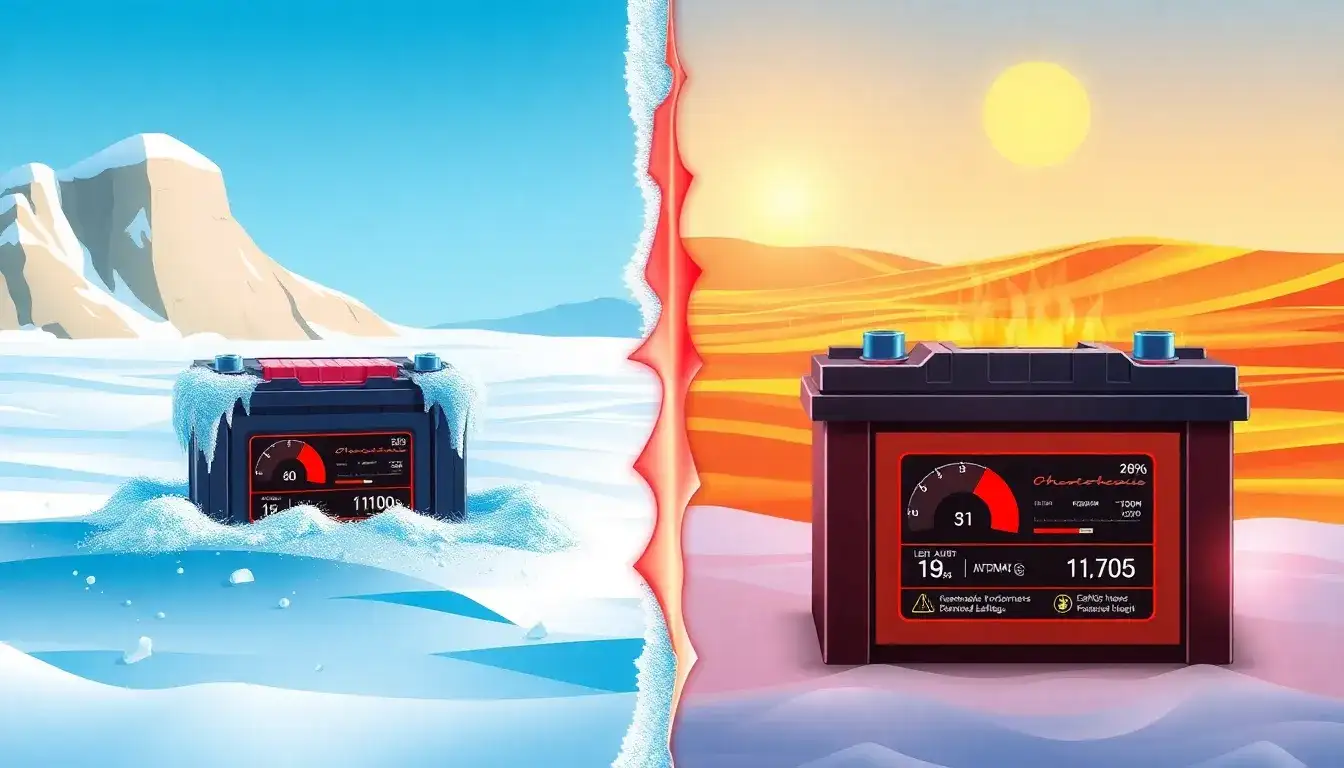
Extreme temperatures significantly impact the performance and lifespan of lead-acid batteries. Here’s how high and low temperatures affect these batteries:
High Temperatures
- Increased Self-Discharge and Corrosion: High temperatures speed up the chemical reactions inside the battery, leading to increased self-discharge and plate corrosion, which can cause irreversible damage through sulfation.
- Reduced Battery Life: For every 10°C (18°F) rise in temperature, the life of a lead-acid battery is typically reduced by about 50%. This means that a battery that would last for 10 years at 25°C (77°F) might only last for 5 years at 35°C (95°F).
- Capacity Maintained but Cycle Life Reduced: While battery capacity might be maintained at higher temperatures, the cycle life is reduced.
- Charging Challenges: Charging should be done between 50°F and 86°F (10°C and 30°C) for best results to avoid overheating and loss of electrolyte.
Low Temperatures
- Reduced Discharge Capacity: Battery capacity decreases at lower temperatures, meaning a battery may not provide its full rated capacity. For example, at 0°C (32°F), a lead-acid battery might have only about 80% of its room temperature capacity.
- Improved Cycle Life: While the discharge capacity is reduced, the battery’s cycle life improves in cooler temperatures.
- Increased Internal Resistance: The electrolyte’s specific gravity decreases as the battery discharges at low temperatures, leading to higher internal resistance.
Overall, managing temperature is crucial for maintaining the health and longevity of lead-acid batteries. Climate-controlled storage and careful charging practices can help mitigate these effects.
Original article by NenPower, If reposted, please credit the source: https://nenpower.com/blog/how-does-extreme-temperature-affect-the-performance-of-lead-acid-batteries/

