

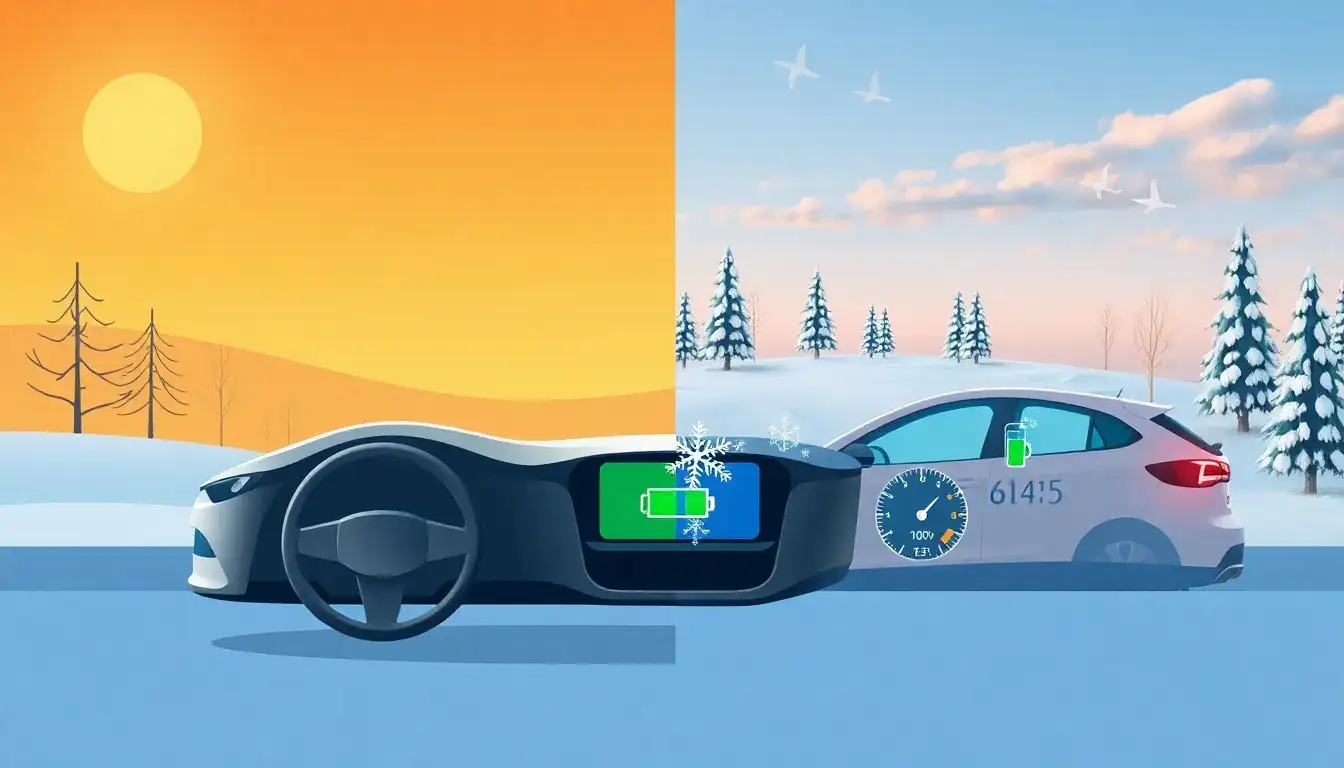
External temperature significantly impacts the range of electric vehicles (EVs). The optimal temperature for maximizing EV range is around 21.5°C (70°F). Both cold and hot temperatures can reduce an EV’s range, although cold temperatures have a more pronounced effect.
Impact of Temperature on EV Range
- Optimal Temperature: At 21.5°C (70°F), EVs often exceed their rated range, sometimes achieving up to 115% of it.
- Cold Temperatures:
- Colder conditions reduce EV range because batteries are less efficient. At -15°C (5°F), EVs may only achieve about 54% of their rated range.
- When the heating is on, the reduction in range can be more dramatic, with decreases up to 41%.
- Hot Temperatures:
- High temperatures also reduce range, although the effect is generally less severe than in cold conditions.
- At 95°F (35°C), the range might decrease by about 4% without air conditioning. With air conditioning, this figure rises to around 17%.
Factors Contributing to Range Reduction
- Battery Efficiency: Batteries perform optimally at moderate temperatures, losing efficiency in extreme heat or cold.
- Climate Control Use: Using heating in cold weather or air conditioning in hot weather consumes additional energy from the battery, further reducing the vehicle’s range.
- Vehicle Technology: Some models, like those with a heat pump, can mitigate the impact of temperature by more efficiently managing heating needs.
Understanding these factors can help EV owners manage their vehicle’s range more effectively across different climates.
Original article by NenPower, If reposted, please credit the source: https://nenpower.com/blog/how-does-external-temperature-impact-ev-range/

