

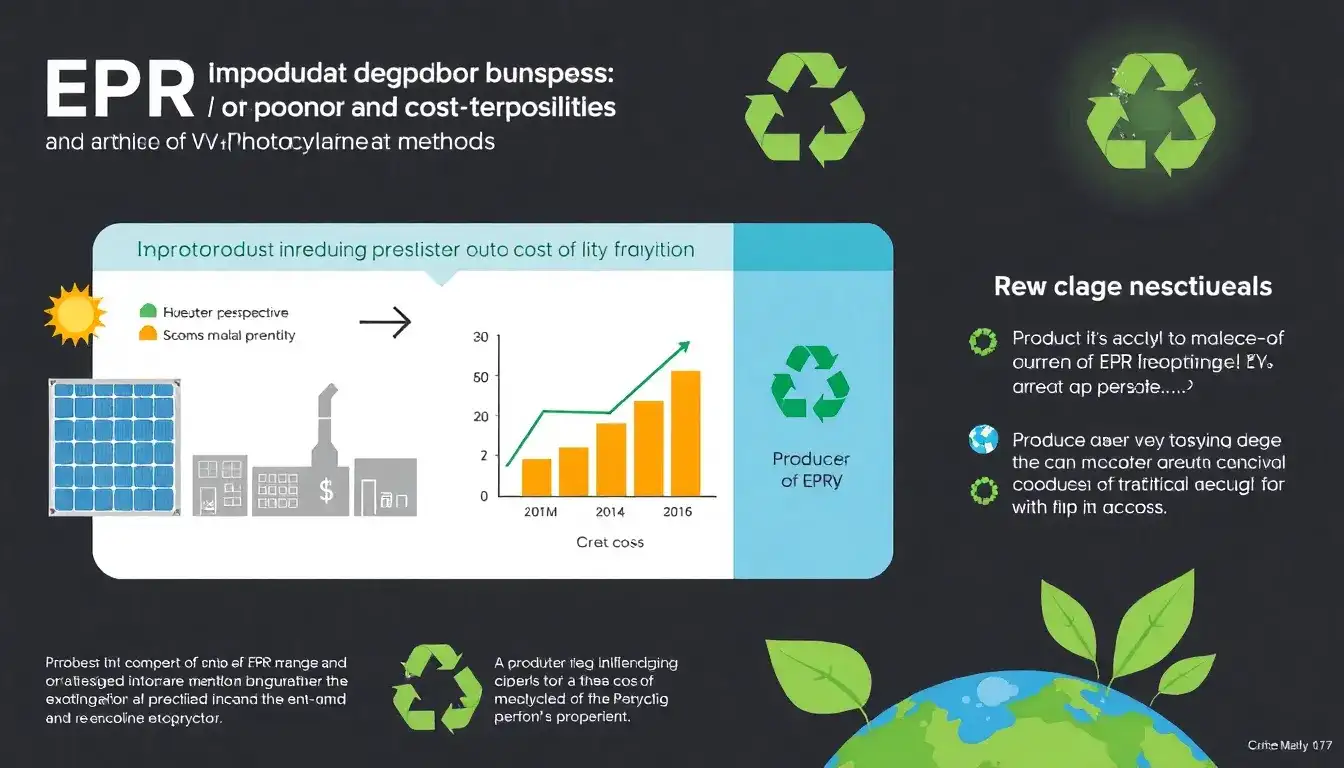
Extended Producer Responsibility (EPR) impacts the cost of photovoltaic (PV) recycling for producers primarily by shifting financial accountability for the collection, recycling, and disposal of solar panels from public systems or consumers directly onto the producers themselves. This policy approach incentivizes producers to manage the full product lifecycle, including end-of-life recycling costs, embedded within the product pricing.
Key impacts of EPR on PV recycling costs for producers include:
- Internalization of Recycling Costs: Under EPR, producers bear the expenses associated with recycling solar panels, including logistics, transportation, and processing costs, which can range roughly from $10 to $40 per panel depending on various factors such as panel type and facility location. These costs become part of the product’s lifecycle cost rather than resulting as external waste management expenses.
- Incentive for Design and Process Efficiency: EPR encourages producers to innovate in product design and recycling processes to reduce costs and improve material recovery rates. For example, advancements in mechanical, thermal, and chemical recycling technologies aim to improve yield and lower expenses, offering a path for cost reductions in the long term.
- Potential to Create More Efficient Recycling Systems: EPR schemes drive the creation of comprehensive collection and recycling infrastructure funded by producers, which can increase efficiency and result in overall system cost reductions. Such economies of scale are important given that current recycling operations often require large waste volumes to be profitable.
- Cost Incorporated into Product Pricing: While there is concern that EPR compliance fees could increase consumer prices, evidence suggests that the overall system efficiencies and increased recycling rates may mitigate broad inflationary impacts. Nonetheless, producers may pass some recycling costs along the supply chain within product prices.
- Variation by Region and Legislation: The cost impact varies depending on the robustness of local EPR legislation and infrastructure. Many countries still treat solar panel waste under general waste laws rather than specific EPR mandates, influencing how costs are allocated and managed.
In summary, EPR shifts the financial burden of PV recycling to producers, embedding recycling costs into the product lifecycle and motivating more sustainable production and recycling practices. While this increases costs for producers compared to non-EPR scenarios, it also encourages efficiency and innovation that can reduce long-term recycling expenses and support sustainability goals in the solar industry.
Original article by NenPower, If reposted, please credit the source: https://nenpower.com/blog/how-does-epr-impact-the-cost-of-pv-recycling-for-producers/

