

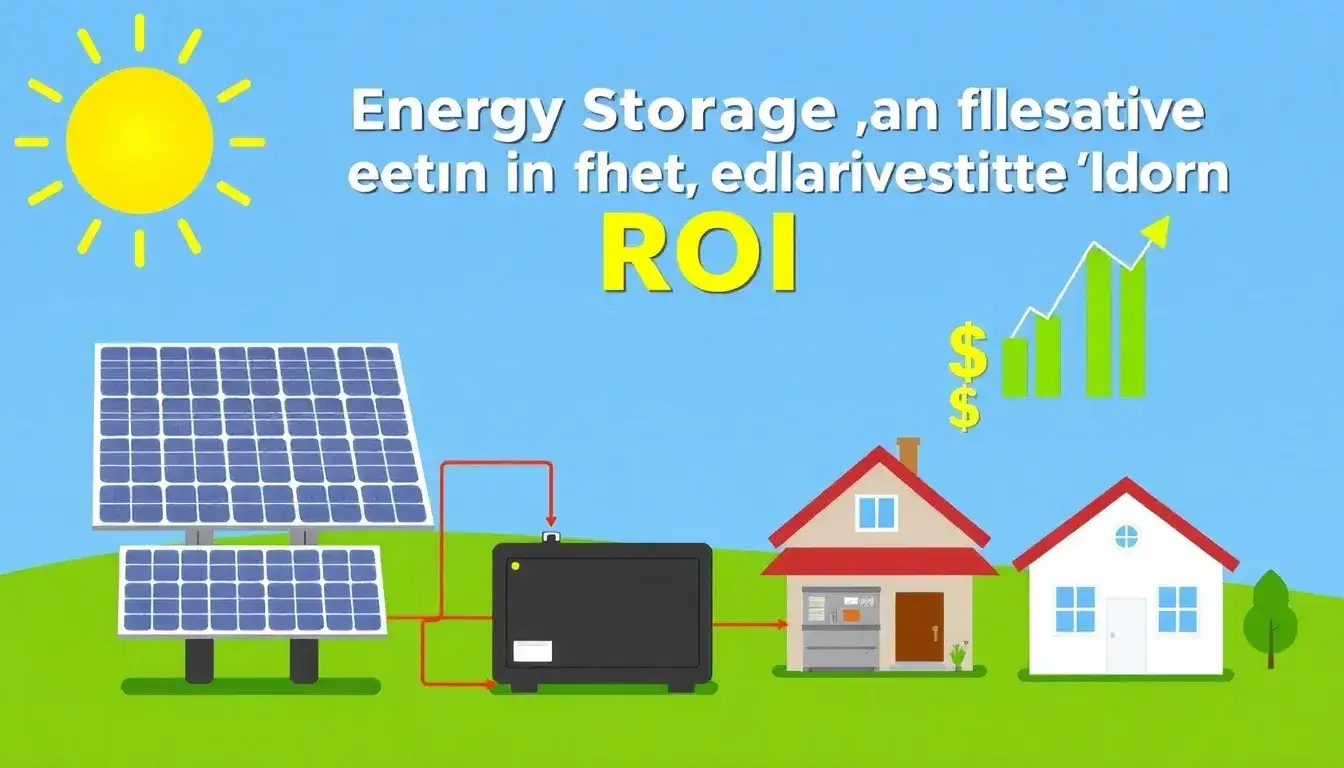
Energy storage significantly enhances the return on investment (ROI) for solar power systems by offering several strategic benefits:
Key Benefits of Energy Storage on ROI
- Energy Arbitrage:
- Energy storage allows homeowners and businesses to store solar energy generated during low-value hours and use it during high-demand periods when electricity rates are higher. This strategy, known as “charge low, discharge high,” increases the value of the solar energy generated.
- For instance, storing energy for use during peak hours when rates are higher can save customers significant amounts compared to selling excess energy at lower rates during the day.
- Peak Demand Shaving:
- Commercial and residential users can reduce peak demand charges by using stored energy during high-demand periods. This approach reduces reliance on grid electricity during costly peak hours, directly lowering utility bills.
- Peak shaving is particularly beneficial in regions with time-of-use (TOU) pricing structures, where using stored energy during high-rate hours maximizes cost savings.
- Increased Efficiency and Resilience:
- Energy storage transforms solar systems into reliable, 24/7 energy solutions, providing backup power during outages. This resilience is crucial for maintaining operations in critical industries like manufacturing and healthcare.
- By storing excess energy generated during the day, businesses can maintain continuity during periods of low sunlight or grid outages.
- Revenue Generation:
- With energy storage, businesses can participate in demand response programs or sell excess stored energy back to the grid, creating additional revenue streams.
- Programs like Tesla’s Virtual Power Plant in California demonstrate potential earnings from contributing to grid stability.
- Enhanced ROI Through Incentives:
- Local and federal incentives, such as rebates and tax benefits (e.g., MACRS depreciation), further enhance the ROI by reducing upfront costs and taxable income.
Calculating ROI with Energy Storage
To calculate ROI with energy storage, consider the following steps:
- Total System Costs: Include initial costs of solar panels, battery storage, installation, and maintenance.
- Annual Savings: Estimate savings from reduced grid usage and peak shaving.
- Incentives: Account for tax benefits, rebates, and other incentives.
- ROI Calculation: Use these figures to determine the overall return on investment, factoring in system lifespan and ongoing savings.
By integrating energy storage into solar power systems, users can maximize cost savings, enhance operational efficiency, and accelerate their return on investment.
Original article by NenPower, If reposted, please credit the source: https://nenpower.com/blog/how-does-energy-storage-improve-the-return-on-investment-roi-for-solar-power-systems/

