

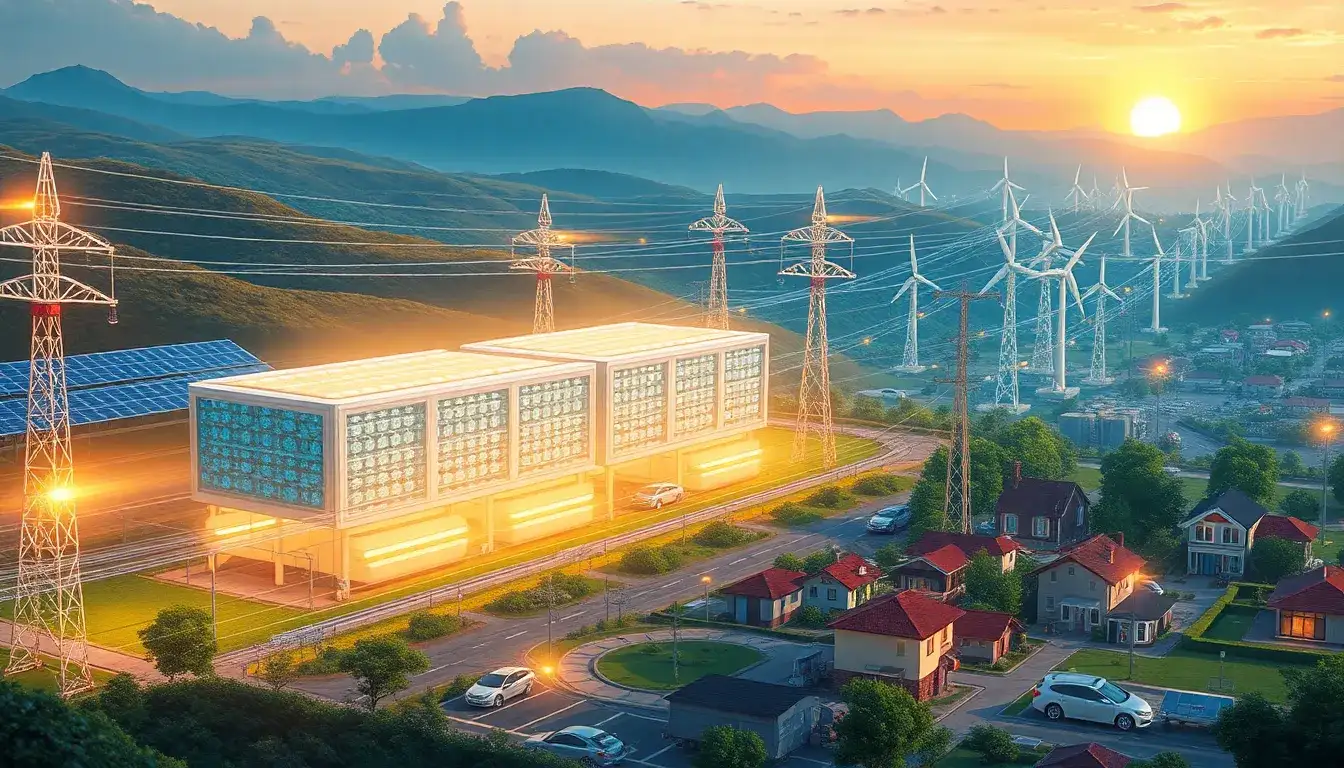
Key Benefits of Energy Storage
- Peak Capacity Management:
- Challenge: High electricity demand during peak usage periods strains grid resources, especially during extreme weather events.
- Solution: Battery systems store excess energy during low-demand periods and discharge it during peak times, reducing the need for peaker plants and lowering emissions.
- Voltage Support:
- Challenge: Voltage fluctuations due to renewable output variability can damage equipment and disrupt operations.
- Solution: Energy storage systems provide reactive power to stabilize voltage levels, ensuring proper equipment operation and reducing maintenance costs.
- Black Start Capability:
- Challenge: Restarting the grid after a widespread outage is complex, often relying on diesel generators.
- Solution: Energy storage offers the initial power needed to restart grid infrastructure, enabling faster recovery and reducing reliance on diesel.
- Critical Infrastructure Support:
- Challenge: Hospitals and essential services require continuous power during outages.
- Solution: Grid-scale storage supplies backup energy, ensuring business continuity and critical service availability even during extended grid failures.
- Cybersecurity:
- Challenge: Grids are increasingly vulnerable to cyber threats as they integrate more cloud services and distributed energy resources.
- Solution: Energy storage systems can be isolated from the main grid, reducing vulnerability and providing a secure source of power during cyber incidents.
- Renewable Energy Firming:
- Challenge: Intermittent renewable energy sources can lead to grid instability.
- Solution: Combining energy storage with renewables prevents outages by stabilizing energy supply when solar or wind availability drops.
Additional Strategies
- Microgrids with Battery Storage: These offer localized resilience by providing continuous power even when the main grid is down, using decentralized energy sources like solar and wind.
- Smart Grid Integration: Energy storage works with smart grid technologies to predict and manage power usage effectively, optimizing energy supply and demand in real-time.
In summary, energy storage is essential for building a resilient grid by enhancing operational stability, supporting critical infrastructure, and ensuring a reliable supply of power during disruptions.
Original article by NenPower, If reposted, please credit the source: https://nenpower.com/blog/how-does-energy-storage-improve-the-resilience-of-the-electrical-grid/

