

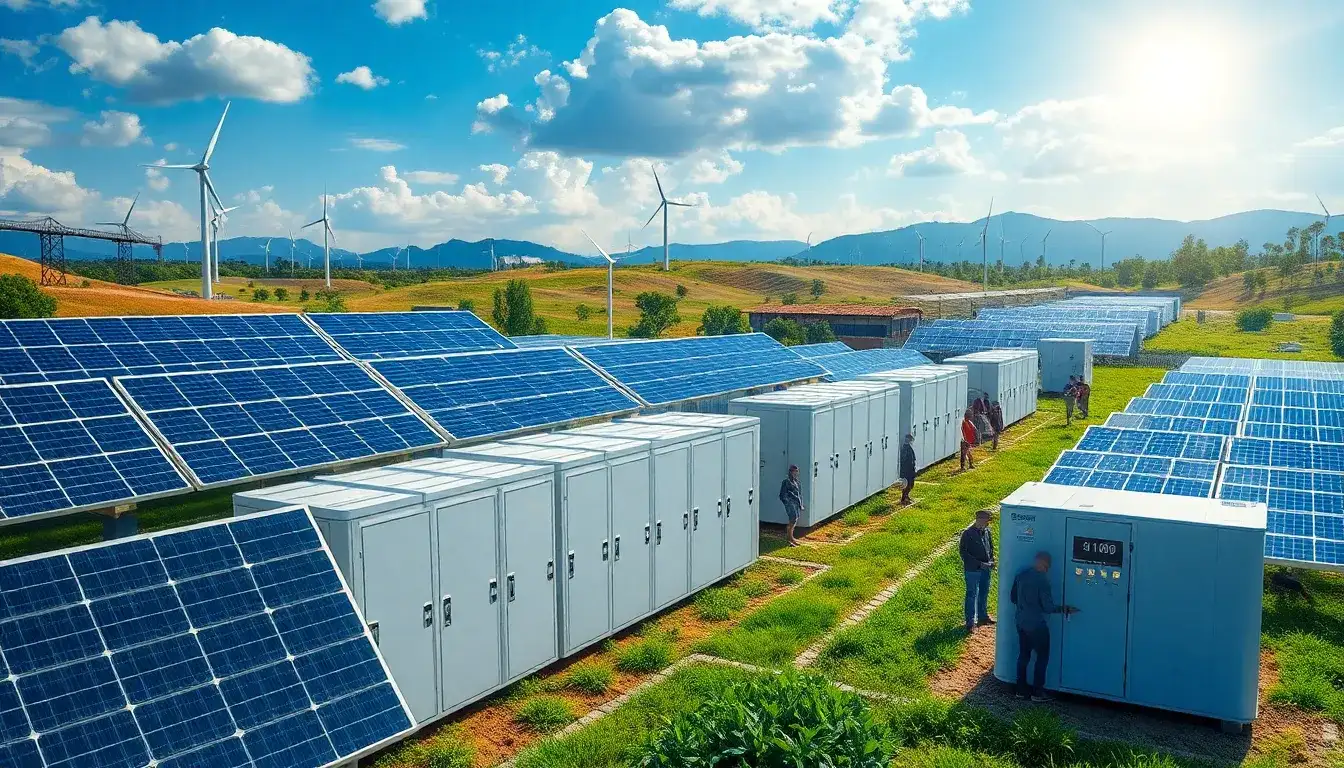
Energy storage significantly enhances the resilience of solar energy systems by enabling continuous and reliable power supply during grid outages and disruptions, thereby improving overall energy security and operational stability.
How Energy Storage Boosts Solar Resilience
1. Enables Power During Outages and Disruptions
Solar panels alone typically shut off when the grid goes down for safety reasons, so without storage, solar cannot provide power during outages. However, pairing solar with battery storage allows the system to detect loss of grid power and switch to an “islanded” mode, delivering electricity independently from the grid to critical loads such as homes, hospitals, fire stations, and emergency shelters during outages caused by storms, floods, or other emergencies. This local energy storage acts as a backup, keeping essential services and facilities operational even when the centralized grid is down.
2. Extends Power Availability Beyond Daylight Hours
Solar energy production is intermittent and limited to daylight hours, but energy storage systems store excess solar electricity generated during the day for use at night or during cloudy periods. This capability ensures that solar power can be deployed continuously, maintaining power supply during extended outages without relying on diesel generators that require fuel delivery and are vulnerable to supply disruptions.
3. Facilitates Microgrid Formation for Local Resilience
Energy storage combined with solar enables the creation of microgrids — localized, self-sufficient energy networks that can operate independently from the main grid. These microgrids provide resilience benefits by balancing supply and demand locally and can operate indefinitely during emergencies if sized appropriately. Microgrids with solar-plus-storage have been deployed in critical infrastructure, including military bases and emergency facilities, improving their ability to maintain power autonomously during grid failures.
4. Supports Grid Restoration and Stabilization
Advanced solar-plus-storage systems equipped with grid-forming inverters have the potential to assist in restarting the grid after disruptions, enhancing overall grid resilience. These systems can provide multi-directional power flow and help stabilize the local grid during and after disturbances, speeding up the recovery process.
5. Economic and Operational Benefits by Valuing Resilience
Incorporating energy storage with solar shifts the economics by increasing the value of solar systems through resilience benefits. Facilities with solar-plus-storage can avoid costly downtime, maintain operations during outages, and reduce reliance on traditional fuel-based backup generators, which may be less reliable and more expensive over time. This added value often justifies larger and more robust solar and storage system investments.
6. Hardening Solar Infrastructure for Disaster Resilience
Designing solar-plus-storage systems with resilience in mind includes hardening infrastructure against extreme weather events, ensuring the system’s physical and operational durability. This approach reduces maintenance costs and avoids damage, allowing solar systems with storage to continue functioning when most needed.
Summary Table of Energy Storage Benefits for Solar Resilience
| Benefit | Description | Impact |
|---|---|---|
| Backup power during outages | Storage provides electricity when the grid fails | Keeps critical loads powered during emergencies |
| Extends solar usage beyond daylight | Stores excess solar energy for nighttime or cloudy periods | Continuous power supply |
| Enables microgrid operation | Supports islanded operation of local energy networks | Localized energy independence and resilience |
| Assists grid restoration | Grid-forming inverters and storage help restart and stabilize the grid after disruptions | Faster recovery from outages |
| Economic value from resilience | Avoids outage costs, reduces fuel dependency, justifies investment | Improved financial viability of solar systems |
| Infrastructure hardening | System design improves durability against extreme weather | Reduced damage and maintenance |
In conclusion, energy storage transforms solar energy systems from intermittent, grid-dependent resources into resilient, dispatchable power sources capable of maintaining electricity supply through disruptions and disasters. This capability is critical for enhancing community resilience, protecting critical infrastructure, and supporting grid reliability amidst increasing physical and climate-related challenges.
Original article by NenPower, If reposted, please credit the source: https://nenpower.com/blog/how-does-energy-storage-improve-the-resilience-of-solar-energy-systems/

