

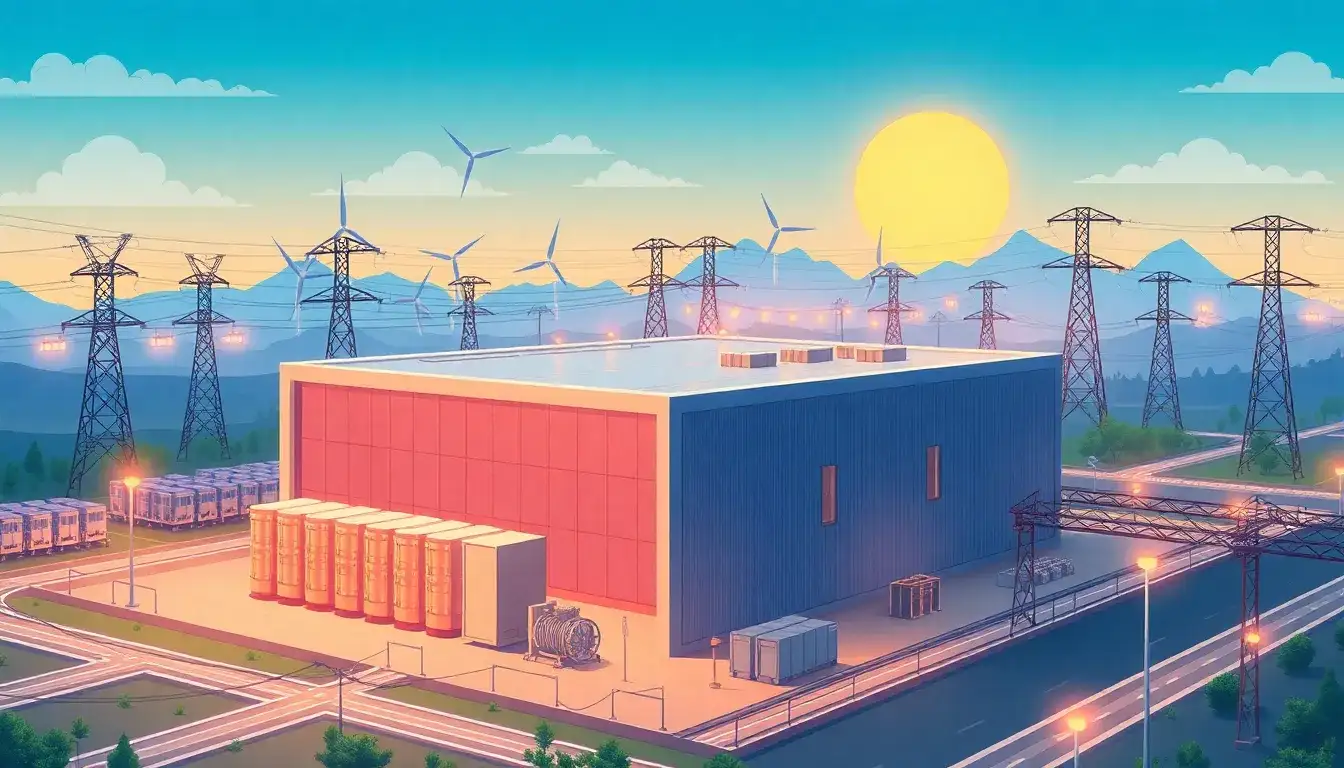
Energy storage significantly improves grid stability through several key mechanisms:
Balancing Supply and Demand
Energy storage systems (ESS), such as battery energy storage systems (BESS), absorb excess electricity generated during periods of low demand or high renewable energy production and release stored energy during peak demand times. This balancing act smooths out fluctuations and ensures a consistent energy supply, helping to maintain stable grid frequency and voltage levels essential for reliable power delivery.
Frequency Regulation and Voltage Support
Maintaining a stable grid frequency requires precisely balancing electricity supply and demand in real time. Energy storage systems can rapidly respond to fluctuations by injecting or absorbing energy as needed, thereby regulating frequency deviations. Additionally, energy storage can provide voltage control by managing reactive power, ensuring voltage remains within acceptable limits to prevent equipment damage and power quality issues.
Enhancing Grid Resilience and Reliability
Energy storage provides backup power during outages or grid disturbances, reducing the frequency and duration of blackouts. This capability increases the grid’s resilience against natural disasters, equipment failures, and other disruptions. Distributed storage installations can localize backup power for critical infrastructure and communities prone to disruptions, minimizing downtime and impacts on consumers.
Facilitating Renewable Energy Integration
The variable nature of renewable energy sources like solar and wind poses challenges for grid stability. Energy storage mitigates this by storing surplus renewable energy when generation is high and releasing it when generation is low, thus enabling a more continuous and reliable renewable energy supply. This integration supports grid modernization and the transition to cleaner energy systems.
Economic and Operational Benefits
By reducing the need for peaking power plants and optimizing the use of existing grid infrastructure, energy storage helps lower operational costs and improves grid efficiency. This economic advantage benefits both utilities and consumers while supporting a shift toward sustainable energy.
In summary, energy storage enhances grid stability by balancing supply and demand, regulating frequency and voltage, providing backup power for resilience, and enabling the integration of variable renewable energy sources, all of which contribute to a more reliable, efficient, and modernized power grid.
Original article by NenPower, If reposted, please credit the source: https://nenpower.com/blog/how-does-energy-storage-improve-grid-stability-3/

