

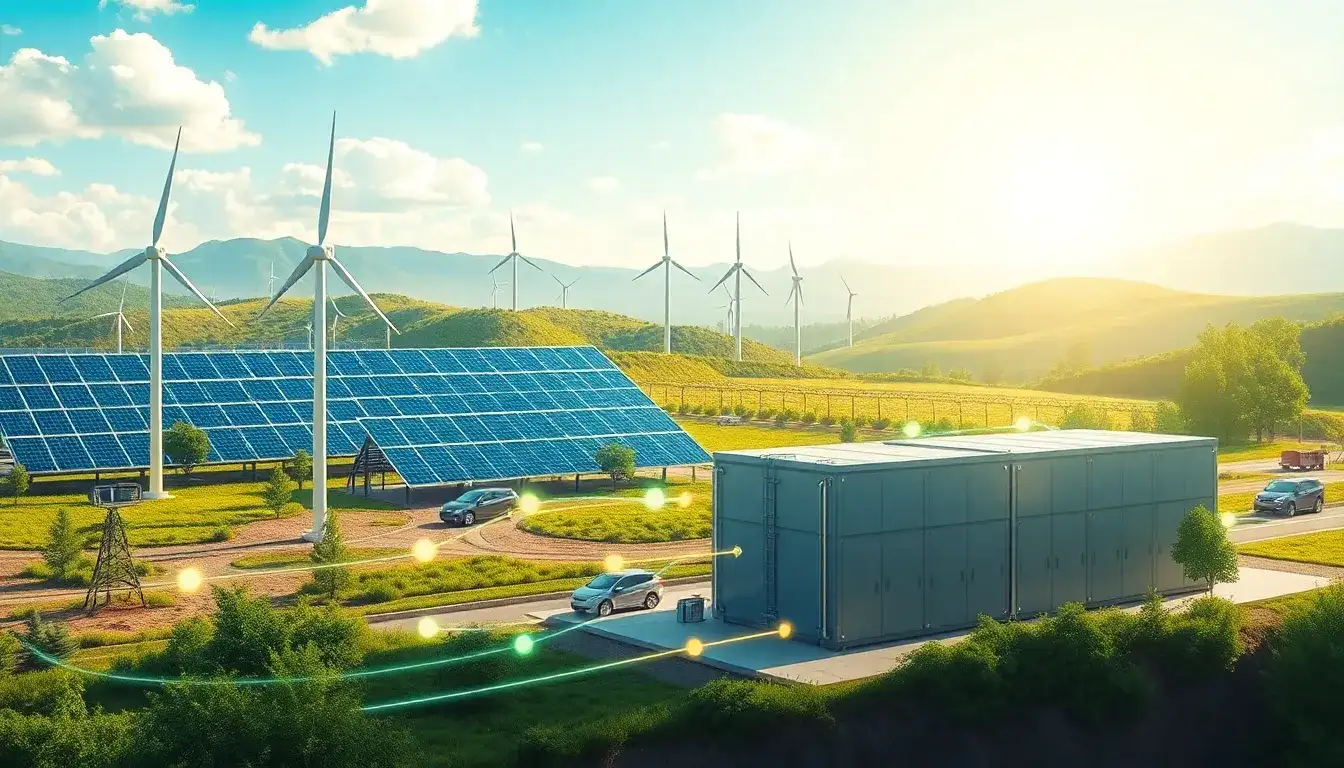
Energy storage plays a crucial role in the integration of renewable energy sources by addressing the inherent variability and unpredictability of these resources. Here are some key ways energy storage impacts this integration:
Key Impacts of Energy Storage
- Variability Management:
- Balancing Supply and Demand: Energy storage helps manage the fluctuations in renewable energy production, such as those from solar and wind power, by storing excess energy generated during periods of high output and releasing it when demand is high.
- Curtailment Reduction: By storing excess energy, energy storage can significantly reduce renewable energy curtailment, which occurs when renewable energy is produced but not used due to grid constraints.
- Grid Stability and Services:
- Regulation Reserves: Energy storage can provide regulation reserves to balance the grid’s supply and demand in real-time, compensating for the variability of renewable resources.
- Fast-Frequency Response: It helps maintain grid stability by providing fast-frequency response services, which are critical as conventional generators retire and are replaced by variable renewables.
- Voltage Support: Energy storage aids in managing voltage levels, ensuring the grid’s stability even with remote renewable installations.
- Economic Benefits:
- Price Arbitrage: By storing energy during low price periods and selling it when prices are high, energy storage can enhance economic opportunities for renewable energy producers.
- Increased Renewable Penetration: Energy storage enables higher penetration levels of renewable energy into the grid, creating a positive feedback loop where renewables increase the demand for storage, which supports further renewable deployment.
- Optimized Resource Utilization:
- Temporal and Spatial Optimization: Energy storage enables the transfer of renewable energy across time and locations, ensuring that energy is available when and where it is needed most.
- Hybrid Systems: Collocating energy storage with renewable energy plants enhances the efficiency and reliability of these systems, allowing for more consistent power output.
Overall, energy storage is vital for maximizing the utilization of renewable energy sources, reducing waste, enhancing grid stability, and supporting a shift towards a cleaner energy future.
Original article by NenPower, If reposted, please credit the source: https://nenpower.com/blog/how-does-energy-storage-impact-the-integration-of-renewable-energy-sources/

