

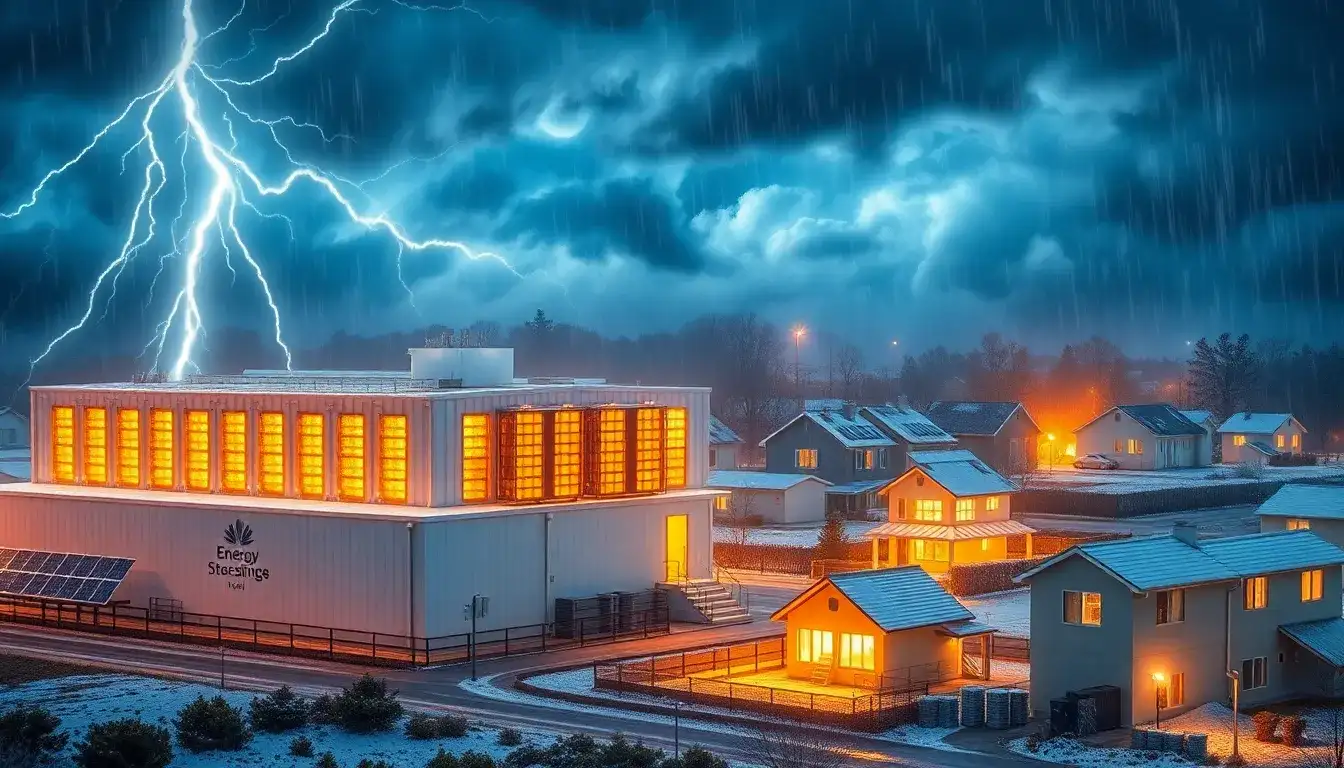
Energy Storage and Its Role During Weather Events
Energy storage plays a critical role in helping communities and utilities manage electricity during weather events that disrupt power generation and distribution. Here is how energy storage provides support during such events:
Backup Power During Grid Outages
Energy storage systems store electricity when generation is abundant (e.g., during sunny periods for solar) and can provide emergency backup power during grid outages caused by extreme weather such as hurricanes, storms, blizzards, wildfires, or heat waves. This stored energy enables homes and critical facilities to continue operating essential appliances like refrigerators, lighting, and medical devices, thereby enhancing safety and comfort during outages.
Supporting First Responders and Recovery Efforts
During large-scale weather disasters like Superstorm Sandy or Hurricanes Irene and Katrina, energy storage systems have been instrumental in providing power and lighting to assist first responders, reducing the time needed to begin recovery and repair operations.
Grid Reliability and Cost Management for Utilities
For utilities, battery energy storage systems (BESS) help maintain grid reliability during stressful conditions brought on by extreme weather. These systems allow utilities to optimize energy procurement by purchasing and storing electricity when prices are low and dispatching it during peak demand or outages. This arbitrage reduces costs and enhances operational flexibility.
Enabling Continuous Energy Supply with Distributed Generation
Energy storage coupled with renewable energy sources like solar allows for localized power generation and storage. This decentralized approach means that even if the main grid is down in an area due to weather damage, homes and buildings with solar panels and battery storage can maintain power independently. This improves resilience and reduces dependence on fossil fuels during emergencies.
Summary Table
| Benefit | Description |
|---|---|
| Emergency backup power | Supplies power during grid outages to maintain essential home and medical functions |
| Support recovery efforts | Powers first responders and critical infrastructure during disaster recovery |
| Cost savings and grid optimization | Utilities save on wholesale electricity costs via energy arbitrage and ensure supply during peak demands |
| Resilience through decentralization | Enables homes and communities to maintain power independently from the grid when disrupted by weather events |
In conclusion, energy storage systems significantly enhance resilience, safety, and cost-efficiency during weather events that disrupt electricity generation by providing backup power, supporting emergency response, optimizing utility operations, and enabling local energy autonomy.
Original article by NenPower, If reposted, please credit the source: https://nenpower.com/blog/how-does-energy-storage-help-during-weather-events-that-disrupt-electricity-generation/

