

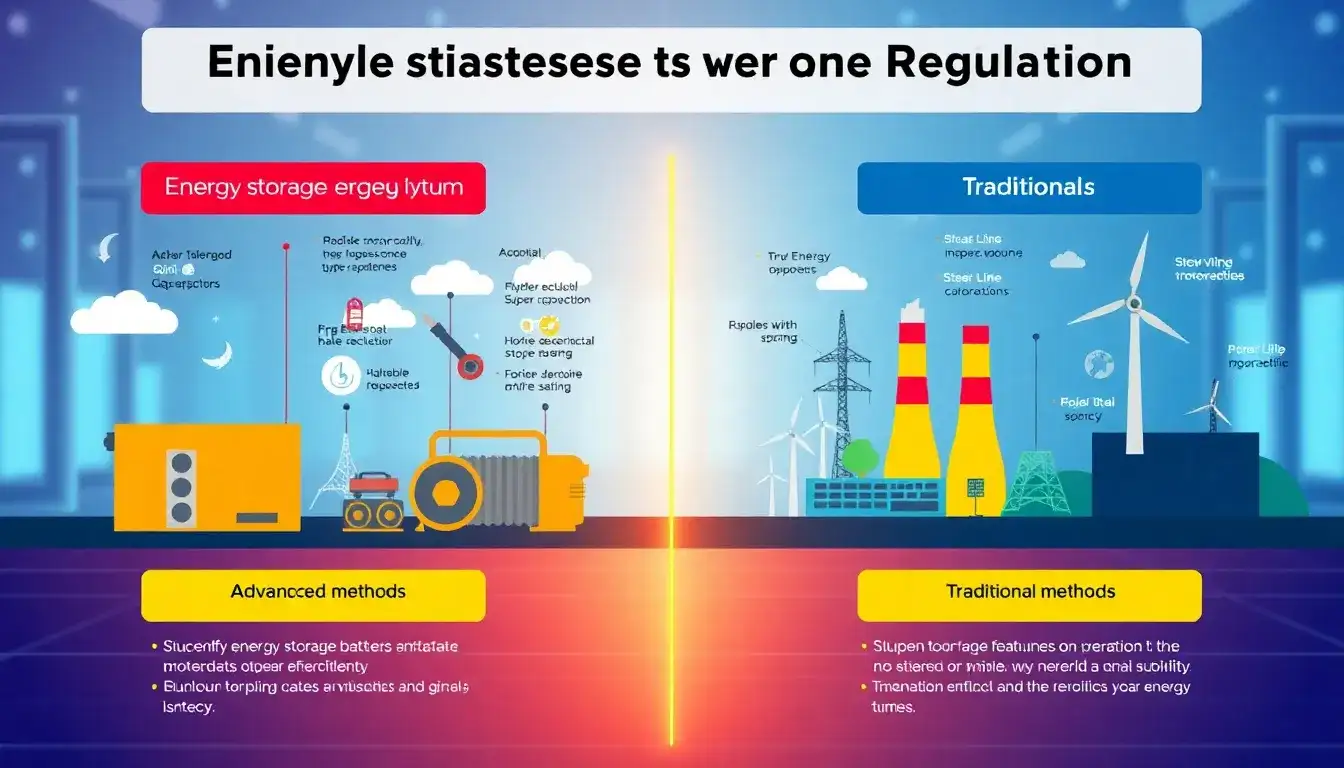
Comparison of Energy Storage and Traditional Methods in Frequency Regulation
Introduction
Frequency regulation involves injecting or withdrawing active power from the grid to maintain the system frequency. Energy storage systems (ESS) and traditional generators (e.g., fossil fuel plants) are the primary tools used for this purpose. This section will compare these two methods in terms of performance, cost, and operational constraints.
Performance and Ramping Ability
- Energy Storage Systems (ESS): ESS, particularly batteries, offer faster ramping capabilities compared to traditional generators. They can respond quickly to changes in the grid’s frequency, making them highly effective in providing frequency regulation services. Their fast response helps maintain grid stability, especially with the integration of renewable energy sources.
- Traditional Generators: Traditional generators provide a slower ramp but can maintain continuous operation over long periods. They have historically been the primary source of frequency regulation but are less agile in responding to rapid frequency changes.
Cost and Efficiency
- Energy Storage Systems (ESS): The cost of ESS is decreasing, making them more competitive, but they still have higher initial investment costs compared to traditional methods. They also have energy efficiency losses during charge/discharge cycles.
- Traditional Generators: While traditional generators have lower upfront costs for some types, their operational costs, such as fuel and maintenance, can be higher over time. They generally have better energy efficiency but lack the fast response time of ESS.
Operational Constraints
- Energy Storage Systems (ESS): ESS are energy-limited, meaning they cannot continuously discharge or charge without losing capacity. They require mechanisms to manage their state of charge (SoC) to avoid overcharging or depleting, such as energy offset compensation strategies used by CAISO.
- Traditional Generators: These can provide sustained power output as long as they are within their operational range. However, they require longer start-up times and do not offer the same level of flexibility as ESS in responding to rapid frequency changes.
Market Integration
- Energy Storage Systems (ESS): ESS are increasingly integrated into grid management through innovative market policies, such as FERC Order 755, which rewards fast-responding units like ESS with higher payments based on performance.
- Traditional Generators: These have long been integrated into grid management but face challenges from the encroachment of ESS and renewable energy sources, which can provide similar services with greater agility.
Conclusion
Energy storage systems offer superior ramping capabilities and faster response times, making them ideal for frequency regulation, especially in grids with high renewable penetration. However, they face challenges related to energy efficiency and cost. Traditional generators provide sustained power but lack the agility of ESS. Market strategies and technological advancements are needed to fully integrate ESS into frequency regulation systems effectively.
Original article by NenPower, If reposted, please credit the source: https://nenpower.com/blog/how-does-energy-storage-compare-to-traditional-methods-in-frequency-regulation/

