

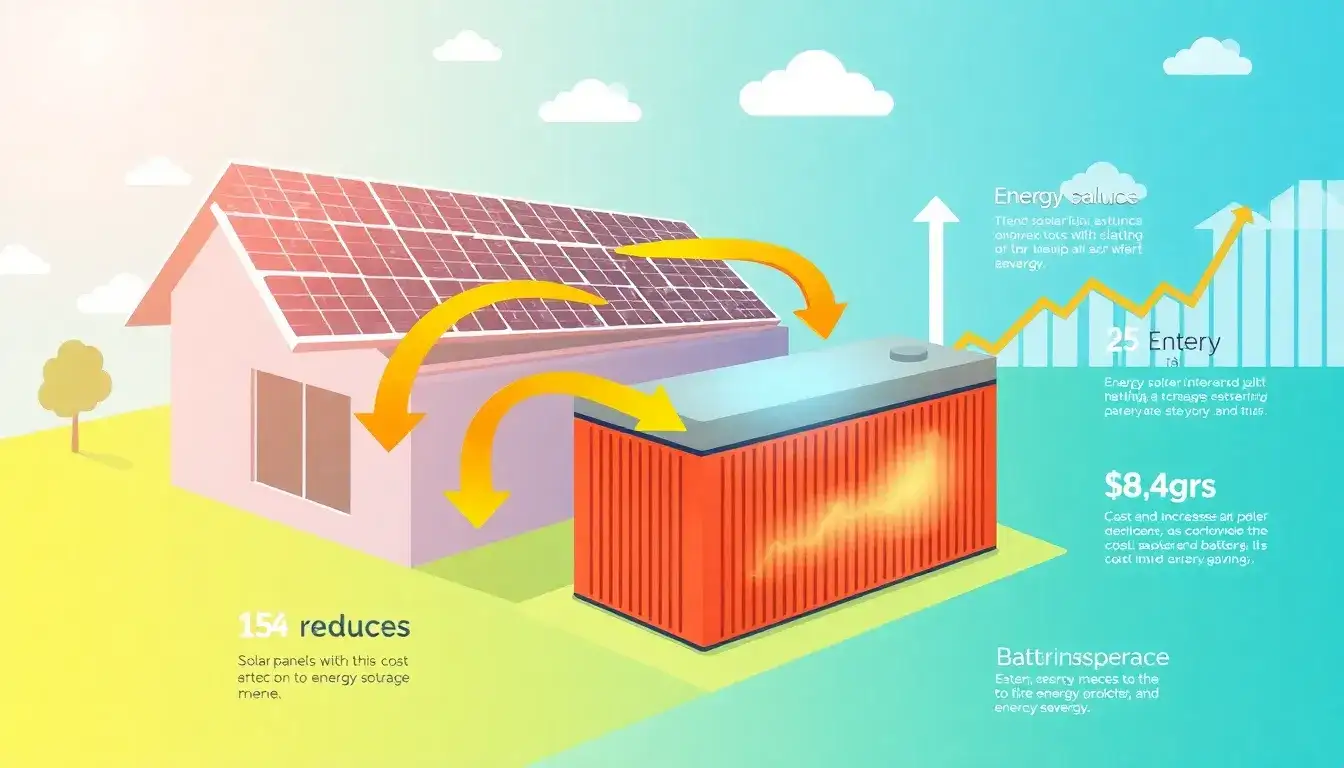
The integration of energy storage systems into solar power installations has a significant impact on the cost and overall value proposition of solar energy. Understanding these effects involves analyzing various factors, including initial investment, operational savings, and long-term financial viability.
Cost Breakdown of Solar Power Systems with Storage
- Initial Investment:
- The upfront cost of installing solar panels alone is around $3 per watt in 2025, which is significantly lower than the $7.50 per watt in 2010.
- Adding battery storage can sometimes double the overall price of a solar system. For instance, while battery costs have decreased from $1,000-$1,500 per kWh in 2010 to approximately $200-$400 per kWh, the complete installation of battery systems still represents a substantial initial investment depending on the system size and configuration.
- Installation Considerations:
- The complexity of integrating battery storage may lead to increased installation costs, particularly if retrofitting an existing solar system. When battery storage is included in the initial solar installation, the costs can be lower due to the simultaneous electrical work required.
- Cost-Saving Mechanisms:
- An energy storage system enhances the utility of solar power by allowing homeowners to store excess energy generated during the day for use at night or during outages. This capability helps to reduce electricity bills by minimizing dependency on grid power when rates are higher. Additionally, battery systems support participation in programs that provide compensation for exporting stored energy back to the grid during peak demand periods.
Long-term Financial Viability
- Return on Investment (ROI):
- While solar installations provide savings from reduced electricity bills, the addition of storage can further enhance these savings. Energy storage can capture excess energy produced during sunny periods, thus maximizing self-consumption and lowering overall energy costs.
- Market Fluctuations and Incentives:
- The dynamics of energy pricing, coupled with financial incentives like tax credits (e.g., a 30% federal tax credit for solar and storage systems), can positively affect ROI. However, market conditions such as inflation and supply chain disruptions can introduce uncertainty in future costs.
- Grid Benefits:
- Energy storage systems also provide broader benefits by stabilizing the grid and reducing the need for expensive energy imports. They allow for the integration of more renewable energy sources, thereby reducing overall energy costs for consumers.
Conclusion
Energy storage plays a critical role in enhancing the cost-effectiveness and reliability of solar power systems. While the initial costs may be high, the potential for energy savings, enhanced financial incentives, and increased energy independence demonstrate that integrating battery storage can be a worthwhile investment for both individual consumers and the wider electricity grid. As technology continues to improve and costs decrease further, the economic viability of solar-plus-storage systems is poised to become increasingly favorable.
Original article by NenPower, If reposted, please credit the source: https://nenpower.com/blog/how-does-energy-storage-affect-the-cost-of-solar-power-systems/

