

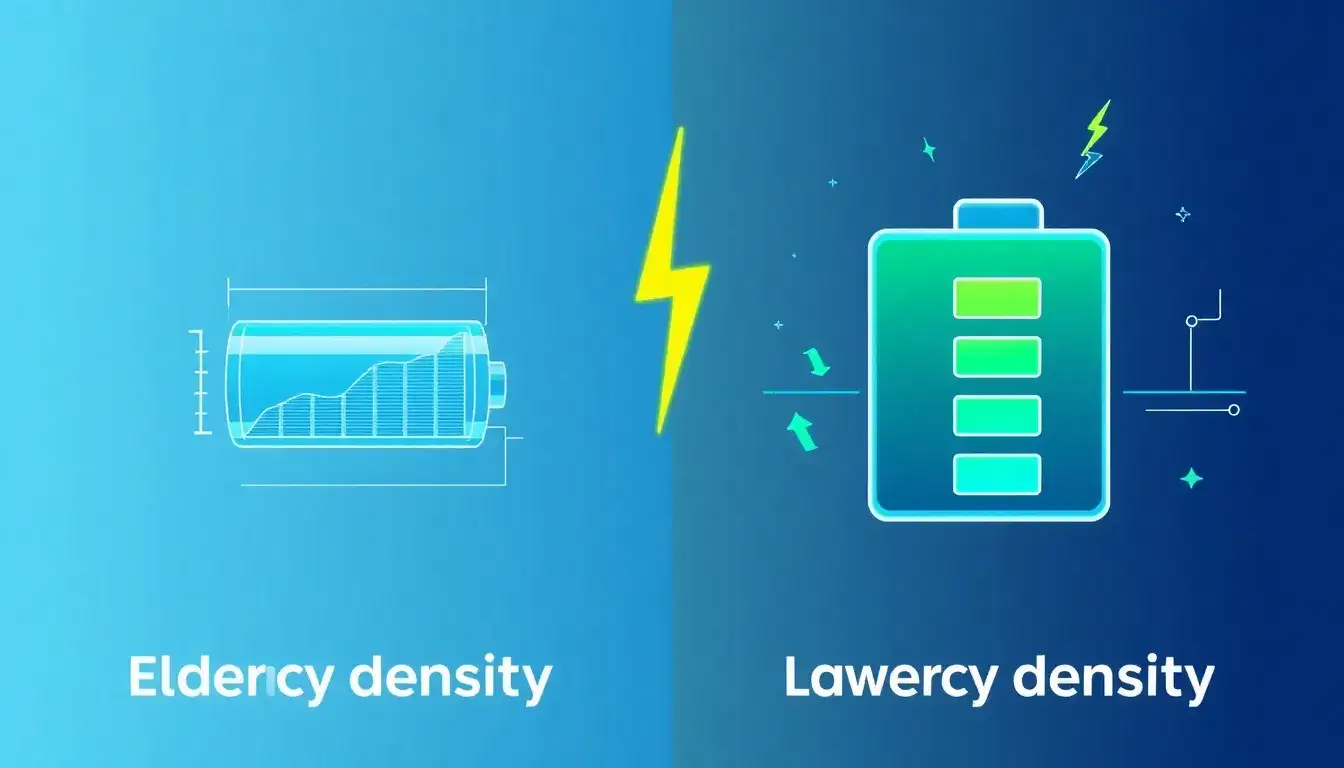
The energy density of lithium-ion batteries plays a crucial role in determining their weight and size. Energy density is the amount of energy stored per unit of mass or volume. Lithium-ion batteries have a gravimetric energy density ranging from approximately 50 to 330 Wh/kg, with recent advancements reaching up to 711.3 Wh/kg.
Impact on Weight
- Higher Energy Density: Increases in energy density allow more energy to be stored per kilogram of battery material. This means that for the same amount of energy, a higher energy density battery will be lighter. For example, if a battery has a higher energy density, a smaller amount of material is needed to store the same amount of energy, reducing overall weight.
- Reduced Material: With advancements in materials and design, like using ultrathin current collectors and increasing the proportion of active materials, the weight of lithium-ion batteries can be significantly reduced without compromising performance.
Impact on Size
- Compact Design: Higher energy density also results in more energy being stored per unit volume, which can lead to a more compact design. This means that for the same energy capacity, a battery with higher volumetric energy density will be smaller.
- Volume Reduction: Technologies that enhance volumetric energy density enable the development of smaller batteries with the same or improved performance, making them more suitable for applications where space is limited.
In summary, as lithium-ion batteries’ energy density increases, they can become both lighter and more compact, making them ideal for a wide range of applications, from portable devices to electric vehicles and potentially even electric aviation.
Original article by NenPower, If reposted, please credit the source: https://nenpower.com/blog/how-does-energy-density-impact-the-weight-and-size-of-lithium-ion-batteries/

