

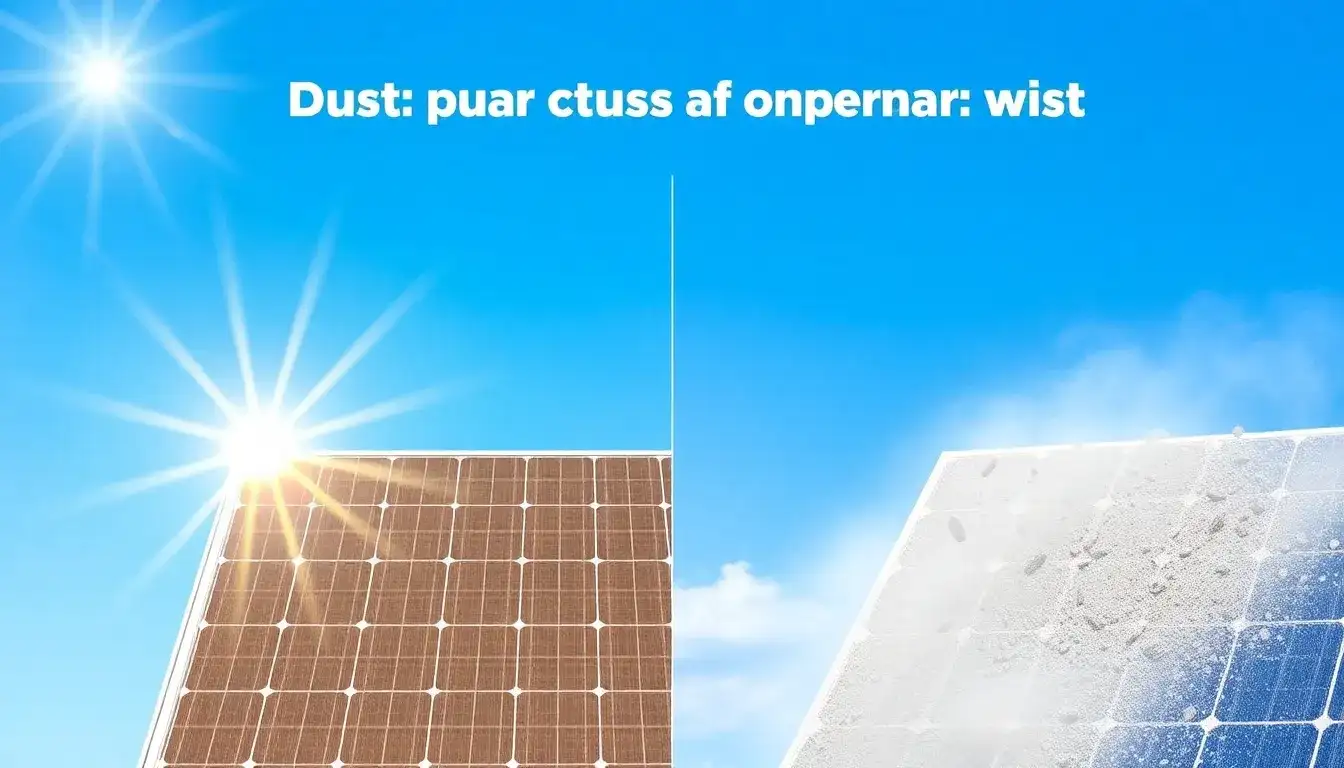
Dust accumulation significantly degrades the performance of solar panels through multiple mechanisms, leading to substantial energy losses and economic impacts.
How Dust Affects Solar Panel Performance
- Reduction in Light Transmission: Dust forms a physical barrier on the panel surface that blocks or scatters sunlight, reducing the radiation reaching the solar cells inside the panels. This directly lowers the electrical current generated, which is the main cause of efficiency losses. Studies show that dust accumulation decreases short circuit current by around 10-12% over periods of weeks, causing power output drops in a similar range.
- Magnitude of Energy Loss: The extent of performance loss depends on the dust accumulation amount and regional conditions. Losses of 7% efficiency are typical, but can reach as high as 30-50% in areas with heavy dust or ash accumulation, such as deserts and industrial zones. One study noted a 13% power decline after three months without cleaning in northern Jordan. Dust can reduce efficiency by up to 76% in extreme cases.
- Temperature Increase and Hot Spots: Dust increases the operating temperature of panels by causing partial shading and hotspot formation on cells, which reduces cell longevity and further hampers performance. However, some studies indicate dust’s effect on temperature rise is minor compared to other factors.
- Corrosion and Surface Damage: Dust that contains acidic or alkaline compounds can corrode the panel’s glass or coating, creating rainbow-like patterns that reduce light transmission and accelerate degradation. Dust accumulation also sometimes contains corrosive elements that harm panel materials.
Economic Impact
- Power loss from dust translates directly to revenue losses. For example, a 1% reduction in output for a 150 MW solar plant can cost about $200,000 annually. Globally, a 3-4% loss from dust could amount to billions of dollars in lost revenue annually. A single gram of dust per square meter was found to cause a loss worth $77 per lost kW in solar productivity.
Mitigation and Cleaning
- Regular cleaning is essential to maintain panel efficiency. Conventional cleaning uses large amounts of water (~10 billion gallons annually worldwide), which is costly especially in arid regions.
- Innovations like MIT’s electrostatic, waterless cleaning system use electric fields to repel dust without water or physical abrasion, potentially reducing operational expenses and improving reliability.
- Anti-dust solar panel designs and coatings (such as LONGi’s Hi-Mo 5 Anti-Dust modules) can reduce dust accumulation, improve energy yield by a few percent, and lower cleaning frequency, thus also cutting O&M costs.
Summary Table of Dust Impact on Solar Panels
| Impact Aspect | Effect | Magnitude (typical/peak) |
|---|---|---|
| Power output | Reduces incident sunlight and current | 7-30% loss (up to 50-76% in extreme cases) |
| Short circuit current | Decreases proportionally | ~10-12% decrease after weeks |
| Operating temperature | Increases due to hot spots | Minor to moderate effect |
| Corrosion | Acidic dust causes surface degradation | Visible “rainbow” patterns and damage |
| Economic losses | Revenue loss from reduced output | $200,000/year per 1% loss at 150 MW plant; billions globally |
| Cleaning water usage | High in conventional washing | ~10 billion gallons annually |
In conclusion, dust accumulation is a major factor impairing solar panel performance by physically blocking sunlight, increasing temperature and corrosion risks, and causing significant financial losses. Effective cleaning and anti-dust technologies are key to maintaining optimal solar energy production, especially in dusty and arid environments.
Original article by NenPower, If reposted, please credit the source: https://nenpower.com/blog/how-does-dust-accumulation-impact-the-performance-of-solar-panels/

