

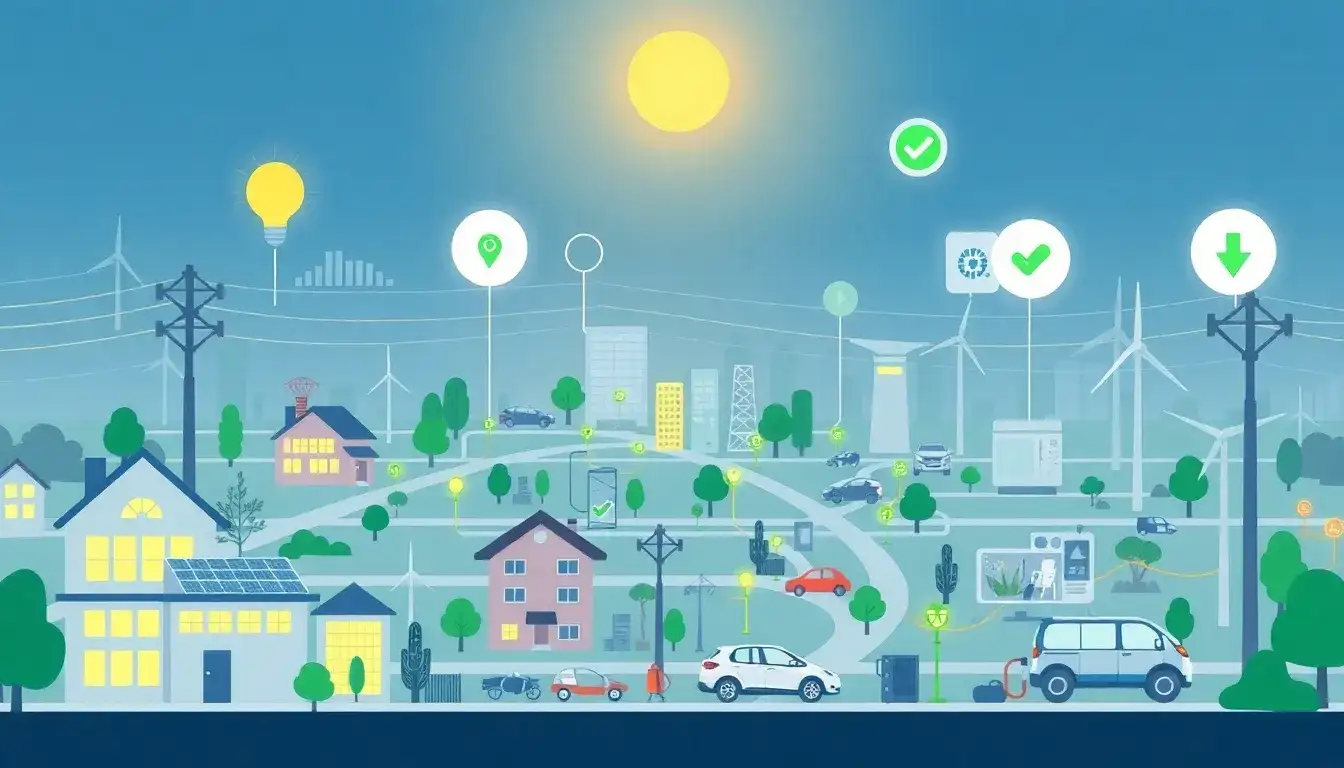
Demand response plays a critical role in stabilizing the power grid by managing energy consumption during periods of high demand. Here’s how it helps:
Key Mechanisms of Demand Response
- Reducing Peak Demand: During peak periods, such as hot summer days or cold winter nights, demand response programs encourage consumers to reduce their energy usage. This can be done by manually adjusting lighting, thermostats, or automating these adjustments through smart technologies.
- Balancing Supply and Demand: By reducing energy consumption during peak times, demand response helps balance the energy supply with demand, preventing grid overloads that could lead to blackouts or brownouts.
- Financial Incentives: Participants in demand response programs often receive financial incentives for reducing their energy consumption, which not only benefits the grid but also offers economic advantages to consumers.
Benefits to the Grid
- Stability and Reliability: Demand response enhances grid resilience by ensuring that the energy supply is not overwhelmed during peak demand periods. This reduces the likelihood of power outages and supports continuous energy delivery to critical infrastructure like hospitals.
- Sustainability: By reducing peak demand, demand response helps utilities avoid relying on expensive and carbon-intensive peaker plants, which are used during periods of high energy demand. This contributes to a more sustainable energy system by minimizing greenhouse gas emissions.
- Integration of Renewables: Demand response also aids in the integration of renewable energy sources by allowing consumers to adjust their usage during times when these sources are not producing enough power.
Technologies and Strategies
- Automation: Automated demand response uses smart devices to automatically adjust energy consumption based on signals from the grid, making it easier for consumers to participate in demand response programs without manual intervention.
- Virtual Power Plants: Demand response can be integral to the operation of Virtual Power Plants (VPPs), which manage multiple energy resources to meet fluctuating demand patterns and ensure grid stability.
In summary, demand response is a vital tool for maintaining grid stability by aligning energy consumption with available supply, reducing strain on the grid during peak times, and promoting a more sustainable energy system.
Original article by NenPower, If reposted, please credit the source: https://nenpower.com/blog/how-does-demand-response-help-stabilize-the-grid/

