

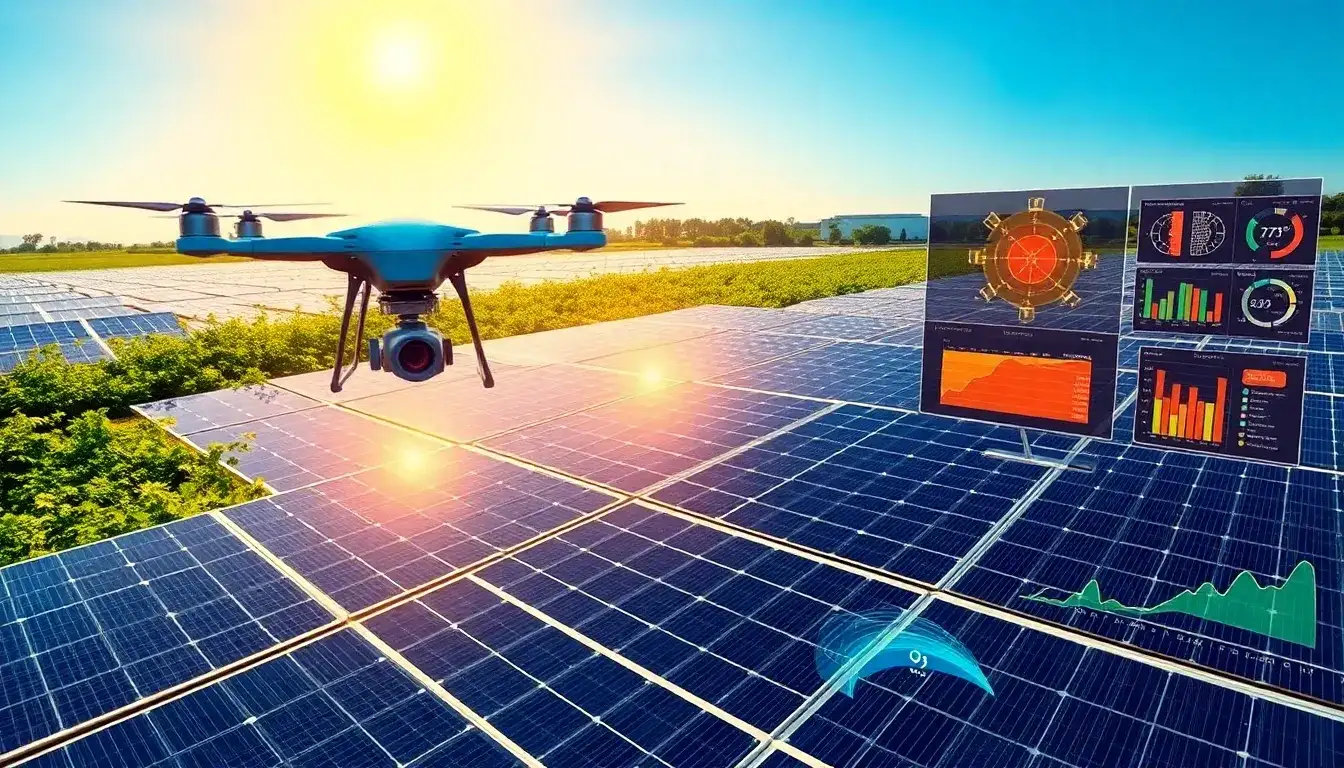
Computer vision significantly contributes to solar panel monitoring through various advanced imaging and analysis techniques, enhancing detection, maintenance, and overall system performance.
Key Contributions of Computer Vision in Solar Panel Monitoring
-
Fault and Anomaly Detection Using Thermal Imaging
Computer vision algorithms analyze thermal images captured by infrared or thermal cameras to detect temperature anomalies such as hotspots on solar panels. These hotspots often indicate malfunctioning cells or components that could reduce efficiency or cause system failure. Early detection enables timely repairs that prevent further damage and minimize downtime. -
Performance Monitoring
By continuously observing the temperature distribution across photovoltaic (PV) panels, computer vision helps assess the system’s performance in real-time. Deviations from expected thermal patterns can signal efficiency losses or technical issues, enabling operators to take corrective actions promptly. -
Predictive Maintenance
Through analyzing thermal data trends over time, computer vision systems can forecast maintenance needs before failures occur. This predictive capability optimizes scheduling for repair and upkeep, reducing operational costs and maximizing energy output. -
Quality Assurance During Manufacturing
In production environments, computer vision is used to detect defects such as cracks, misalignments, or impurities in solar panel components. Systems employing advanced image processing and precise measurement techniques (e.g., Hough Line Transform for edge detection) ensure that only panels meeting strict quality standards are deployed, lowering the risk of failures in the field. -
Identification and Mapping via Aerial Imagery
Computer vision models trained on aerial images can automatically identify and map solar panels installed across large areas. This capability supports applications such as government energy usage assessments, insurance verifications, and infrastructure planning by providing accurate data on the location and extent of solar installations. -
Integration with AI and IoT for Enhanced Monitoring
Computer vision, combined with machine learning and IoT technologies, enables continuous and automated monitoring of solar panel health. This integration allows real-time anomaly detection and risk assessment, supporting decision-making processes that maintain and improve the efficiency of solar energy systems.
Summary Table of Computer Vision Applications in Solar Panel Monitoring
| Application Area | Description | Benefits |
|---|---|---|
| Thermal Fault Detection | Identifies hotspots/anomalies in thermal images | Early fault detection, prevents damage |
| Performance Monitoring | Monitors temperature distribution to assess system efficiency | Continuous performance insight |
| Predictive Maintenance | Analyzes thermal data trends to forecast maintenance needs | Reduced downtime, cost savings |
| Manufacturing Quality Control | Detects manufacturing defects and measures component dimensions with high precision | Ensures product quality, reduces failures |
| Solar Panel Identification | Uses aerial imagery to detect and map solar panel installations | Accurate asset tracking, planning |
| AI and IoT Integration | Combines vision data with AI/IoT for proactive monitoring and risk management | Enhanced operational efficiency |
In essence, computer vision automates and enhances the inspection, monitoring, and maintenance of solar panels by extracting actionable insights from visual and thermal data. This leads to improved reliability, efficiency, and longevity of solar energy systems, supporting sustainable energy production.
Original article by NenPower, If reposted, please credit the source: https://nenpower.com/blog/how-does-computer-vision-contribute-to-solar-panel-monitoring/

