

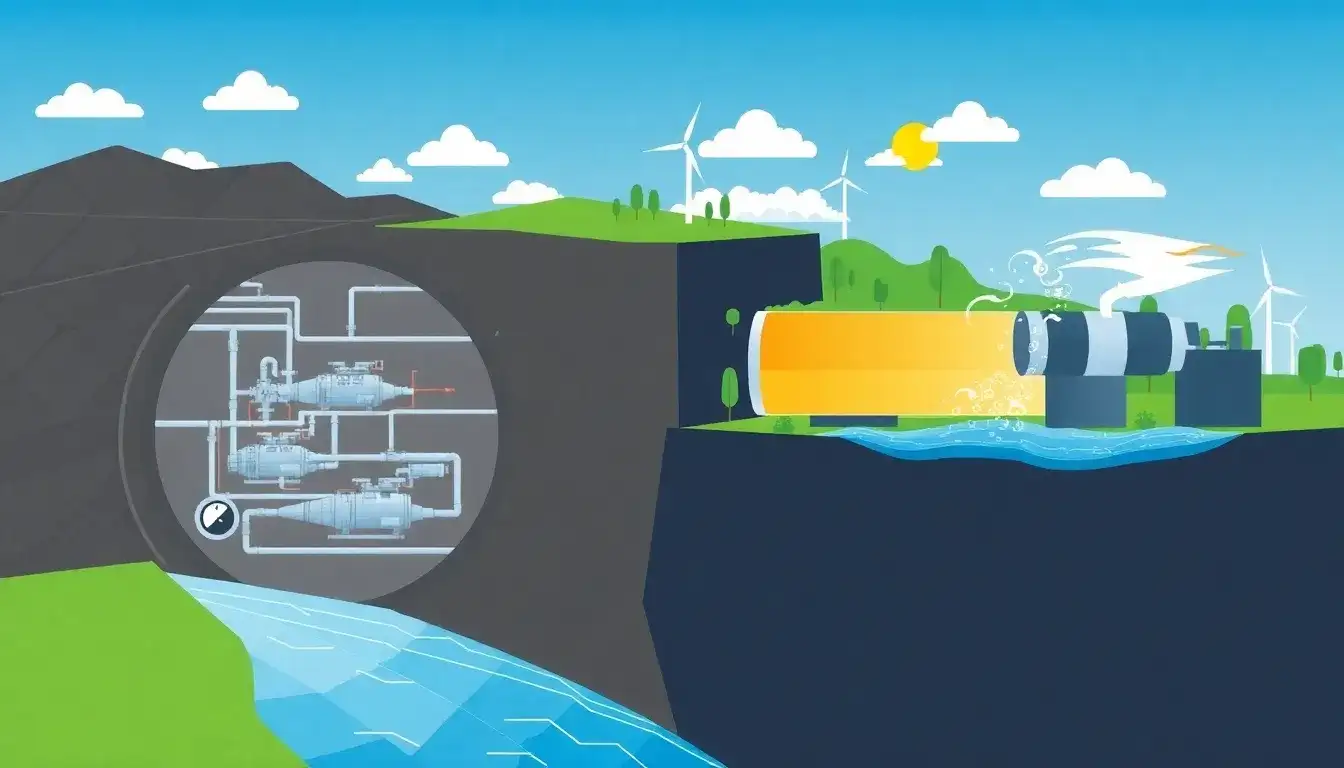
Overview of Compressed Air Energy Storage (CAES)
Compressed Air Energy Storage (CAES) is a method of storing energy by compressing air using off-peak electricity, typically generated from renewable sources like solar or wind power. This compressed air is stored in underground reservoirs or caverns. When energy demand peaks, the compressed air is released, mixed with fuel such as natural gas, and expanded through a turbine to generate electricity.
How CAES Works
- Compression Phase: Air is compressed using electricity during periods of low demand. This electricity is usually sourced from renewable energy sources.
- Storage Phase: Compressed air is stored in underground caverns or tanks.
- Expansion Phase: During peak demand periods, compressed air is mixed with a fuel source like natural gas and expanded through a turbine, generating electricity.
Limitations of CAES
- Efficiency: Diabatic CAES systems, which release heat during compression and require reheating before expansion, have low efficiencies, typically around 40-50%. This is due to energy losses from heat dissipation and the need for additional fuel.
- Geological Requirements: CAES requires large underground caverns that are airtight and suitable for storing compressed air. If such natural formations are not available, creating artificial reservoirs can be costly and challenging.
- Scalability and Cost: While CAES can store large amounts of energy, its high upfront costs and specific geological requirements limit its widespread use.
- Environmental Impact: Although CAES can help integrate renewable energy by smoothing out supply fluctuations, it still relies on burning fossil fuels (like natural gas) to reheat the air during expansion, which contributes to emissions.
Future Developments
Research is ongoing to improve CAES efficiency, particularly through adiabatic systems that store and reuse the heat generated during compression. These systems aim to achieve higher efficiencies and reduce environmental impacts by minimizing waste heat and fossil fuel use.
Original article by NenPower, If reposted, please credit the source: https://nenpower.com/blog/how-does-compressed-air-energy-storage-caes-work-and-what-are-its-limitations/

