

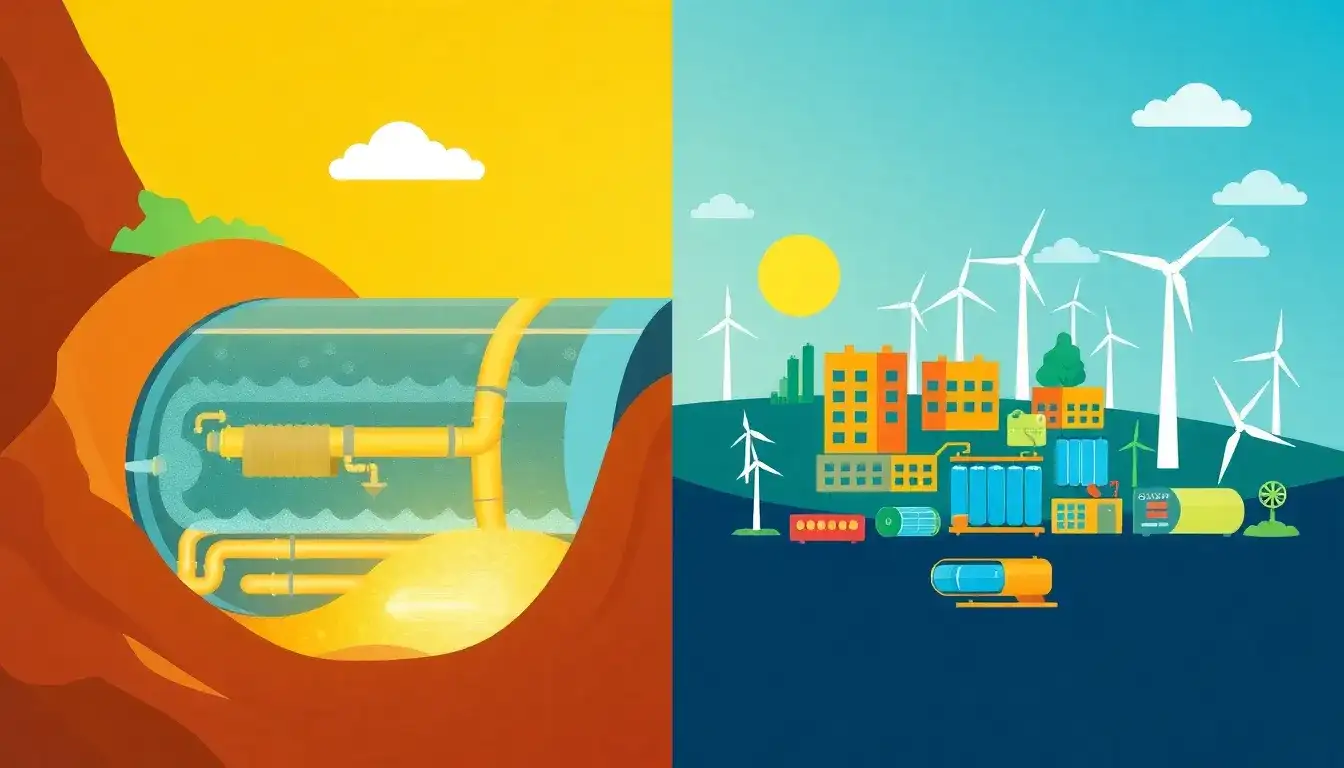
Compressed Air Energy Storage (CAES)
Compressed Air Energy Storage (CAES) differs significantly from other energy storage technologies in several key aspects:
Advantages of CAES
- Cost and Implementation: CAES is more affordable and easier to implement than many other energy storage solutions, such as pumped hydro storage (PHS) and advanced battery systems.
- Environmental Impact: CAES is environmentally friendly as it does not use toxic chemicals or rare materials, reducing environmental hazards during decommissioning.
- Scalability and Flexibility: CAES can be applied to both small-scale and large-scale energy systems, offering a versatile solution for different applications.
- Duration of Storage: CAES systems can store energy for extended periods, often exceeding 25 days, which is among the highest for existing technologies.
- Long System Lifespan: CAES facilities can operate for over 30 years, significantly outlasting the lifespan of many battery types.
Disadvantages of CAES
- Low Efficiency: CAES systems suffer from low round-trip efficiency, typically ranging from 40% to 52%, due to significant energy losses during compression and decompression.
- Reliance on External Energy: CAES often requires additional energy sources, such as fossil fuels, to heat the air during expansion, which complicates its integration with renewable energy sources.
- Geographical Constraints: CAES requires suitable geological formations, like underground caverns, limiting its deployability to specific locations.
Comparison to Other Technologies
- Battery Energy Storage Systems (BESS): BESS offers higher efficiency rates (e.g., lithium-ion batteries at 99%) but has a shorter lifespan and higher initial costs. Unlike CAES, BESS does not require large infrastructure or specific geography, making it more versatile in deployment.
- Pumped Hydro Storage (PHS): PHS is highly efficient (70-85%) but is limited by geographical constraints similar to CAES and has higher initial investment costs.
- Other Technologies: CAES is generally more cost-effective and environmentally friendly than many other energy storage options, though its efficiency and scalability can be limiting factors.
In summary, while CAES offers benefits in cost, sustainability, and scalability, its efficiency and reliance on external energy sources are significant drawbacks.
Original article by NenPower, If reposted, please credit the source: https://nenpower.com/blog/how-does-compressed-air-energy-storage-caes-differ-from-other-energy-storage-technologies/

