

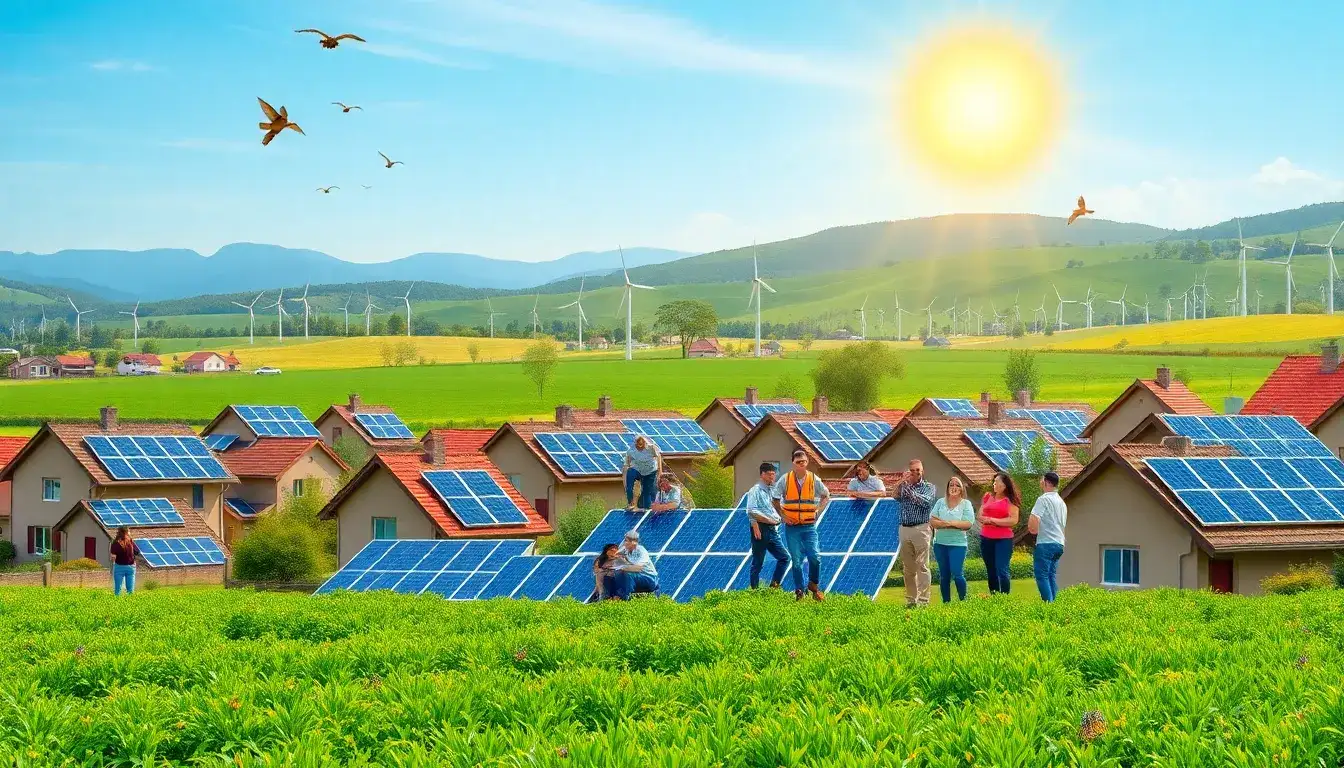
Community solar contributes to energy independence at the state level by enabling local production and shared access to renewable energy, which reduces reliance on fossil fuels and imported energy sources. Here’s how community solar fosters state-level energy independence:
- Local Renewable Energy Production: Community solar projects involve building local solar farms, often on unused land or rooftops, that generate clean energy within the state. This localized generation reduces dependence on distant power plants and fossil fuels.
- Shared Access to Solar Power: Residents, businesses, and organizations subscribe to a portion of the solar farm’s energy output. This subscription model allows broader participation, including renters and those who cannot install their own solar panels, democratizing energy production in the community.
- Reducing Fossil Fuel Dependency: By increasing renewable energy generation locally, states become less reliant on fossil fuel imports, contributing to a more resilient and independent energy grid.
- Economic Stability and Savings: Community solar can stabilize local energy costs by providing meaningful savings to subscribers (often at least 10%), which also reduces economic exposure to fluctuating fossil fuel prices. This economic benefit strengthens energy security at the community and state level.
- Grid Resilience and Sustainability: The distributed nature of community solar enhances grid resilience by diversifying energy sources and supporting environmental sustainability, which is a key aspect of true energy independence.
Overall, community solar empowers states to harness their own renewable resources, support local economies, and reduce fossil fuel reliance, thus significantly advancing state-level energy independence.
Original article by NenPower, If reposted, please credit the source: https://nenpower.com/blog/how-does-community-solar-contribute-to-energy-independence-at-the-state-level/

